What is Life? (Evolution Series Part I)
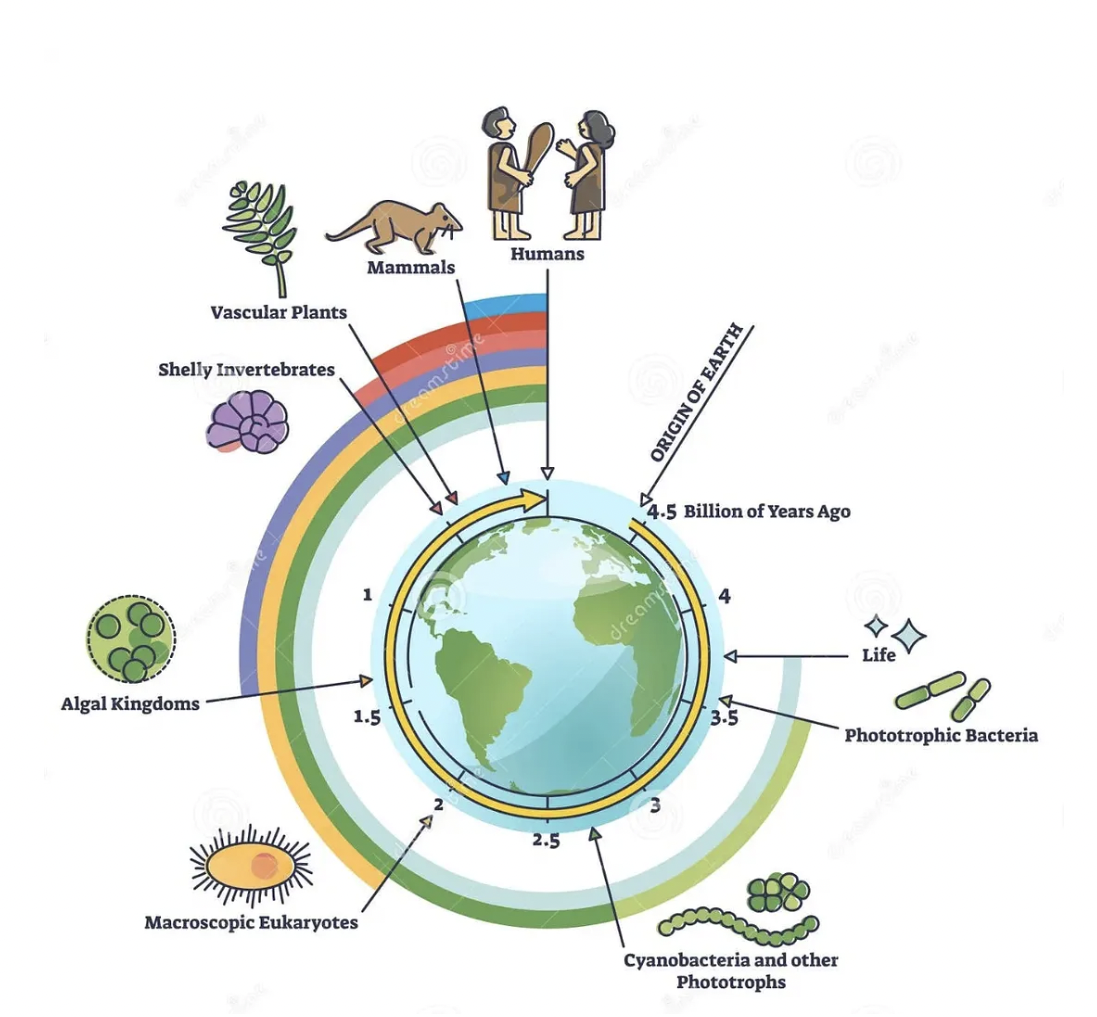
Did you know cyanobacteria and sponges were the start of oxygen and life on earth?
Image from Dreamtime
(You can also listen to this on Apple Podcasts here!)
A friend and I awhile back had conversations about What is Life?
Recently, I was thinking about how parrots can speak like humans, and chimpanzees and bonobos can communicate well with humans, and have immense learning abilities.
I then began researching our genetic similarities. I knew we were like 99% similar to apes, but I had no idea that our genes are also similar to plant species. Perhaps you did? Organic and inorganic, as they are called in the research literature, are different.
“No, humans do not share genes with metal; metals are inorganic elements and lack the genetic material necessary to possess genes, while humans (and all living organisms) have DNA which contains genes that code for specific traits.” — Google AI
However, we share DNA with bananas! 60%
You may already know, but there is a new Google AI function where you just put in a question and it populates an answer from all over the web. So this is what I learned from my searching about gene similarity to homo sapiens in animal species:
Gene Similarity
99%
Bonobos
98.9%
Chimpanzees
98%
Pigs
90%
Cats
85%
Mice
80%
Whales
80%
Cows
75%
Chickens
70%
Sea Sponges
60–75%
Flies
60%
Banana Trees
20–60%
Plant species
“Humans and plants share a significant amount of genetic similarity, with humans sharing 20–60% of their genes with plants, depending on the species. This is because all living things share DNA, which is made up of the same four bases (A, T, C, and G) that code for amino acids, which form proteins.” — Google AI
Also, I’ve been researching the Evolution of Life.
Here is some really interesting research from the National Museum of Natural History at the Smithsonian.
Did you know Earth used to not have oxygen?
And that sponges were the beginning of Our Life on Earth with Oxygen? Sponges! :)
“With an environment devoid of oxygen and high in methane, for much of its history Earth would not have been a welcoming place for animals. The earliest life forms we know of were microscopic organisms (microbes) that left signals of their presence in rocks about 3.7 billion years old. The signals consisted of a type of carbon molecule that is produced by living things.”
“When cyanobacteria evolved at least 2.4 billion years ago, they set the stage for a remarkable transformation. They became Earth’s first photo-synthesizers, making food using water and the Sun’s energy, and releasing oxygen as a result. This catalyzed a sudden, dramatic rise in oxygen, making the environment less hospitable for other microbes that could not tolerate oxygen.”
I’m going to diverge from this article for awhile to address an important point to make for the future of life on earth in the ocean.
Phytoplankton may be an answer to cleaning up our ocean’s mess that homo sapiens created by putting trash and petroleum and all sorts of other ugly stuff from the rain cycle, fertilizers, pesticides, hormones, antibiotics, coal, etc.
I quote:
“Ocean acidification refers to the drop in pH levels in seawater, which were on average 8.2 in the pre-industrial era. Since then, it has declined by 0.1 units. While this appears minute, because the pH scale is logarithmic, this actually represents a 30 per cent increase in acidity. Mid-range projections for 2100 is that ocean pH could decline by 0.3 to 0.4 units. This would be devastating for ocean biodiversity. As a comparison, a drop in blood pH in humans by 0.2–0.3 units could cause seizures, comas and even death.” — Eco-Business
While researching phytoplankton online, they are the major source of oxygen and reduction of carbon. They could be life savers of many animals and homo sapiens alike!
Phytoplankton to reduce acidity and increase O2 and decrease CO2:
“Oxygen production: They are responsible for producing as much as half of the Earth’s atmospheric oxygen, making them vital for all life that breathes.
Carbon cycle: Through photosynthesis, phytoplankton absorb large amounts of carbon dioxide from the atmosphere and are a key component of the ocean’s biological pump, which stores carbon in the deep ocean.
Human dependence: A healthy phytoplankton population is critical for global fisheries, which provides a major food source for humans.
Ecosystem health: A decline in phytoplankton can have cascading negative effects on the entire marine ecosystem, from the smallest creatures to the largest, and can impact global climate stability. — Google AI
Yes, phytoplankton can help with ocean acidity through photosynthesis by consuming carbon dioxide, which lowers acidity in surface waters. However, their impact is complex because some species, like coccolithophores, can temporarily increase acidity in localized areas by using carbonate ions to build shells.
As ocean acidification continues, the composition of phytoplankton communities is expected to change, which could have significant consequences for the marine food web and the ocean’s ability to absorb carbon dioxide.”— Google AI
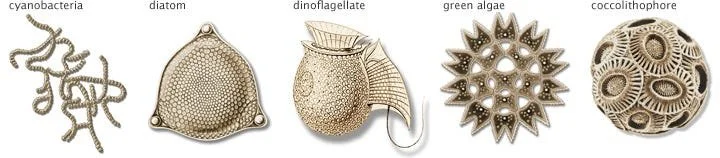
Phytoplankton VI?…do you think these Five are the basis of Life Itself? Source: https://earthobservatory.nasa.gov/features/Phytoplankton
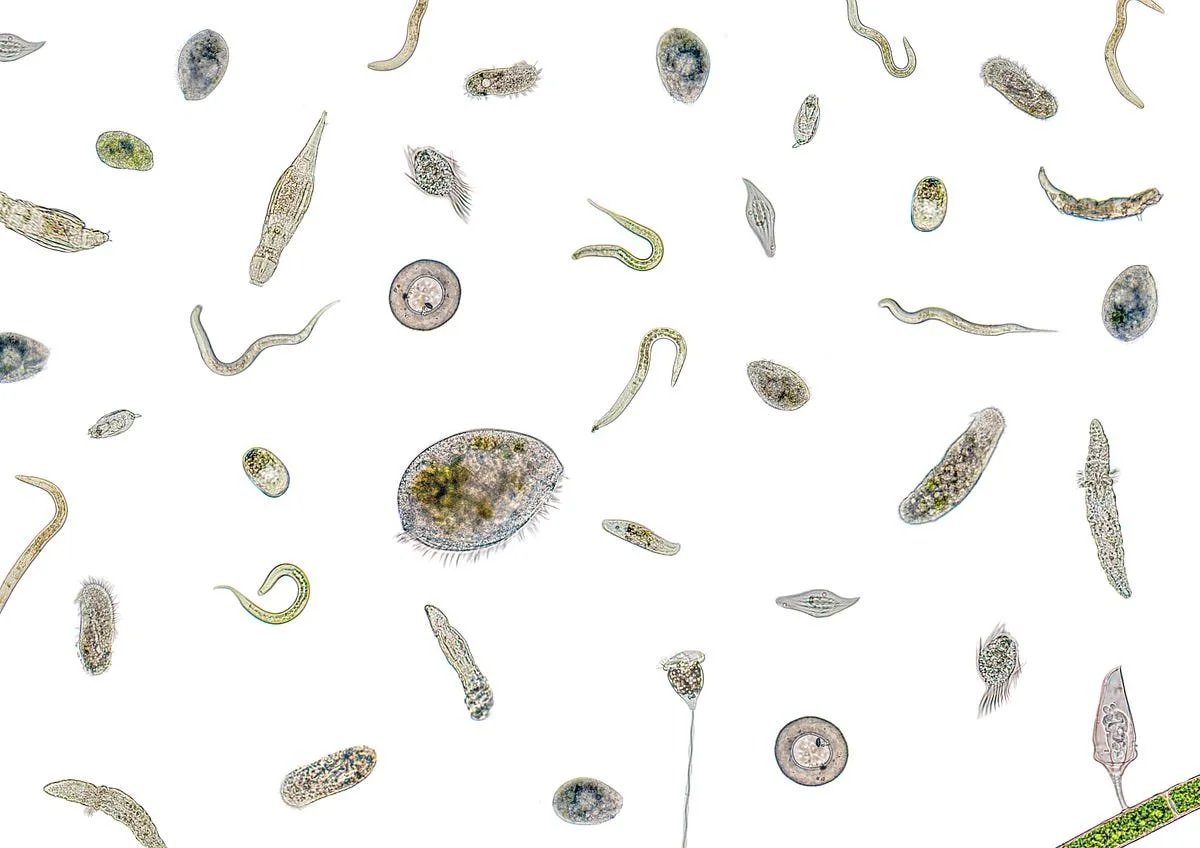
Phytoplankton VII?…more diversity or something? I’m not a scientist, just a curious person about how life began! Image by Freepik
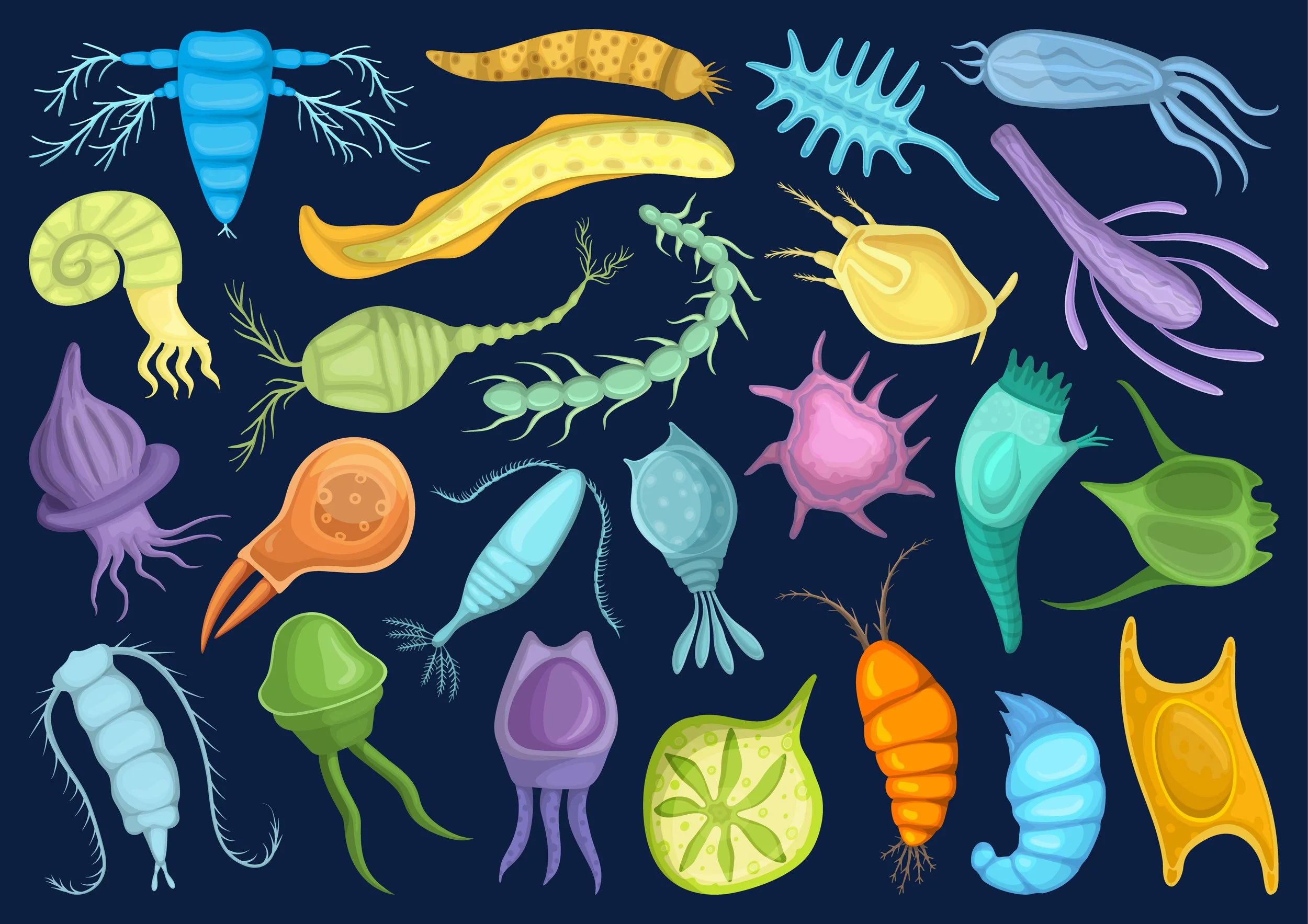
Phytoplankton VIII?…even more diversity, even more nuances, variations. Eventually leading to fish, to mammals, to monkeys, to apes, to homo sapiens. Image by Freepik
Now back to the article by the National Museum of Natural History at the Smithsonian
“However, other innovations were occurring. While they can process lots of chemicals, microbes did not have the specialized cells that are needed for complex bodies. Animal bodies have various cells — skin, blood, bone — which contain organelles, each doing a distinct job. Microbes are just single cells with no organelles and no nuclei to package their DNA.
Something revolutionary happened as microbes began living inside other microbes, functioning as organelles for them. Mitochondria, the organelles that process food into energy, evolved from these mutually beneficial relationships. Also, for the first time, DNA became packaged in nuclei. The new complex cells (“eukaryotic cells”) boasted specialized parts playing specialized roles that supported the whole cell.
Cells also began living together, probably because certain benefits could be obtained. Groups of cells might be able to feed more efficiently or gain protection from simply being bigger. Living collectively, cells began to support the needs of the group by each cell doing a specific job. Some cells were tasked with making junctions to hold the group together, while other cells made digestive enzymes that could break down food.”
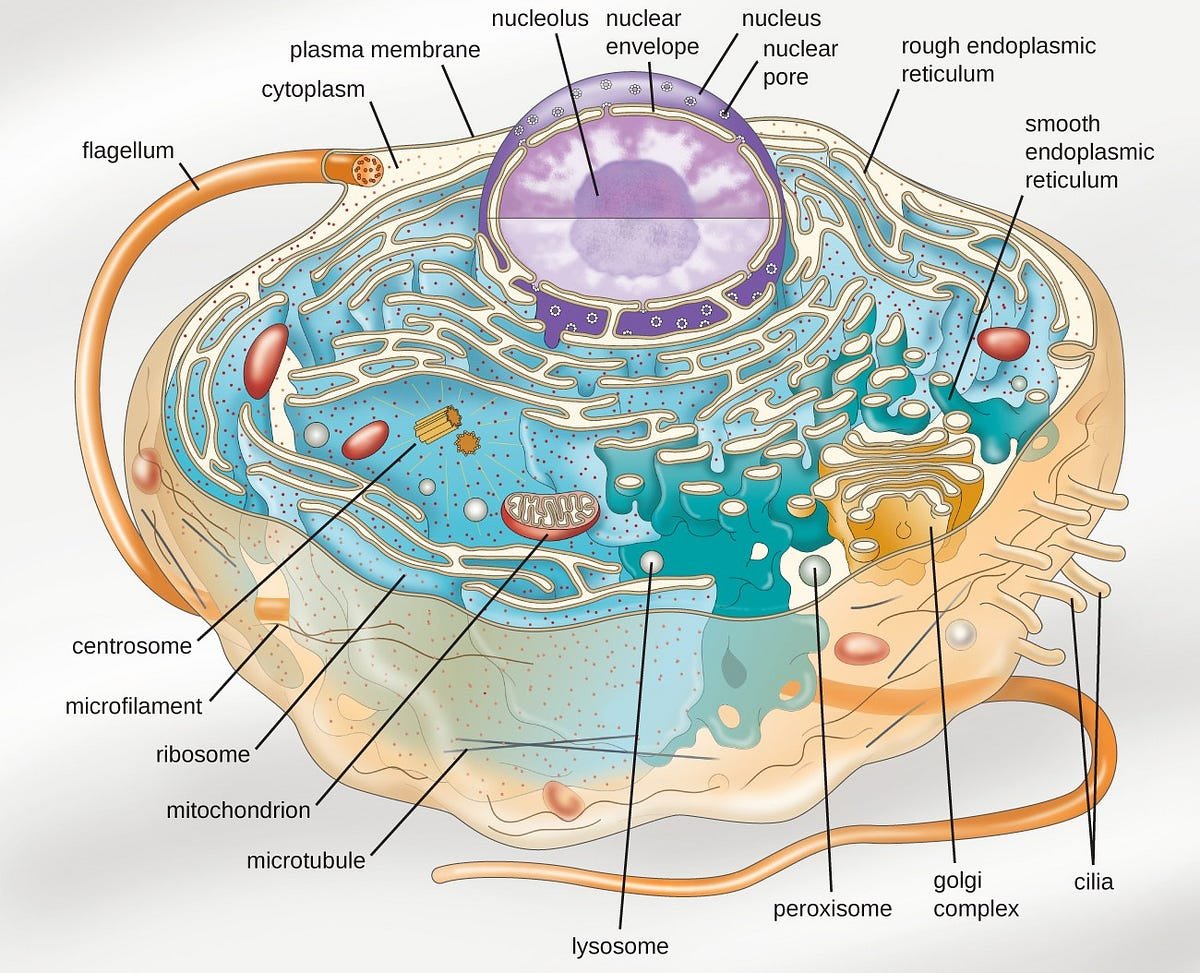
Eukaryotic Cells, The Foundations of Life, Cooperation amongst different types of organisms, eventually leading to the evolution of animal species! Image by https://courses.lumenlearning.com/suny-microbiology/chapter/unique-characteristics-of-eukaryotic-cells/
“These clusters of specialized, cooperating cells eventually became the first animals, which DNA evidence suggests evolved around 800 million years ago. Sponges were among the earliest animals. While chemical compounds from sponges are preserved in rocks as old as 700 million years, molecular evidence points to sponges developing even earlier.
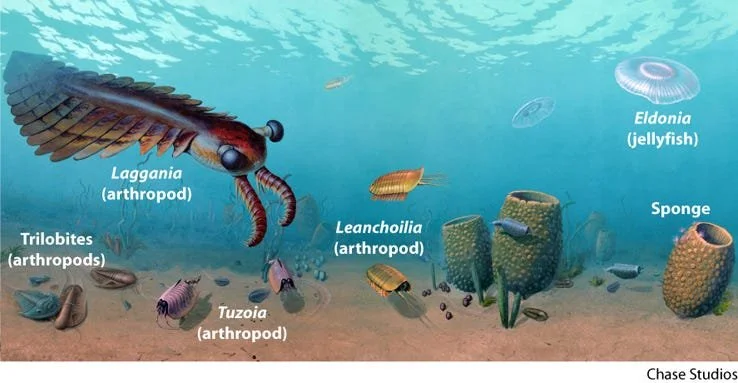
Sponges were among the earliest animals! Wow! https://samnoblemuseum.ou.edu/common-fossils-of-oklahoma/paleocommunities/marine-communities/cambrian-communities/
Oxygen levels in the ocean were still low compared to today, but sponges are able to tolerate conditions of low oxygen. Although, like other animals, they require oxygen to metabolize, they don’t need much because they are not very active. They feed while sitting still by extracting food particles from water that is pumped through their bodies by specialized cells.
The simple body plan of a sponge consists of layers of cells around water-filled cavities, supported by hard skeletal parts. The evolution of ever more complex and diverse body plans would eventually lead to distinct groups of animals.
The assembly instructions for an animal’s body plan are in its genes. Some genes act like orchestra conductors, controlling the expression of many other genes at specific places and times to correctly assemble the components. While they were not played out immediately, there is evidence that parts of instructions for complex bodies were present even in the earliest animals.
Thanks to their hard skeletons, sponges became the first reef builders on Earth. Scientists like Smithsonian’s Dr. Klaus Ruetzler are working to understand the evolution of the thousands of sponge species living on Earth today.”
“The Cambrian Period (541–485 million years ago) witnessed a wild explosion of new life forms. Along with new burrowing lifestyles came hard body parts like shells and spines. Hard body parts allowed animals to more drastically engineer their environments, such as digging burrows. A shift also occurred towards more active animals, with defined heads and tails for directional movement to chase prey. Active feeding by well-armored animals like trilobites may have further disrupted the sea floor that the soft Ediacaran creatures had lived on.” — National Museum of Natural History at the Smithsonian

Cambrian Period Life Forms, Source: https://natmus.humboldt.edu/exhibits/life-through-time/visual-timeline/cambrian-period
I hope you find this as fascinating as me :)
Written by
Ashley Heacock, Researcher, Writer, Mentor, Guide
MIT Sloan School of Management, MBA
Harvard Kennedy School of Government, MPA
The George Washington University, BA Economics, BA International Affairs
Contact: ashleyheacock@gmail.com
Website: awakeningconsciousness.community