Questions about Distribution of Wealth and the History of Inventions

An article about the history of technology and who really owns and deserves the money made from these products. Image by Freepik
I am a person who questions many topics around the world, as you can see on this website or on my Medium profile.
I have been pondering patents and technology. It is a new field, especially with the advent of Artificial Intelligence.
I first researched Uber. Initially I thought wow, Uber first existed and then Lyft stole the idea. Shouldn’t Uber get proceeds from Lyft?
However, I did my research.
The idea for Uber came from Garrett Camp in 2009. He wanted to make it easier and cheaper to procure direct transportation. “The prototype of the mobile app was built by Camp and his friends, Oscar Salazar and Conrad Whelan, with Kalanick as the “mega advisor” to the company.”
Then I researched Lyft. I thought it was an idea that came from Uber. However, with more research, the story got more complicated.
Lyft officially launched in 2012, by computer programmers Logan Green and John Zimmer. However, it came from “a service of Zimride, a long-distance intercity carpooling company focused on college transport that they founded in 2007 after Green shared rides from the University of California, Santa Barbara campus to visit his girlfriend in Los Angeles and was seeking an easier way to share rides.
Isn’t that interesting? So this “idea” of ride sharing seemed to possibly be a “thing” and not owned by anybody, but was rather an idea percolating amongst many.
That’s one legal way to put it, perhaps?
Then I wondered about Microsoft Office. How long does a company own a patent? Bill Gates, the Founder, “became the first centibillionaire (receiving more than $100,000,000) in 1999, when his net worth briefly surpassed $100 billion.”
However, “the first version of Microsoft Word was developed by Charles Simonyi and Richard Brodie, former Xerox programmers hired by Bill Gates and Paul Allen in 1981.”
People still pay for Microsoft Office. Especially businesses. It is a luxury good, especially if you are in poverty.
Google then made a program similar to Microsoft Office. It has docs, sheets, presentations, videos, forms, drawings, etc. It is not as sophisticated as Microsoft, but it is similar.
However, somebody, anybody could have made something like this eventually. It is a pretty basic “idea” to develop. Right? Or is it? Should Google be indebted to Microsoft, should Bill be indebted to Charles and Richard?
Should we just categorize these programs as “ideas” floating around at the time to organize our minds on computers?
Google Sheets is incredible, as it is free and open to the public and can help billions of people around the world access a similar program to Microsoft Office. They can organize their lives, their small business. It is very beneficial to the world.
Where does “beneficial to the world” fit into the legal code?
Additionally, what about Gratitude? Giving thanks to those who came before you that made Microsoft Word, Uber, Lyft, and all other technology companies possible?
Bill Gates personally made billions of dollars. Why not spread it to more people? Should the people who built the program be receiving more money? Should other people in the company, Charles and Richard, and perhaps a Julie or a Jane, not just Bill? What about Bill’s, Charle's, and Richard’s Universities and professors? What about the people who created coding? What about people who created the computer? What about people who created the internet?
Should one megalomaniac be credited for an invention, or should people around the world throughout history be credited, and we distribute the wealth to all so we have a kind, just, loving world free of poverty and suffering?
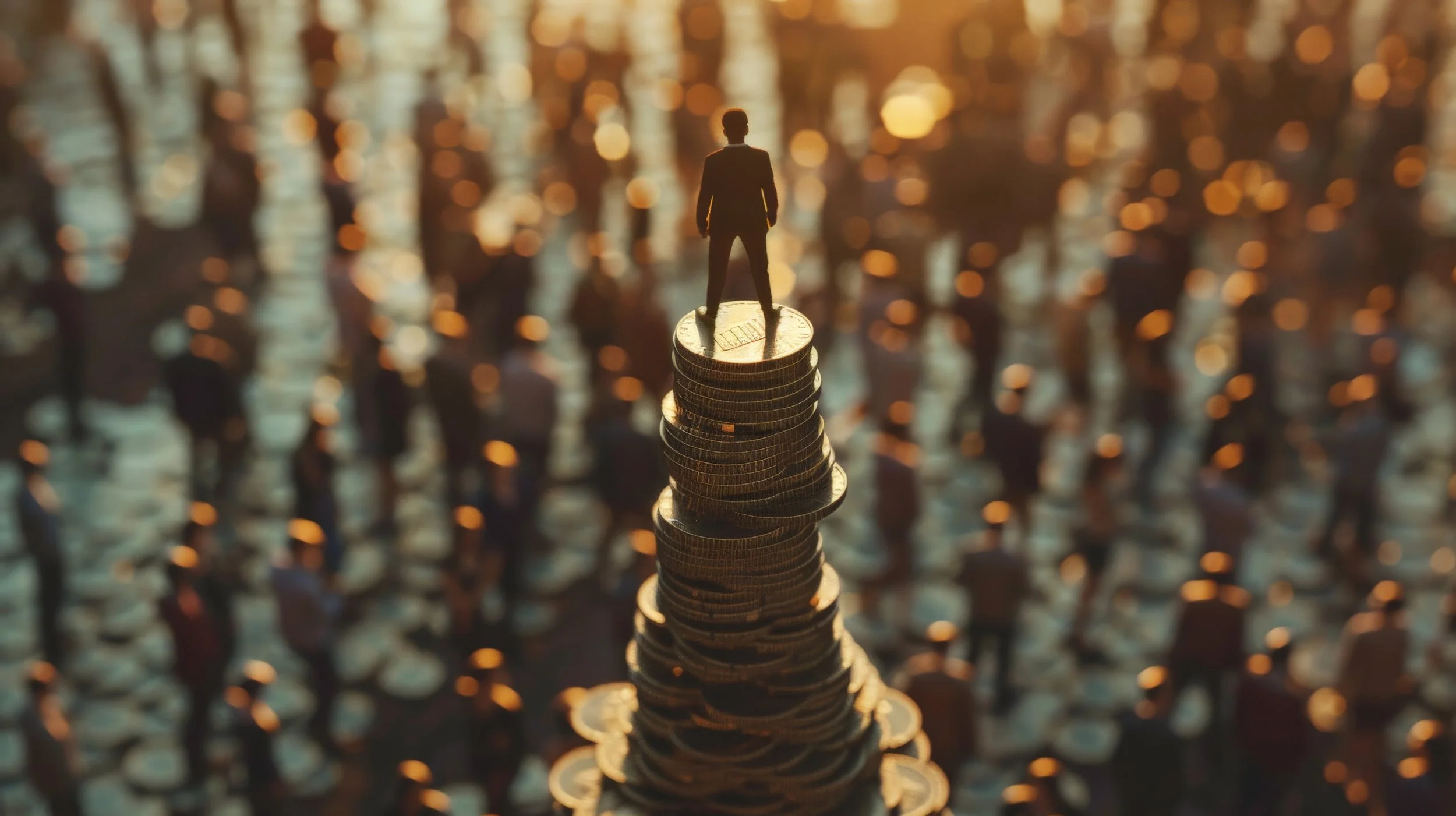
Image by Freepik
When looking up who created coding, “Ada Lovelace (a female) is considered the first computer programmer, having written the first algorithm for a machine in the 1840s to calculate Bernoulli numbers for Charles Babbage’s Analytical Engine. While the machine was never completed in her lifetime, her work is recognized as the first computer program and laid the groundwork for modern coding concepts.” — Google AI
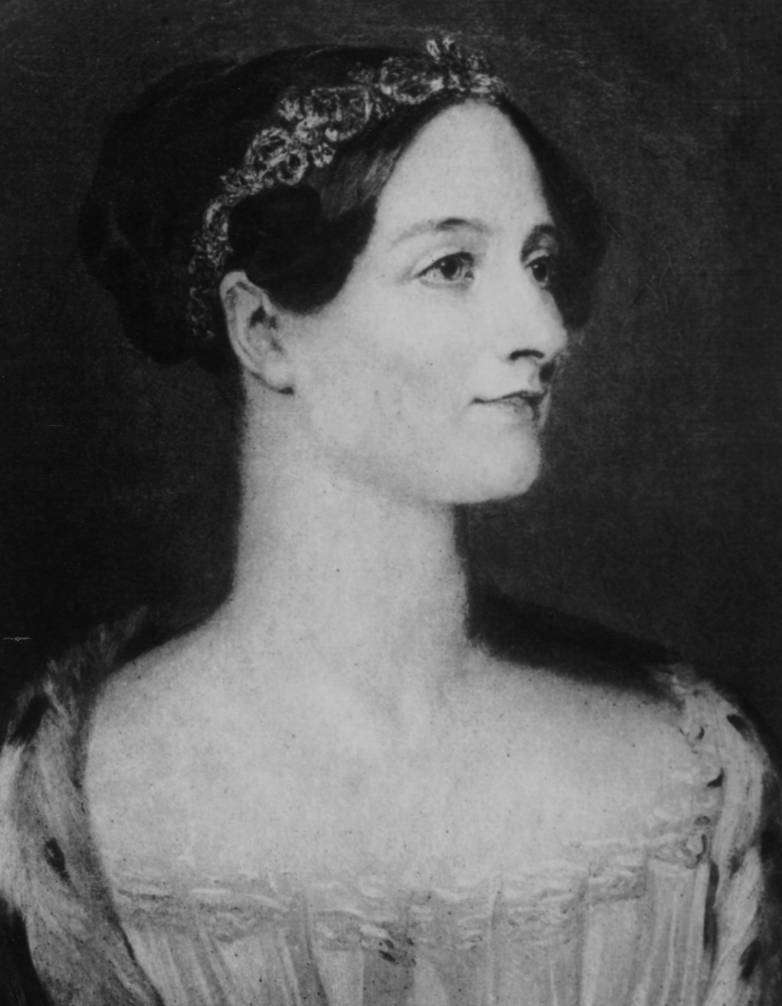
Ana Lovelace; Source: https://es.wikipedia.org/wiki/Archivo:Ada_Lovelace_portrait_circa_1840.jpg
When looking up the history of how a computer was made, it is quite complicated. You can read about it here, and here’s the history of laptops. It seems like Charles Babbage was the first to truly make a usable computer, but there were many inventions and prototypes before.
“Charles Babbage, an English mechanical engineer and polymath, originated the concept of a programmable computer. Considered the “father of the computer”, he conceptualized and invented the first mechanical computer in the early 19th century. After working on his difference engine he announced his invention in 1822, in a paper to the Royal Astronomical Society, titled “Note on the application of machinery to the computation of astronomical and mathematical tables”. — Wikipedia
Then I go back to who created algebra? You would need mathematical intelligence to create a computer. You can read more about my research on this topic here, The Rhythm and Cadence of The Universe Found in Mathematics.
A section from my article:
“The Babylonians (Middle East) and Egyptians began using algebraic concepts around 1900–1600 BC.
The Egyptians developed extremely complex scientific discoveries, including using sacred geometric principles. The Babylonians included advanced quadratic and cubic equations.
Then there was a Greek contribution by Diophatus around 200–300 AD
According to Google AI he is considered by them to be the “father of algebra”. It is fascinating though, that he also follows a rhythm, a beat of the universe!
Read this from Wikipedia:
“The only definitive piece of information about his life is derived from a set of mathematical puzzles attributed to the 5th or 6th century CE grammarian Metrodorus preserved in book 14 of the Greek Anthology. One of the problems (sometimes called Diophantus’ epitaph) states:
Here lies Diophantus, the wonder behold. Through art algebraic, the stone tells how old: ‘God gave him his boyhood one-sixth of his life, One twelfth more as youth while whiskers grew rife; And then yet one-seventh ere marriage begun; In five years there came a bouncing new son. Alas, the dear child of master and sage After attaining half the measure of his father’s life chill fate took him. After consoling his fate by the science of numbers for four years, he ended his life.’
This puzzle implies that Diophantus’ age x can be expressed as
x = x/6 + x/12 + x/7 + 5 + x/2 + 4
which gives x a value of 84 years. However, the accuracy of the information cannot be confirmed.”
Isn’t it interesting that the highlighted part is actually poetry? So Diophantus was also in rhythm with the universe, and so able to be a scientific genius.
Then we have al-Khwarizmi, an Arab mathematician, from the 9th century.
This is a super fascinating story. Instead of using numbers, he used words, he used Arabic! It is called rhetorical algebra: Al-Khwarizmi’s work, particularly his Al-jabr, used full sentences to describe algebraic problems and their solutions. For example, instead of writing “x + 2 = 4”, he would have written “A thing plus two equals four”.
This is really complex. He must have been in rhythm with the cadence of Arabic, and used the words rather than numbers to teach these concepts and understand them, which would align with the rhythm of the Universe. Again, you can read more about it in my article, The Rhythm and Cadence of The Universe Found in Mathematics.
What’s even more interesting is that he was able to use rhetorical algebra to do quadratic equations. “A quadratic equation is a polynomial equation of the second degree, meaning it contains a term where the variable is raised to the power of two. The general form of a quadratic equation is ax² + bx + c = 0, where ‘a’, ‘b’, and ‘c’ are constants, and ‘a’ cannot be zero.”
Also, al-Khwarizmi uses the term “completion, or restoration.” This is fascinating, spiritually and scientifically.
al-Khwarizmi’s Treatise:
In the 9th century, al-Khwarizmi’s book, al-Kitāb al-Mukhtaṣar fī Ḥisāb al-Jabr wal-Muqābalah, introduced the systematic solution of linear and quadratic equations using the concept of “al-jabr” (restoration or completion).
As a spiritual person, this is really interesting. Mathematicians have been trying to understand the universe and equal their equations to zero. Could there be clues here? For quantum physicists and others?
Al-Khwarizmi also “wrote on Indian numerals, which were the basis for the decimal system. In the 12th century, Robert of Chester translated Al-Khwarizmi’s “Hisab al-jabr w’al-muqabala” into Latin, making it accessible to European scholars.
This translation, and others of Al-Khwarizmi’s works on Indian numerals, were instrumental in bringing the decimal system (including the concept of zero) to Europe, revolutionizing mathematical practices.
Fibonacci, another influential mathematician, further popularized the decimal system in Europe after learning about it in North Africa and through studying Al-Khwarizmi’s work.” — Google AI
So who really should get credit for these new technologies?
A UBS Global Wealth Report found that in 2023, the world’s richest 1% owned around 47.5% all the wealth. Meanwhile, adults with less than $10,000 make up nearly 40% of the world’s population and only hold less than 1% of the wealth. Quite a drastic difference.
Artificial Intelligence products will be coming soon. This is an extremely important question. Can we distribute the profits to the entire world, which helped create all of these inventions? Or are we going to be stuck in a world of inequality and not sharing, not giving gratitude to all of the souls who worked hard around the entire world to create the systems and technologies we are now using.” — Ashley Heacock

From a few getting everything

To sharing, caring

To peace, with love
(Images by Freepik.)
This also gets into questions about the structure of our institutions and companies. Should we have more companies that are structured around spreading the profits across employees, the community, and educational institutions?
“Ben & Jerry’s shares profits through its “linked prosperity” mission, which focuses on spreading wealth across stakeholders, including employees and the community, rather than solely maximizing shareholder profit. This is demonstrated by the Ben & Jerry’s Foundation, which receives 7.5% of annual pre-tax profits to fund community projects, and by initiatives to ensure living wages for workers in the supply chain and fair compensation for all employees.” — Google AI
Another example of businesses looking to the future and being ethical is B-Corps. It was started and has set standards for companies to be more kind, respectable, and ethical.
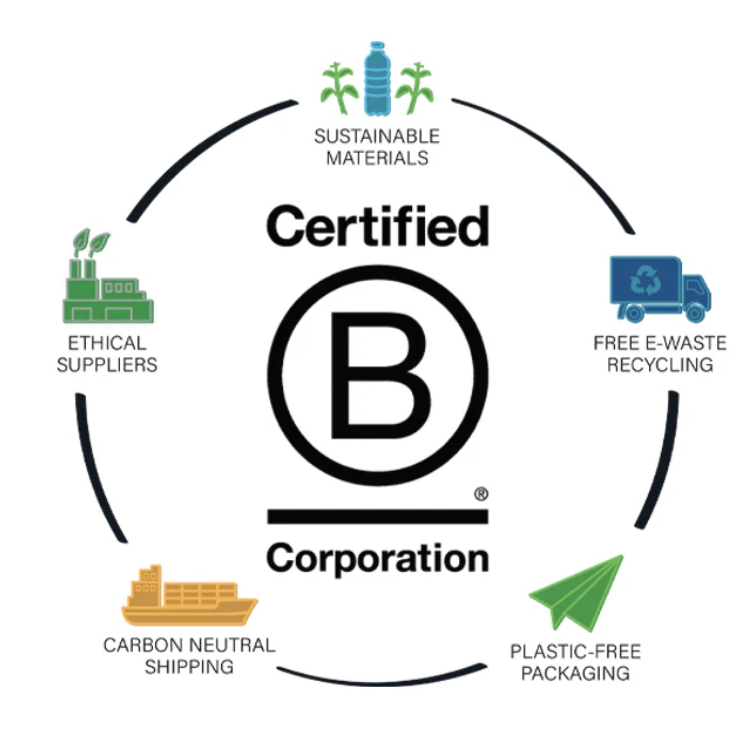
“B Lab Standards are multifaceted and include:
B Impact Assessment: A comprehensive tool to measure, manage, and improve a company’s positive impact performance for workers, communities, customers, suppliers, and the environment. A required verified score of 80 on the B Impact Assessment also serves as a certification requirement for B Corp Certification.
Risk Standards: An assessment of eligibility for B Corp Certification based on a review of potentially negative impacts associated with a company’s industry and other practices.
Multinational Company Standards & Baseline Requirements: Additional baseline requirements for large companies which are defined as a parent company generating $5B+ in annual revenue.
We update and improve our standards on a regular basis. While specific revision mechanisms will vary by the nature of the project, all standards development projects are informed by research and multi-stakeholder input.” — B Lab
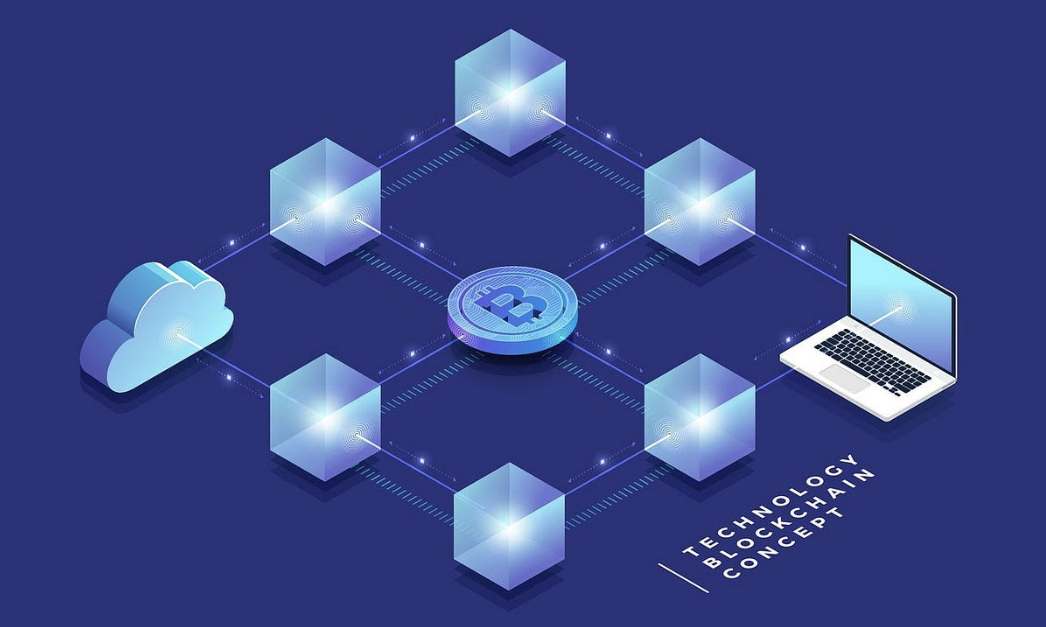
Image by Chalermsuk Bootvises
Another idea is Creating a Socially Maximally Beneficial Energetic Currency Distribution System, which I wrote about in 2023.
A quote from my article:
“This currency distribution system will calculate everything! Where did the product come from, how was the Earth treated, how were the people treated? What were the consequences of this resource created? We can begin modeling these new currency and social welfare systems off of how Life, Energy, and the Universe functions.”
For instance, currently the United States receives all the benefits from products made in the rest of the world, but at a cost of devastating pollution and harm to the environment and people. We must realize we are All One, i.e “Quantum Entangled.” The greed and pain of the United States needs to be calculated. As people come into their Hearts, we will not need such a massive consumerist economy. As we understand Nature and new AI quantum technologies come to the fore, we will advance towards more efficiencies in all that we create. Products will become harmonious with Nature, as we Become harmonious with how the Universe works. Nothing will be treated as “waste” but rather all will be respected, recycled, reused, and repurposed.
In this new bitcoin cryptocurrency, those who Value Nature and Human Beings will be rewarded. Those who destroy others and the world will be brought to the awareness of Society, and the People can choose who they support by what they buy, where they live, and who they support.
When all is Known, people can make Choices that reflect their Heart and Soul, and that will be recorded. Those in poverty versus those who are in power is Known to God. Be Truthful in your Choices, in Integrity in your Behaviors, and Listen to Your Body. The subatomic quantum realm knows if you are in Love or your ego (read more here)!
New technologies will allow God to create a more Just World for All by allowing this Free Flowing of Information. Who is Harming? Who is Doing Good? Where are we destroying each other and the environment? Where are we Cooperating and Supporting Each Other and this Precious Earth we Live On?
With the rise of artificial and quantum intelligence, we will also create massive economies of scale that will not only take away jobs, as it already has done, but this will also lead to great amounts of wealth for those who create it.
These monetary benefits will need to be redistributed to All. We will experience an Enlightenment Period never before seen in the history of the World as we come together as One. Not only will health and education be free for all, but also Food, Shelter, Water, and all the basics a person needs to feel Calm in their Bodily System so they can Flower into their Destiny.
We will evolve from treating people as cogs in a wheel to feed the industrial system to treating each other as Divine Human Souls who deserve what they need to feel Loved so they can Flourish.” — Ashley Heacock
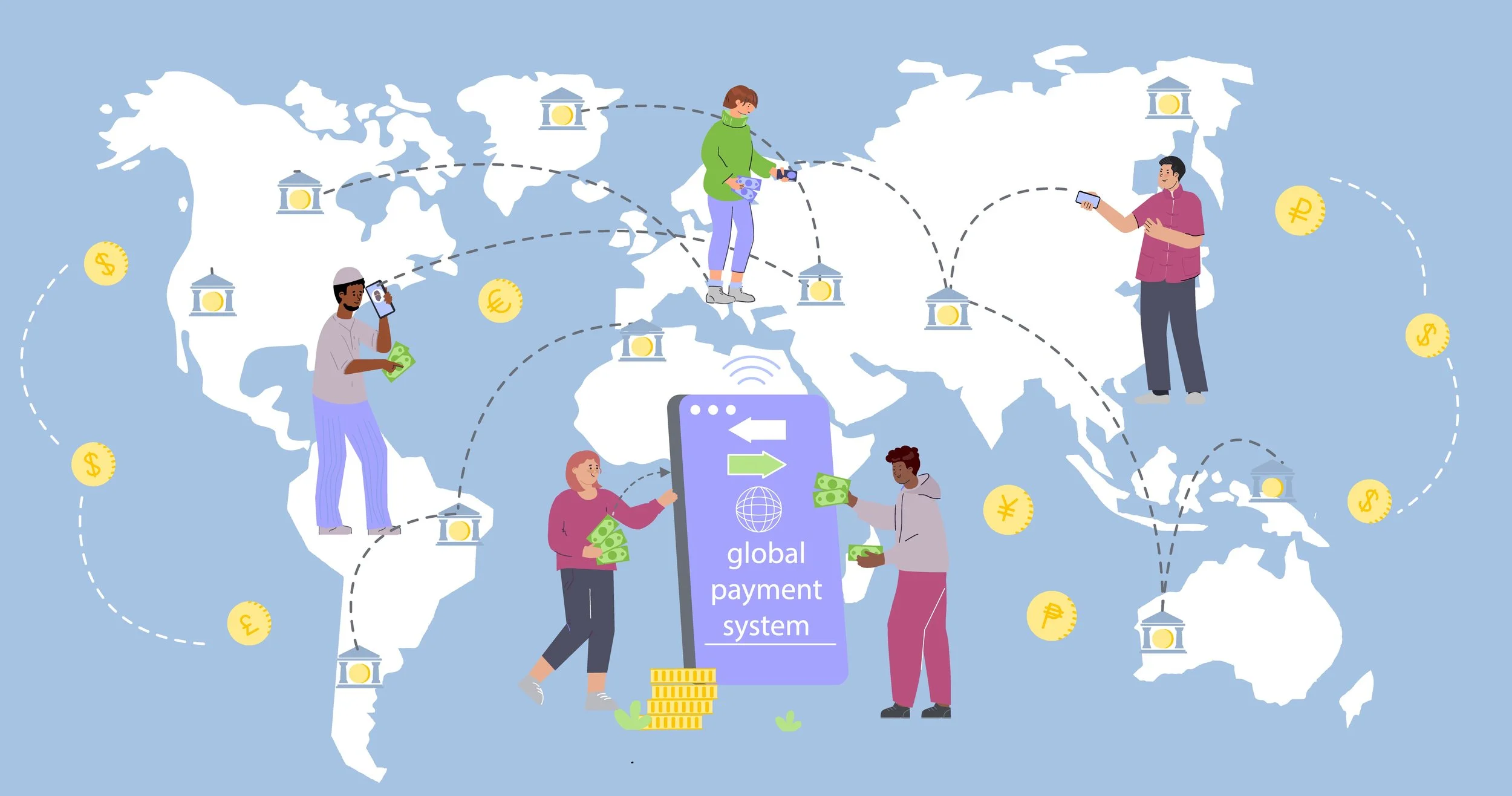
Image by Freepik
Therefore, my basic premise is, who actually should get the benefits of money made from technology, or anything really? This is an extremely important question with the upcoming age of Artificial Intelligence.
Technology has such an ancient history. Shouldn’t we give credit to al-Khwarizmi, the Babylonians, and Diophantus, Fibonacci, etc.?
Shouldn’t we give credit to the black women who were featured in the movie Hidden Figures, which highlights the contributions of Katherine Johnson, Dorothy Vaughan, and Mary Jackson to the U.S. space program. “The film and the non-fiction book tells the story of these women and other African American "human computers" who performed complex calculations for NACA and NASA during the 1950s and 1960s. It portrays the racial and gender discrimination they faced, as well as their crucial role in pivotal moments like John Glenn's first orbit around Earth.”—Google AI
Shouldn’t we give credit to the Chinese, since there were Czechoslovakians in America who have Chinese descent from trade and migration and have a unique brain intelligence. Shouldn’t we give credit to the musicians and dancers of Africa from our tribal days as apes evolving into homo sapiens, who created rhythms and cadences for us?
Shouldn’t we give credit to all of the women who helped clean, cook, and raise children (basically be slaves) for men, who had rights to vote and be educated and make inventions.
Shouldn’t we give credit to the little birds chirping in the garden as somebody received inspiration from nature?
There are so many people from around the world now in America helping create all of these unique technologies. CEO’s need teams, employees. They need them to be smart. They need universities. They need roads. They need electricity. They are part of a community. We are now living in a One World Ecological Community and Economy. We are all so interlinked.
Shouldn’t we start distributing the money from the 1-10% to those who are suffering and in poverty? That would lead to a world of peace, love, and harmony.
What are your questions, ideas, insights? I would love to hear from you! You can email me at ashleyheacock@gmail.com.
With Gratitude,
Ashley Heacock, Researcher, Writer, Mentor, Guide
MIT Sloan School of Management, MBA
Harvard Kennedy School of Government, MPA
The George Washington University, BA Economics, BA International Affairs
Contact: ashleyheacock@gmail.com
Website: awakeningconsciousness.community
More articles related to this topic you can read by me:
Giving and Getting
A Lesson in Love and Karma from Godmedium.com
The Logic of Love
A mathematical approach to achieving flourishingmedium.com