Social-Emotional Intelligence for Children and Adults
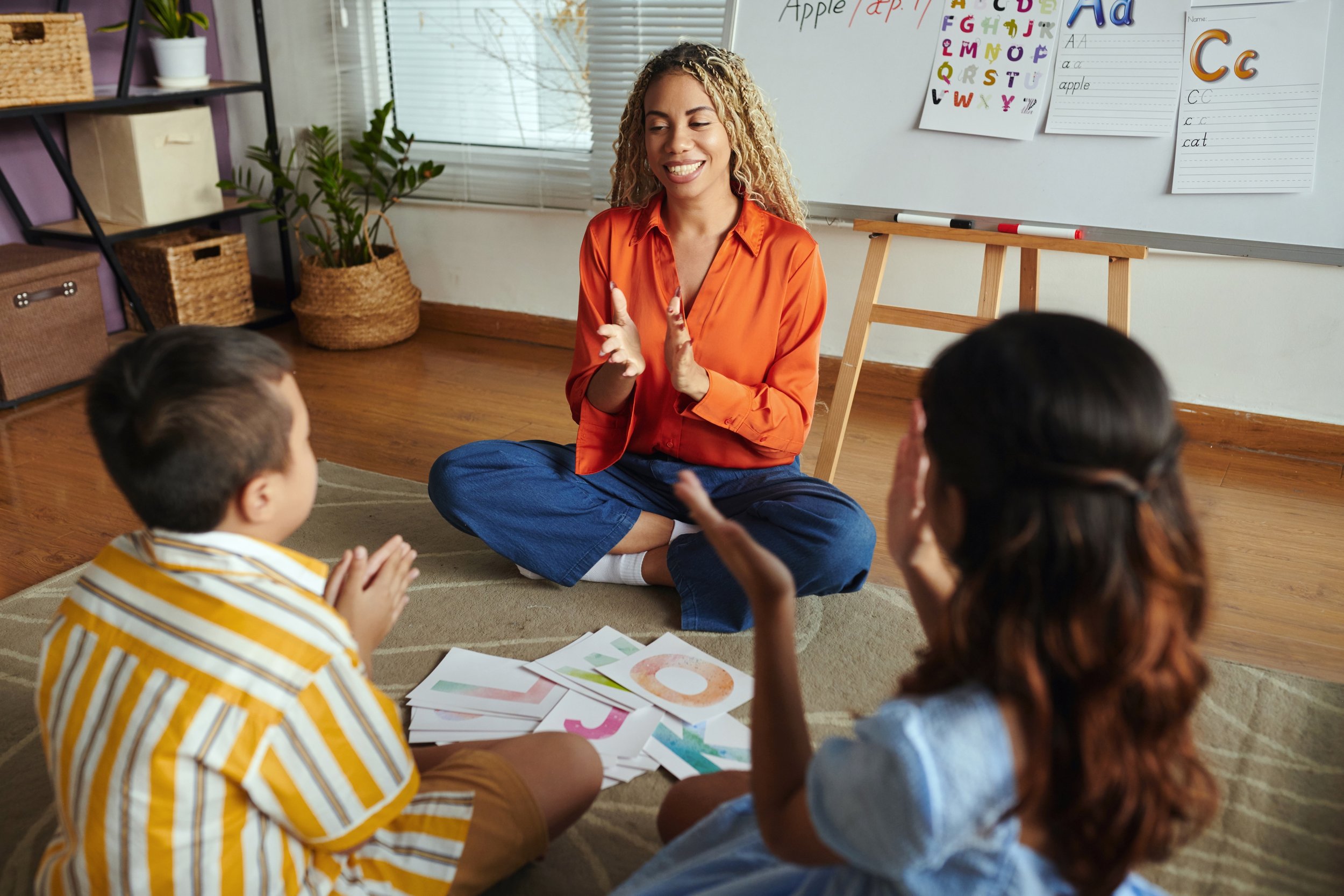
Image by Freepik
(Note this is also a YouTube series you can use in schools, organizations, etc.!)
An often missed topic around the world is educating people about social-emotional skills.
However, it is extremely important.
It could make or break a person’s life by not being intuitive, understanding, and caring.
Some children and adults are taught by spiritual traditions. Others are not. Others are not. I have substitute taught in schools, and know this is important.
Schools should be aware that not everybody has these social-emotional skills. It would be very helpful to educate children, students in college and grad school, and adults of all ages about these concepts.
I will try to help you in this article understand more, and then you can take the necessary steps on your own by googling, networking, etc. for your personal situation or institution.
Typical Emotions:
Joy
Sadness
Anger
Fear
Trust
Shame
Guilt
These are normal. They are human. They are used for our survival, for our communication with each other. They bring people to the Heart so that people can feel each other.
When people just speak with their egoic mind, that creates a push-pull reactional force.
When people speak from their Heart, it creates a bond, an understanding, a caring, a listening, and hopefully, a resolution.
Social-Emotional Intelligence is critical in all settings:
Relationships
Family
Schooling
Professionalism
Occupations
Karmic imprints of saying things you would rather not say, but your body not knowing how to express how it feels to the other person
Accidental incidents due to lack of social-emotional intelligence to communicate your body’s feelings leading to anger, rage, etc.
Here is a really useful video as well about social-emotional learning to get you to understand more how important this is.
For Parents upon Conception of a Child
Children can feel your energies from the start of the sperm in the egg. Especially after 3 months, when they have developed into a more conscious being.
Therefore, watch your language, be conscious of how you talk to each other
Be calm
Play beautiful music
Have conversations that are from the heart, not the mind. Not you’re right or wrong, or to blame; but rather, how do you feel? This opens the heart waves. This opens understanding. This opens possibilities for peace.
For Ages 0–4; At Home or Preschool
Remember your child is kind of like a robot. You program them. Who you are is what they experience and learn from. Continue the above as a parent.
You can start introducing emotions. How do you feel? This will open their heart waves; this will introduce deeper understanding. This will teach them how to communicate in a peaceful way.
Your character matters. Your integrity. Your responsibility. That is who they will become too.
Introduce listening. Caring. How are they feeling? Sad? Happy?
What can you do to help them feel calm and loved?
Massaging, dancing, singing, cuddling, etc. are helpful.
The child may feel more comfortable with the mother at this age range. Mothers are in general more gentle.
Breast-feeding by the mother, not using a bottle, is important. She spreads her love to the child in this way.
For Ages 4–8; Elementary School
Introduce social emotional learning. Introduce emotions and what they are. Something similar to the list above, and you can add or subtract emotions, or do different ones each time.
You can Google or Network to find a proper person to be the one who introduces this subject to the children.
I recommend Talking Circles.
I suggest groups of five children with one adult. That way each child gets a chance to speak. I also suggest a female. As boys might be scared to open up to a man, but would be more amenable to opening up their hearts to a mother-like figure, a female.
The age ranges should be similar so that the little children do not feel overwhelmed by the older children. Probably each grade level is the best option.
I have experience with Talking Circles. Here is my Recommendation; however, feel free to Google or Network and find something that feels right to you or whoever is leading this process.
I would start with a meditation, like five minutes, to get the students grounded in the space.
I then suggest the leader first going over the common emotions that humans experience.
Then I recommend the leader going over the norms for the day: 1) Feeling, 2) Listening, 3) Self-Reflection, 4) No Advice
Then I suggest having the children speak about how they are feeling that day. Allow for silence. Allow for listening.
You can ask gentle questions if you’d like, however, the main point is for them to get used to feeling their heart.
Do not give any advice. Do not have the other children give advice. This is only for listening. Advice can cause all types of problems. You and the other children do not know what this child is going through in totality. It could really offend their hearts. Your advice could be totally off-base. The advice could be judgmental, make everything worse. You would then be involved in their karma for their entire lives. So, just listen with your heart. Be empathetic. Caring. Loving. Kind.
This is only for them to express their emotions and get in this habit of feeling their sensitive heart.
If there is a problem you feel with one of the children, such as abuse in their household, then you will have to get administration involved. Pass it on to somebody else to handle the situation. Don’t get involved. That is not your role.
For Ages 8–12; Elementary to Middle School
These talking circles are really for anybody. It is helpful to get children started early, from 4–8. However, it’s really a life-long endeavor. Even for adults.
I started my journey with social-emotional learning after graduate school when I had a spiritual awakening. Therefore, continue the talking circles recommended above.
The age ranges should be similar so that the little children do not feel overwhelmed by the older children. Probably each grade level is the best option.
For Ages 12–18; Middle School to High School
At this age range, you can make it optional. Some have reached puberty. You do not want children in the space who do not want to be there. They would be a distraction. You want children who are actually interested in these talking circles.
You can also increase the meditation from 5–15 minutes. They are probably ready for 15 minutes. This really helps with getting in tune with their heart, calming down from their lives, which may be stressful, and grounding into the space of care and love.
For Ages 18–22-35; College and Graduate School
Again, have optional talking circles for social-emotional healing and learning.
Not everybody may have received this intelligence while at their elementary, middle, high schools, or colleges; or by their parents; or by any spiritual tradition. Therefore, it can be a really useful program for students at college and graduate school.
Again, this could make or break their life. Feeling, caring, sensitivity, can save their careers. Anger, insensitivity, and ugly behaviors can ruin their careers.
At this age range, you can even have larger groups. You can have three leaders of different genders and races (I highly recommend as the students will be diverse and feel more comfortable with people who look like them and are able to understand their background). You can have around 12 students.
Or you can also do a one leader and five students.
The students can decide which type they prefer.
I have a Poetry of the Heart and Mindfulness Meditation Handbook that also can be useful to guide your sessions. It is available on Amazon in Kindle or Paperback format, or on Academia.edu here that you can print out on your own for free.
For Adults
I recommend all of the above. Some adults may not be used to emotionality. It’s a product of your generation and not speaking from your hearts and emotionality. Be gentle with yourself. The emotions card deck may be useful to you too! Remember, I started learning emotionality after graduate school. It’s nothing to be ashamed of. It will make you a more heart-intelligent person and improve your life, your spirituality, and your communication skills tremendously.
You can have talking circles anywhere; a cafe, a spiritual institution; a library; etc.
If your group is really interested in meditation, you could even increase from 5-15-30 minutes. It’s not a competition, it’s about how you all feel about the experience and if it’s helpful.
I have a Poetry of the Heart and Mindfulness Meditation Handbook that also can be useful to guide your sessions. It is available on Amazon in Kindle or Paperback format, or on Academia.edu here that you can print out on your own for free.
I hope this is helpful to you on your spiritual journey!
With Love,
Ashley Heacock, Researcher, Writer, Mentor, Healer, Guide
MIT Sloan School of Management, MBA
Harvard Kennedy School of Government, MPA
The George Washington University, BA Economics, BA International Affairs
Contact: ashleyheacock@gmail.com
Website: awakeningconsciousness.community