Environmental Course (for children, adults, teens, organizations, companies, governments)
Image by Ashley Heacock on Canva
I have created a course on the environment, climate change, and what is happening to our world.
You can use this in your classroom, community (such as a library), business, or an or organization.
It is free and available to the public. You can print it out to view the photos and take home to your family. It also includes some videos and podcast audios to listen to, which include additional content.
However, if you receive value and have the funds, please consider donating the benefit you accrued so I can share more educational content. My PayPal is: paypal.me/ashleyheacock and my Venmo is Ashley-Heacock
Table of Contents:
1) Introduction to What is Happening Environmentally
2) Evolution Series to Get You Connected to The Earth
3) Solutions for How to Help
4) Financial Benefits of Protecting the Earth
5) Your Commitment
Let’s Begin!
1) Introduction to What is Happening Environmentally
Image by Ashley Heacock on Canva
Protecting Our Environment _ Presentation for Children or Adults about Climate Change and the Survival of our Species on Earth
(*Note 1: This is made for children. It may still be interesting and educational for you. Consider giving presentations at schools if you’re an adult. These slides can be useful. You can also get creative and make it your own. Children are crucial. We need to educate them now!)
(*Note 2: You can print out and read through this article and look at the photos at the same time. You can bring it home and share it with your family and friends. Note that there are also videos and podcast audios with additional content to view and listen to.)
To begin, climate change is a serious topic. It is especially important for children to learn about. They are our future! We need plants, animals, oxygen to survive. Their lives are in danger. We need to act now! I’m hoping this presentation will spur the action necessary to save our One Precious Earth!
Here is the beginning video. It is made for children, but adults may also enjoy viewing it too.
You can view this video on YouTube: https://www.youtube.com/watch?v=2jzV4PepBe0. You can also view it on Canva and scroll through the slides at your own pace: https://canva.link/topinlnzi8lczu4
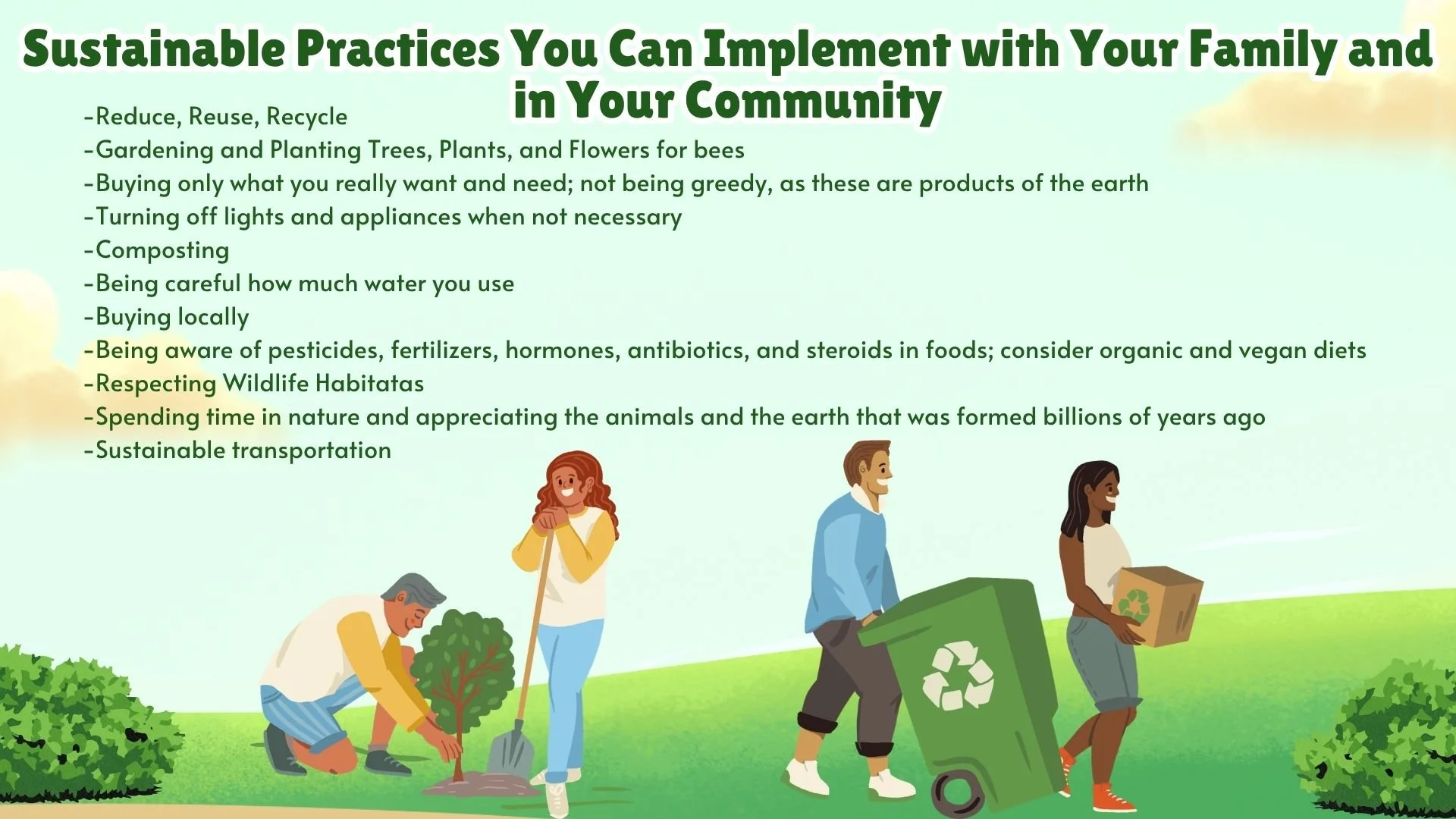
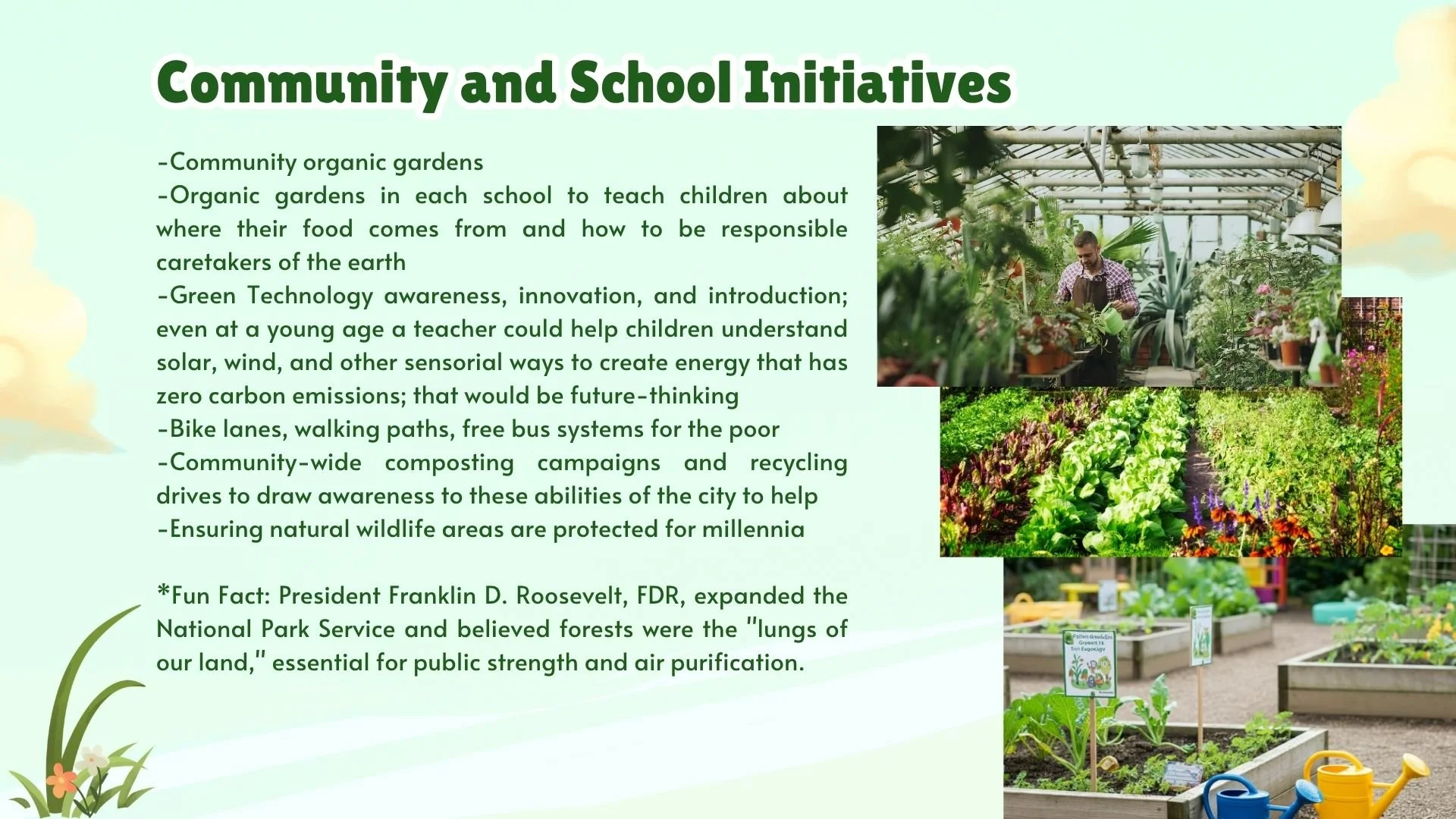
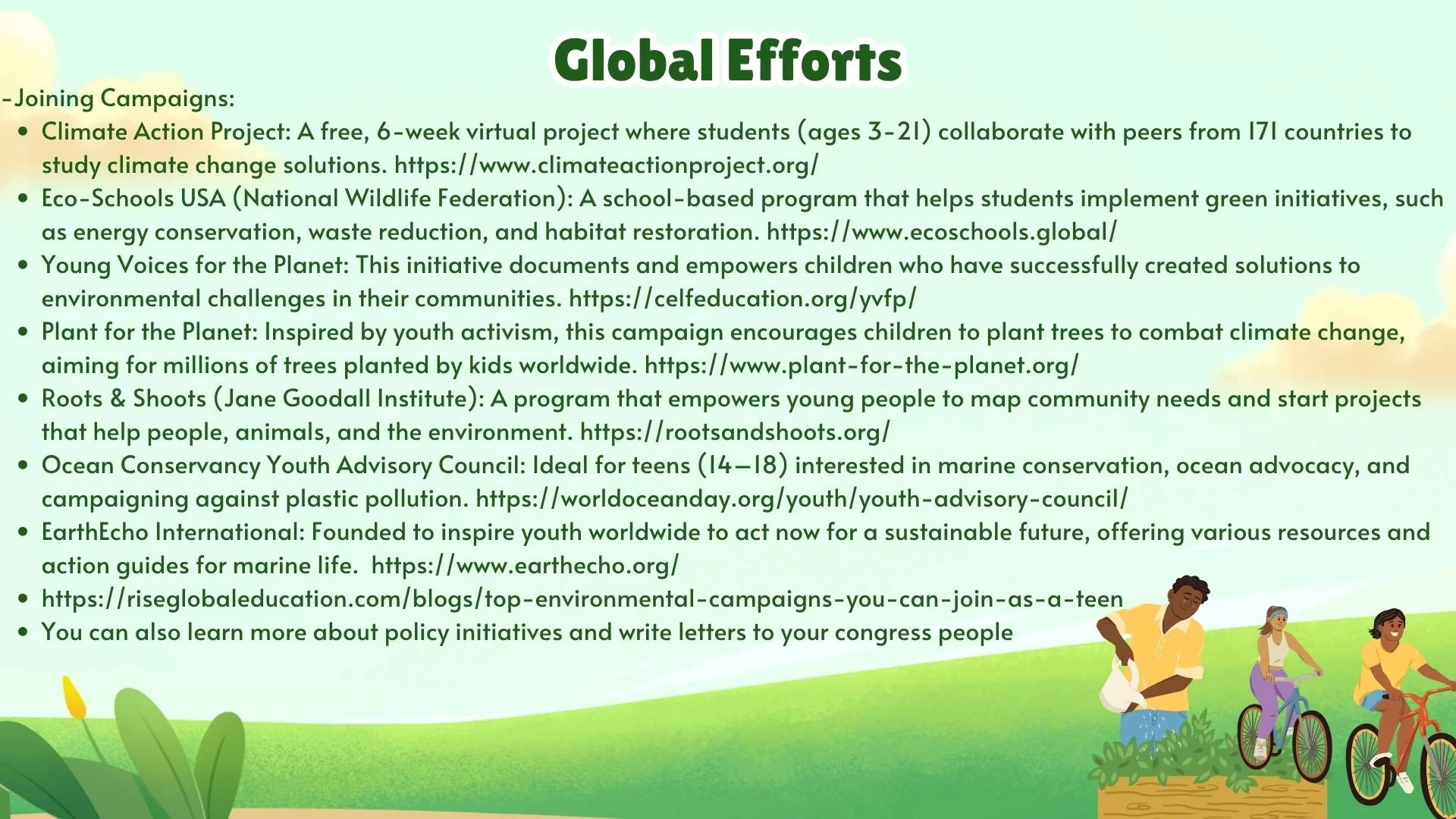
You can print it out for children to use. It contains three activities for them. They can also take their own notes throughout if there is blank space at the bottom of the pages.
The children can take the printout home and share it with their family and friends, and that can spread the movement of change towards caring for our One Precious Earth even more!
Other articles for Adults on the Challenges and Problems we face due to climate change:
Articles:
An Illustration of The Effects of Toxic Pollutants on You and Your Family and Our Precious Planet
A New Global Oneness-Social-Ecological Theory
5-Part Series on Our Circular Economy
An Illustration of The Effects of Toxic Pollutants on You and Your Family and Our Precious Planet
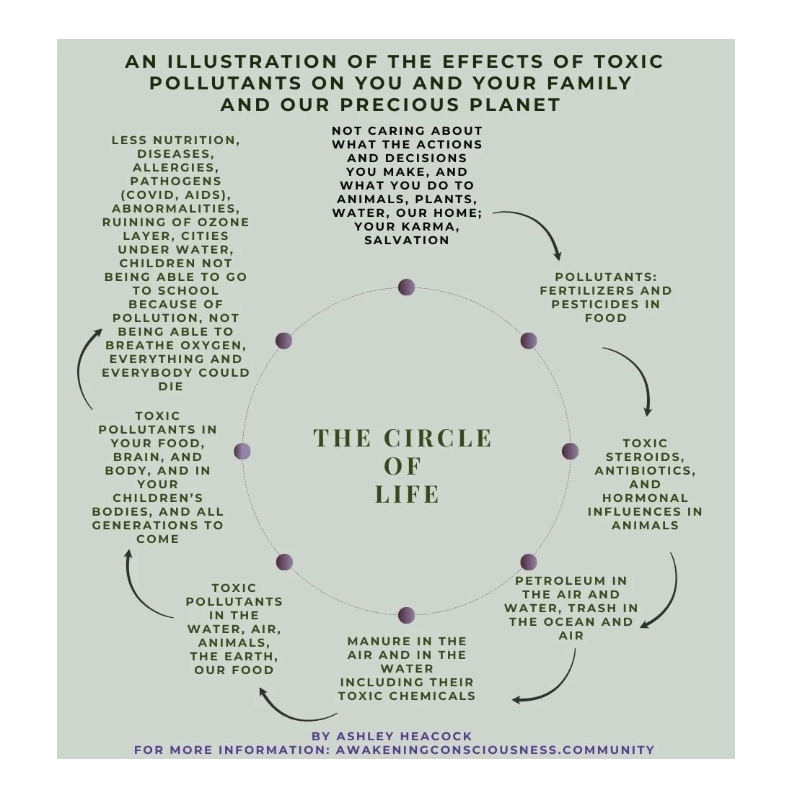
Image by Made by Ashley Heacock on Canva
A diagram that may be helpful for your understanding
Here is a short 13-minute YouTube video I made with a description of this chart:
Here is also a podcast version on Apple Podcasts, The Circle of Life, on my Awakening Consciousness channel.
Here is also a written description of the audio:
Okay, hello all. I am here to demonstrate an illustration of the effects of toxic pollutants on you and your family and our precious planet. So, our precious planet, we have tons of animals, plants, rainforests. It’s a really special planet if you think about it. You know, the birds, the bees, the flowers, the trees, it’s really sacred. And we are here to take care of her, of these species, of this earth. But right now we’re doing the opposite, right?
So if you can see in this diagram, currently we’re not caring about the actions and decisions we make. And what we do to animals, planets, water, our home, this is our home. And this is also about our karma, your karma, your salvation. Because what you do matters, it’s all calculated in the universe. It’s calculated by God, you can read the Bible, you can learn about Hinduism. All of this is calculated, it’s like a karmic score that you get. Read more about this here:
So if you harm animals, if you harm people, if you harm the water, it goes against your karma score. And you can end up in really negative places.
And so currently we have been governed by patriarchy, misogyny, egotism, greed, Satanism. That is why we have the world that we have right now. It’s filled with corruption and prostituted politicians. Democracy is not working. They’re selling themselves to the petroleum industry, to the McDonald’s cow industry, the factory farms, which are evil, cruel, awful, terrible.
The FDA isn’t caring, the EPA isn’t doing anything, the United Nations is not taking any actions.
Children in Pakistan right now cannot go to school, because the pollution from India, from the factories there that are making products for people in America, the pollution is spreading to Pakistan and so they can’t go to school, because the toxic pollution is so suffocating.
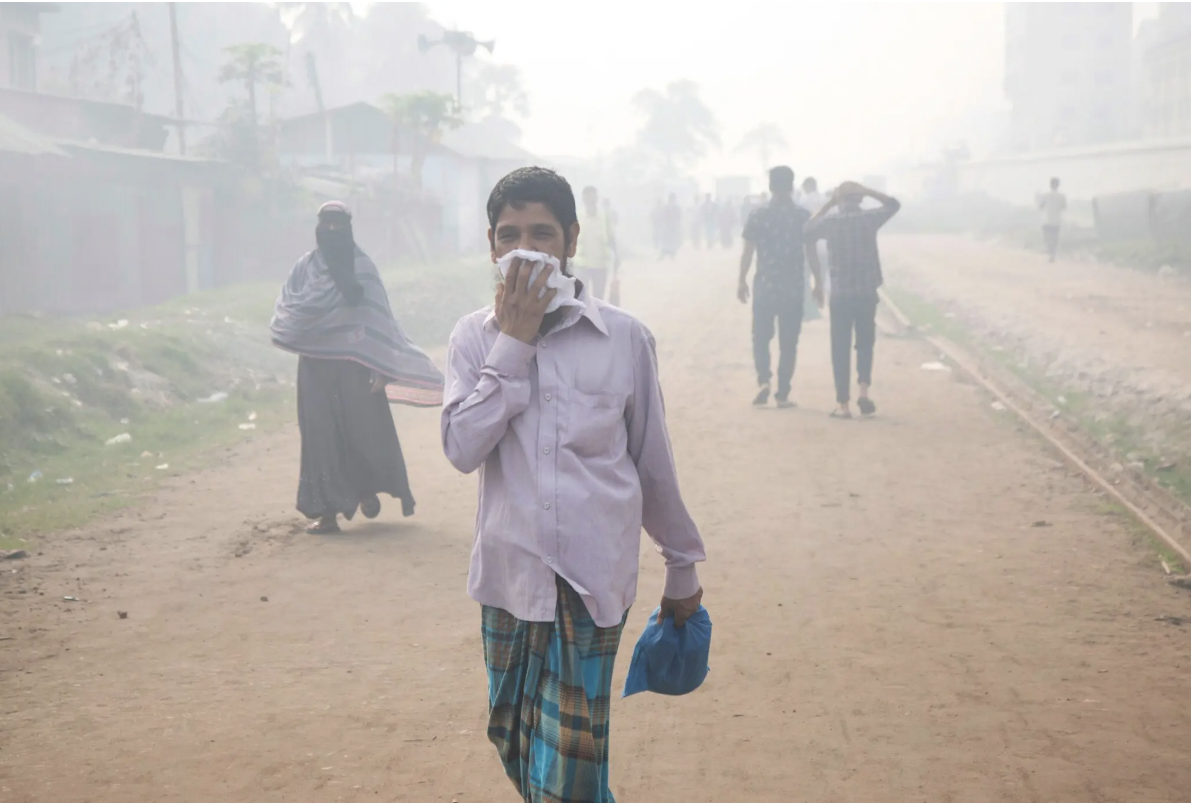
Pakistan could have birth defects. Their entire plants, animals, and forests could die. Pakistan as a country could just entirely die. So this is real.
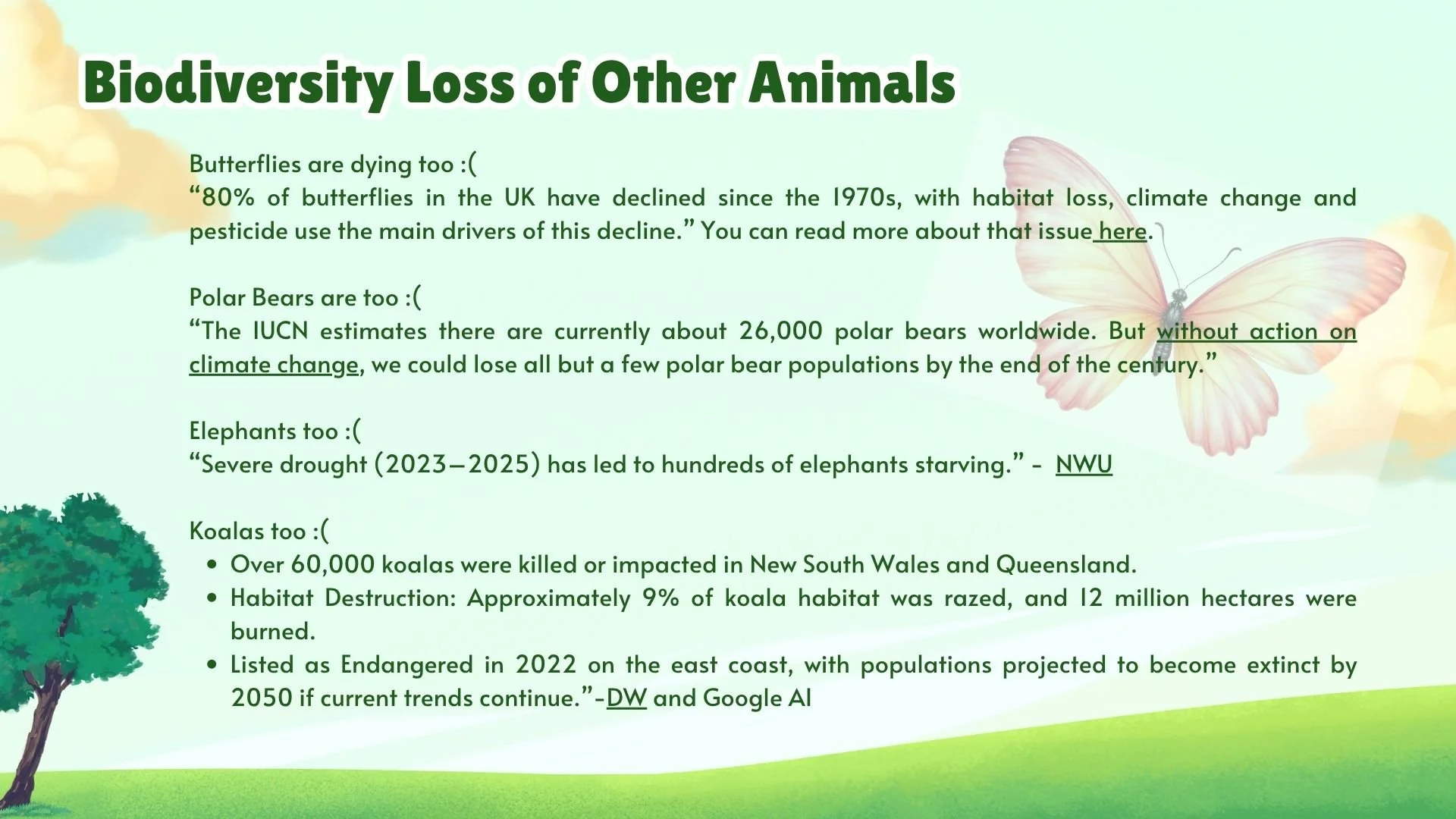
And butterflies are dying too :(
You can read about that issue here. I have many articles on Medium, on my website awakeningconsciousness.community about all of these problematic issues. This is an environmental emergency.
You can learn about how The Guardian has said that the Amazon is now emitting more carbon than emitting oxygen. So we’re dying, the earth is dying, we are dying.
You can read more about that in my article here:
And so that’s why I wanted to create this illustration to show you what is happening. Illustrations can sometimes be helpful.
Image by Ashley Heacock
So if you don’t care, if we don’t care, if we’re in this masculine patriarchy that does not really care about beauty, animals, plants and species, they just care about their own egos and getting elected, then we will have a problem, right?
So we need people who care, we need Wisdom Leaders, we need people who understand the Circle of Life.
The Circle of Life:
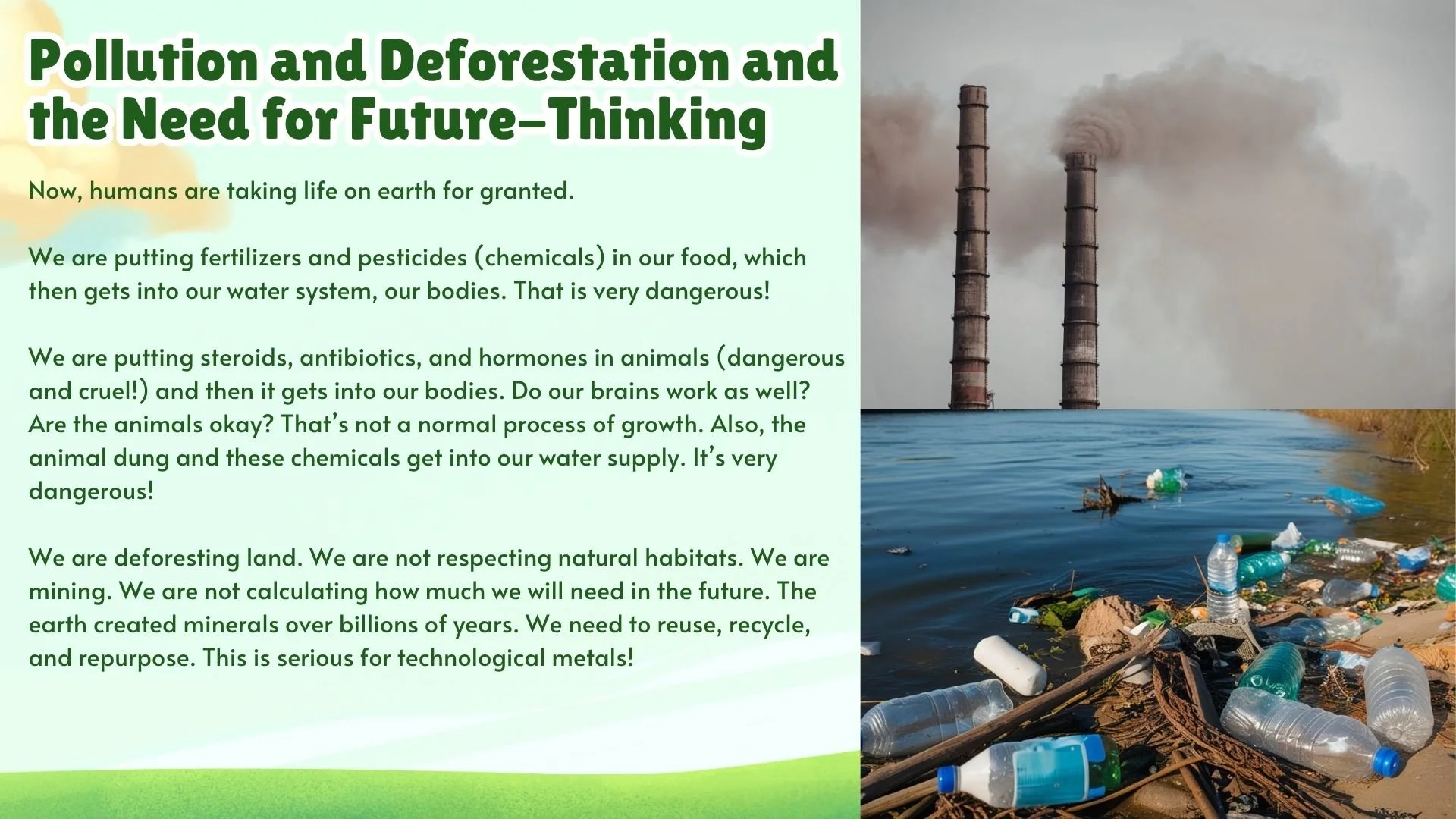
If you put pollutants like fertilizers and pesticides in food, then you’re going to eat that. You’re going to eat the chemicals. Does that make sense to anybody? You should be like, wow, eww, disgusting. That’s bad for one’s health!
We also have these factory farms. They’re putting steroids, antibiotics and hormonal influences in animals and then you eat that. And so that’s in your body. Do you think that’s healthy? No. I feel like puking right now. How about you?
So then we have the petroleum industry and it’s in the air and it’s in the water. You can also read in my articles and in this online news source about acidity in the ocean. People are putting trash in the ocean. It’s kind of ridiculous, it doesn’t make any sense.
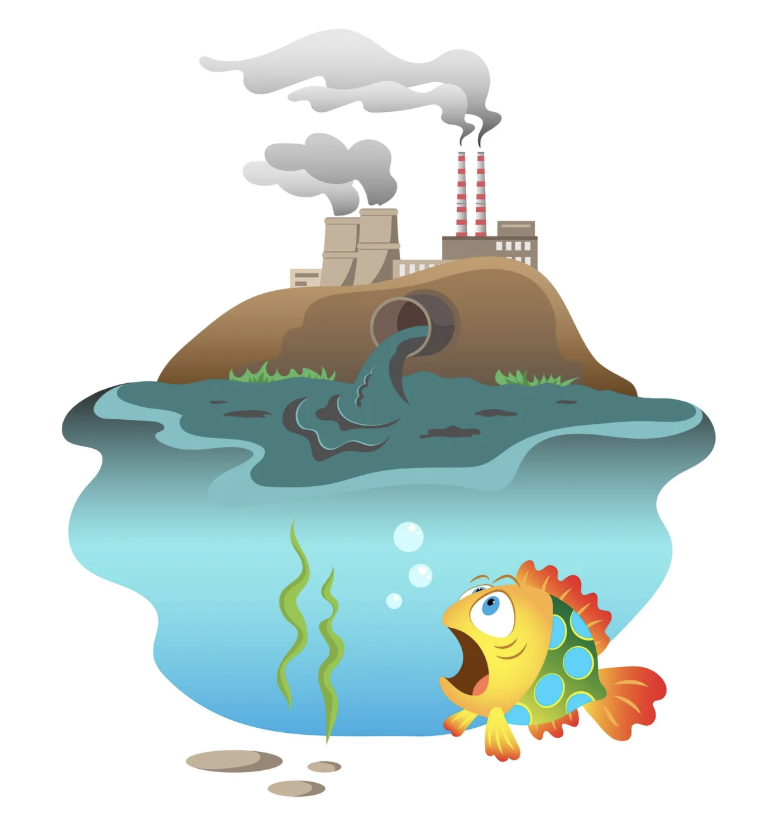
Image by Freepik
So we really need a global effort to help people understand basically the stupidity of what we’re doing.
The manure, the petroleum, all of these toxins they can get in the air and the water, they get in the animals, in the earth, in our food. And then they get in us, they get in our bodies, they get in our brains, and they get in our children, they get in generations to come. We could have massive birth defects. Does that make sense what we’re doing? No. It’s stupid. We’re literally killing ourselves.
So this leads to less nutrition, diseases, allergies, cancer. Some of you may know there’s just allergies everywhere, right? Soccer Mom and Dads know: “My child has an allergy to this, my child has an allergy to that.” What do you bring to the soccer games for snacks? GMOs (Genetically Modified Organisms) are part of this allergy problem as well.
We also have pathogens everywhere. We had COVID because the markets in a lot of these developing countries, like where I’m living in Peru, and I’ve also lived in a village in West Africa, and it’s also in China. They just put these animals out in the air without any refrigeration. That’s a pathogenic disaster zone. The World Health Organization should be taking a Preventative Action Effort along with the UN and other countries who are able to. You can read my article about this issue here.
And so these developing country markets without animal refrigeration are how we get STDs, we get COVID, how we get all of these germs that travel through the air, through planes, through money, through everything. Do you really think we could not get another disease eventually? Actually it’s a probability if we do not take Preventative Action.
And so we could end up with really terrible diseases. We could end up with abnormalities in birds, really sick children because of pollution. I would caution about having children in Asia right now.
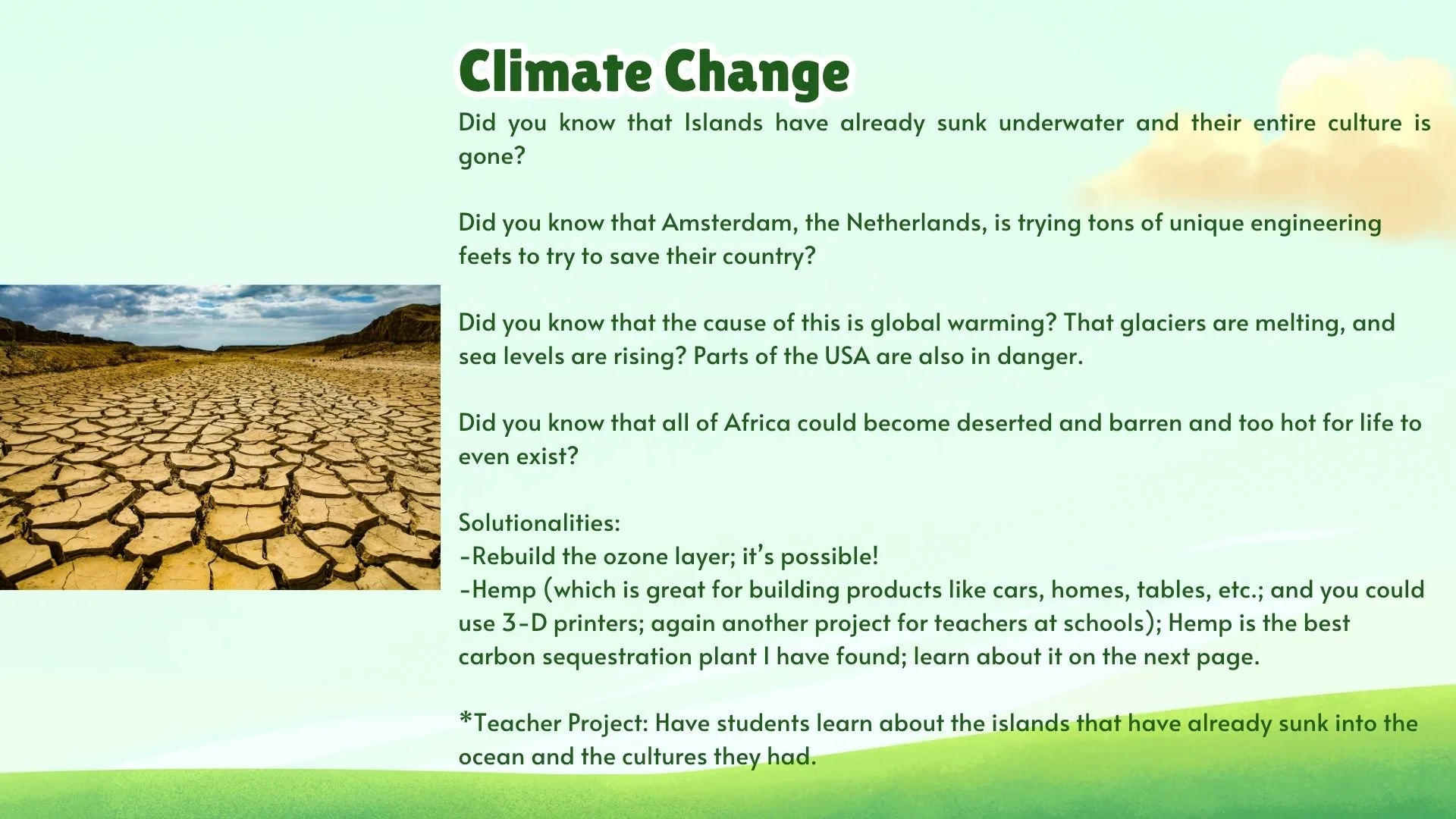
We’re ruining the ozone layer, and so glaciers are melting, indigenous islands have been completely vanished underwater. Some cities are going underwater, Miami has this issue, Amsterdam is trying to create solutions. I’m thinking of Venice canals everywhere to try to help this issue.
I mentioned another effect of this is children not being able to go to school because of pollution. And a huge problem is, so the consumption rates in America and Europe are extremely high because they’re extremely wealthy. However, all of the products are being made in Asia, so Asia is experiencing tons of pollution, tons of awful side effects. While Americans and Europeans might not be aware because the industries are in Asia where all these pollutants are.
You or I or We consume in America, in Europe, and you think everything’s fine when actually it’s not. You’re hurting the Asians who are producing these goods. Additionally, since the Water Cycle is One, we could end up dying too.
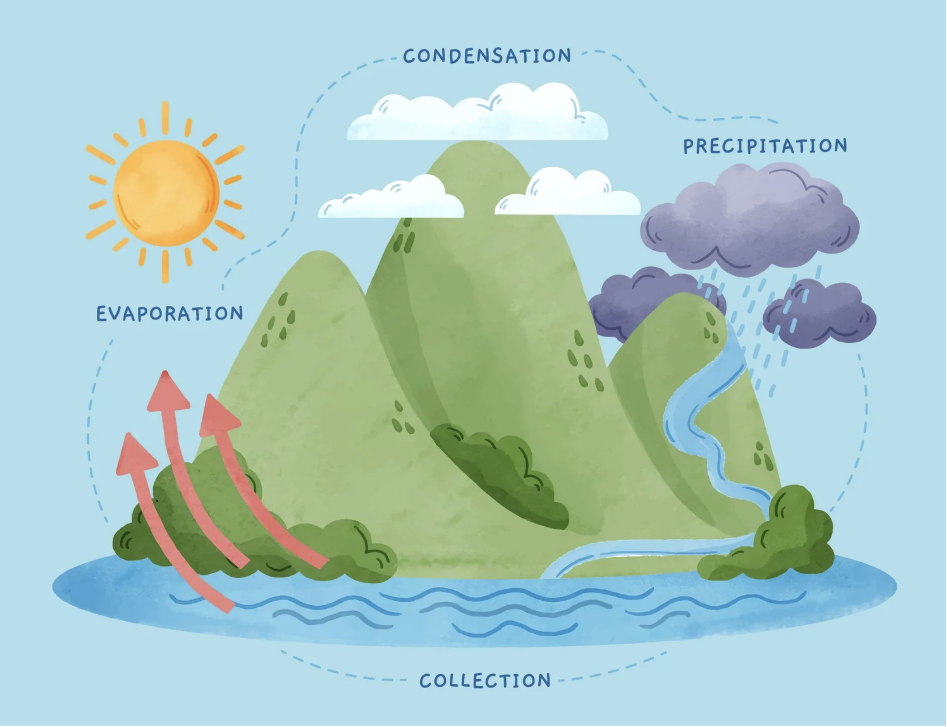
Image by Freepik
So we need green technology. We need sensorial technologies, solar technologies, wind technologies, quantum technologies. We need people who are really creative so that these products are made with zero carbon emissions.
We might not be able to breathe oxygen as I told you. The Amazon rainforest is dying. This means we’re putting too many pollutants into the air for the earth to process adequately so we can breathe. So we may die.
Another problem is there’s so many people who are being birthed. We need family planning practices, birth control awareness, contraception, Plan B.
There’s a lot of people on this planet. People are getting richer, and then there’s just going to be more consumption, more pollution. So we need green technology. We need gardens; trees planted; hemp plants that are carbon absorbers; and organic, sustainable farms. We need ratios of people and plants. And more ratios, more ratios, more ratios (if you’re a scientist).
Everything and everybody could die because of how stupid these practices are.
Hopefully some people have gotten this. This is The Circle of Life. The indigenous people, the Lakota Sioux, are a very different culture. I’m from South Dakota. I have indigenous blood in me. The Lakota know about the proper way to treat the environment. It’s about the animals. It’s about the plants. It’s about the water. It’s about the land.
If we take care of the plants and the animals and the water and the land, then we take care of ourselves.
We need a totally new consciousness. Organic, sustainable farms; green technologies.
We need Wisdom Leaders. We need people who get it to help explain to those who are less educated what is happening. So if you have any comments, any questions, any insights, any solutions, please contact me. I’m here to help. My email is ashleyhecock at gmail.com.
About Me:
I’m from South Dakota. I went to the George Washington University. I received a dual BA in International Affairs and Economics. I went to MIT Sloan School of Management and received an MBA. I went to Harvard Kennedy School and received an MPA in Public Affairs. I’m quite educated, right? However, a lot of people are not. So anybody who can help explain this diagram to others, I think we all would be grateful.
We don’t want to die or have abnormal children. This is obviously not a good thing. It’s karmically negative. The Bible says that we are here to be stewards of the earth. And currently we are not being good stewards.
Jeremiah 2:7
And I brought you into a plentiful land to enjoy its fruits and its good things. But when you came in, you defiled my land and made my heritage an abomination.
We are being really cruel, really unkind to life. Hopefully this helps you understand a little bit more. If you already understand it, that’s great.Please try to help. If you’re just learning, that’s okay. Please try to spread the word in whatever way you can. Take a leadership position. Do any tiny or large effort to help. Alright, that’s all for now. Good day to you.
Many blessings and prayers sent your way and to all of the animals, ancestors, and beings of this Earth and Universe.
A New Global Oneness Social-Ecological-Economic Theory

Sharing, Caring, and Helping a World in Need; Image by Freepik
I have been a student of political economy for awhile. For instance, I wrote these two papers while a graduate student at the Massachusetts Institute of Technology. You may be interested to read them:
There have been many insightful philosophers over the centuries. However, recently as I’ve been re-reading my articles, I noticed that they do not include the earth (ecological interests), and they also have a tilt towards self-interest rather than collective interest.
We now live in a world where the 1–10% own most of the wealth.
A UBS Global Wealth Report found that in 2023, the world’s richest 1% owned around 47.5% all the wealth. Meanwhile, adults with less than $10,000 make up nearly 40% of the world’s population and only hold less than 1% of the wealth. Quite a drastic difference.
Yet there is deep poverty, starvation, and unclean conditions in the developing world.
Where is the United Nations (UN)? Where is the World Health Organization (WHO)? What are they doing to help?
Could there be a partnership with The Giving Pledge (The Giving Pledge is a promise by the world’s wealthiest philanthropists to give the majority of their wealth to charitable causes in their lifetime or wills)?
Could they unite their funds to help with:
Starvation, nutrition, malnutrition, anemia — Could we create a yummy nutritional bar that includes all the essential nutrients a person would need for the day, with all the vitamins, amino acids, etc. that are essential? Do you have other ideas?
Unclean markets causing COVID, and could cause other diseases, including STDs (AIDs/HIV) for everyone around the world — Could we create a hemp-based (biodegradable instead of plastic), solar-generated (carbon-neutral) product that refrigerates animal products so they do not create pathogenic disasters for the world?
Unclean bathrooms. I lived in Mali in the Peace Corps and they need sanitary compostable toilets. They get many diseases, like Giardia, due to unclean bathroom facilities.—I found this organization in South Africa that may be able to help — Eviro Loo — why not just give these out to the poor so we can prevent diseases for everyone?
Toxic fertilizers and pesticides, and manure filled with hormones, steroids, and antibiotics that gets into the water, which then infects us all, since Water is One. Why did Tony Robbins, who was on a pescatarian diet almost die? Mercury poisoning due to agricultural runoff.— Let’s educate people about organic, sustainable, compassionate farming. Let’s educate people about how you can change to a vegan diet and be healthy. It’s about the proper nutritional guidance. My mother, for instance, eats a lot of red meat, but had anemia and took iron pills. I have been researching anemia in Peru, where it is stunting children and adult’s growth and educational development. You can read about a proper vegan diet here (and I am open to other suggestions, if you also have recommendations).
It seems like this may be a good idea for everyone. We live in a world where all is One. This is a very serious situation. Acidity levels are increasing. Children in Pakistan cannot go to school because of pollution. All of these toxins and pollutants are affecting animal life and your lives too.
We are literally poisoning our own lives, these incredibly unique animals, and our precious earth, our home, that was created over millions of years. You can read more in my article below about the Circle of Life.
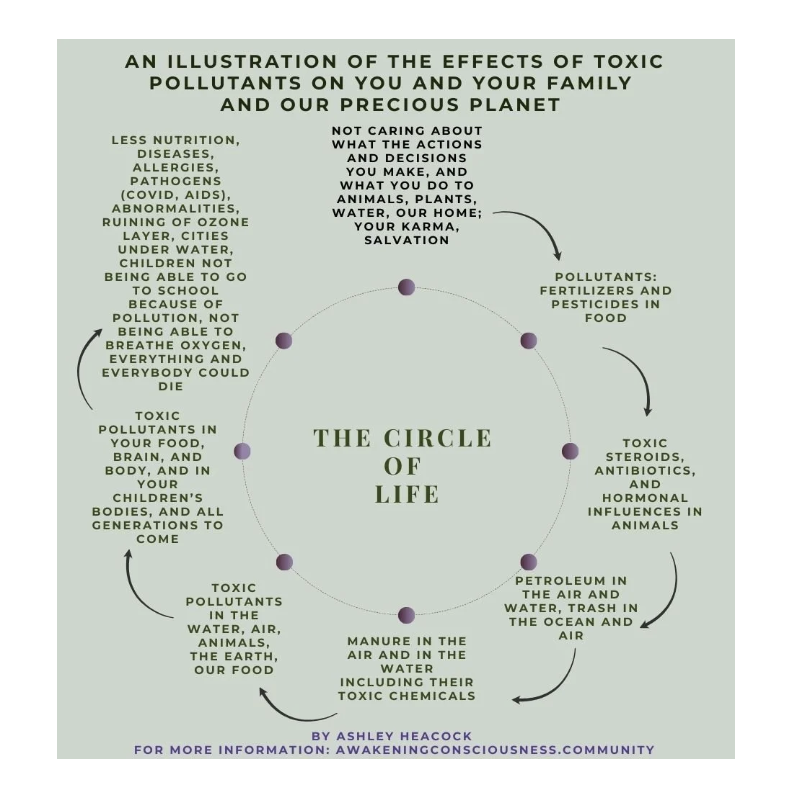
Image by Ashley Heacock using Canva
Also, these philosophers, if you’ve studied The Tragedy of the Commons, bend towards self-interest. This would make sense in a world of scarcity. However, we now have the opportunity to live in a world of non-scarcity. We can distribute this massive wealth of the 1–10% and give to those who are in need.
Then we would live in a world of non-scarcity, and we would not assume self-interest, but collective-interest. Global Oneness.
This is also related to reparations.
Europe colonized many countries, but left them with distorted situations. They changed their cultures. They changed their living conditions. They need a lot of help to be more cleanly and understand proper nutrition. For instance, I live in Peru. The market is filled with pathogens that could be similar to a COVID or STD experience for everyone.
This is also about our souls. What Europeans did to people for instance in Latin America and Africa was awful. It was genocide. They killed, they spread diseases that led to mass deaths. They did not care about the indigenous cultural traditions. This is in your karma, your soul. Distributing the wealth to those who were barbarically murdered, abused, and used, would help with the karmic situation in the world.
Why has the world not taken preventative action against these problems? Do the UN and WHO need to be organized better? Do they need more resources? Why are children starving?
You can read my article below on experiencing a pathogenic market first-hand. It is a dangerous situation in developing countries around the world.
Experience a Pathogenic Market First-Hand
So instead of self-interest, selfishness, and not sharing with each other, I recommend we change our consciousness to sharing, caring, and helping each other out.
We live in a World that is One.
Poverty and disease can affect everybody around the world. We have an opportunity to live in a world of Non-Scarcity, to be clean, non-anxious, and feel good that people are safe, happy, and healthy. This would also prevent war.
So distributing the wealth of the 1–10% seems like a simple solution to this Global Crisis. Don’t you think? Feel? Sense the same?
~
Gratitude Meditation:
I offer my gratitude for the blessing of this earth I have been given.
I offer my gratitude for the measure of safety I have been given.
I offer my gratitude for the measure of health I have been given.
I offer my gratitude for the family and friends I have been given.
I offer my gratitude for the community and environment I have been given.
I offer my gratitude for the teachings and lessons I have been given.
I offer my gratitude for the personality and talents I have been given.
I offer my gratitude for the life I have been given.
*This all may be a lot of information for you to digest. Or you may be curious and want to learn more. Feel into your body and what is right for you. I have included my 5-Part Series on Our Circular Economy below with links that you can click on to understand more about what is going on in the world regarding climate change.
Our Circular Eco Economy 5-Part Series:
Our Circular Eco Economy (I)
Our Circular Eco Economy (II)
Our Circular Eco Economy (III)
Our Circular Eco Economy (IV)
Our CircularEco Economy (V)
Next Chapter on the Evolution on Oxygen, Animals, and Us! Wow!
2) Evolution Series to Get You Connected to The Earth
What is Life? (Evolution Series Part I)
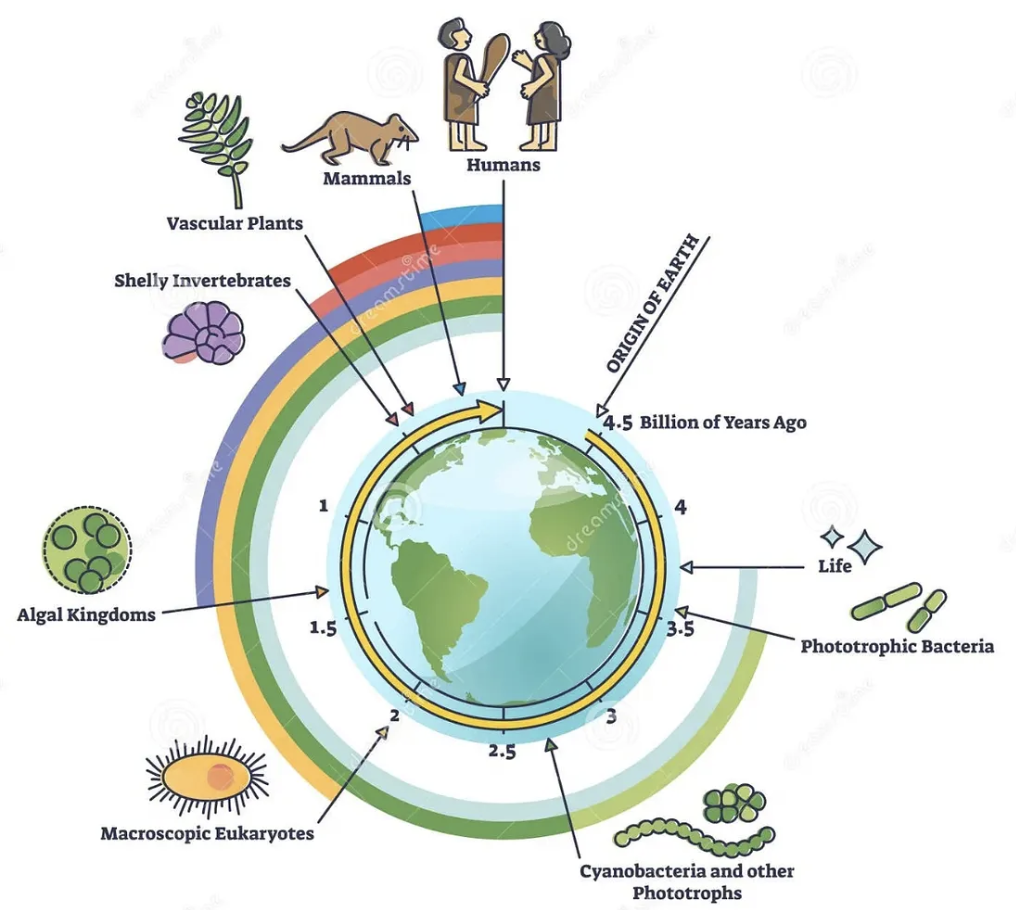
Did you know cyanobacteria and sponges were the start of oxygen and life on earth?
Image from Dreamtime
(You can also listen to this on Apple Podcasts here! You can listen and read through and look at the photos at the same time. Just print out this entire article.)
A friend and I awhile back had conversations about What is Life?
Recently, I was thinking about how parrots can speak like humans, and chimpanzees and bonobos can communicate well with humans, and have immense learning abilities.
I then began researching our genetic similarities. I knew we were like 99% similar to apes, but I had no idea that our genes are also similar to plant species. Perhaps you did? Organic and inorganic, as they are called in the research literature, are different.
“No, humans do not share genes with metal; metals are inorganic elements and lack the genetic material necessary to possess genes, while humans (and all living organisms) have DNA which contains genes that code for specific traits.” — Google AI
However, we share DNA with bananas! 60%
You may already know, but there is a new Google AI function where you just put in a question and it populates an answer from all over the web. So this is what I learned from my searching about gene similarity to homo sapiens in animal species:
Gene Similarity
99%
Bonobos
98.9%
Chimpanzees
98%
Pigs
90%
Cats
85%
Mice
80%
Whales
80%
Cows
75%
Chickens
70%
Sea Sponges
60–75%
Flies
60%
Banana Trees
20–60%
Plant species
“Humans and plants share a significant amount of genetic similarity, with humans sharing 20–60% of their genes with plants, depending on the species. This is because all living things share DNA, which is made up of the same four bases (A, T, C, and G) that code for amino acids, which form proteins.” — Google AI
Also, I’ve been researching the Evolution of Life.
Here is some really interesting research from the National Museum of Natural History at the Smithsonian.
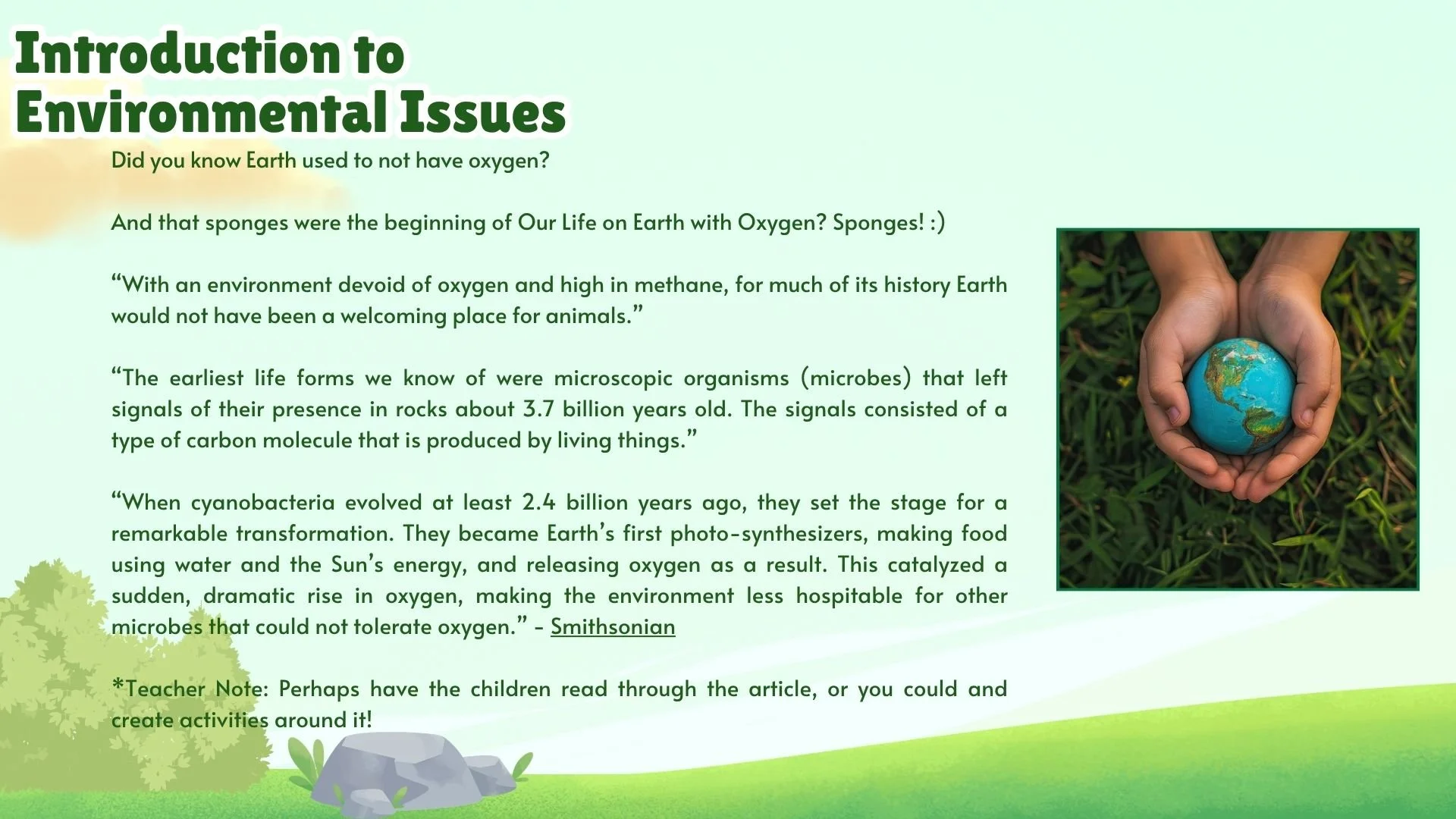
Did you know Earth used to not have oxygen?
And that sponges were the beginning of Our Life on Earth with Oxygen? Sponges! :)
“With an environment devoid of oxygen and high in methane, for much of its history Earth would not have been a welcoming place for animals. The earliest life forms we know of were microscopic organisms (microbes) that left signals of their presence in rocks about 3.7 billion years old. The signals consisted of a type of carbon molecule that is produced by living things.”
“When cyanobacteria evolved at least 2.4 billion years ago, they set the stage for a remarkable transformation. They became Earth’s first photo-synthesizers, making food using water and the Sun’s energy, and releasing oxygen as a result. This catalyzed a sudden, dramatic rise in oxygen, making the environment less hospitable for other microbes that could not tolerate oxygen.”
I’m going to diverge from this article for awhile to address an important point to make for the future of life on earth in the ocean.
Phytoplankton may be an answer to cleaning up our ocean’s mess that homo sapiens created by putting trash and petroleum and all sorts of other ugly stuff from the rain cycle, fertilizers, pesticides, hormones, antibiotics, coal, etc.
I quote:
“Ocean acidification refers to the drop in pH levels in seawater, which were on average 8.2 in the pre-industrial era. Since then, it has declined by 0.1 units. While this appears minute, because the pH scale is logarithmic, this actually represents a 30 per cent increase in acidity. Mid-range projections for 2100 is that ocean pH could decline by 0.3 to 0.4 units. This would be devastating for ocean biodiversity. As a comparison, a drop in blood pH in humans by 0.2–0.3 units could cause seizures, comas and even death.” — Eco-Business
While researching phytoplankton online, they are the major source of oxygen and reduction of carbon. They could be life savers of many animals and homo sapiens alike!
Phytoplankton to reduce acidity and increase O2 and decrease CO2:
“Oxygen production: They are responsible for producing as much as half of the Earth’s atmospheric oxygen, making them vital for all life that breathes.
Carbon cycle: Through photosynthesis, phytoplankton absorb large amounts of carbon dioxide from the atmosphere and are a key component of the ocean’s biological pump, which stores carbon in the deep ocean.Human dependence: A healthy phytoplankton population is critical for global fisheries, which provides a major food source for humans.
Ecosystem health: A decline in phytoplankton can have cascading negative effects on the entire marine ecosystem, from the smallest creatures to the largest, and can impact global climate stability. — Google AI
Yes, phytoplankton can help with ocean acidity through photosynthesis by consuming carbon dioxide, which lowers acidity in surface waters. However, their impact is complex because some species, like coccolithophores, can temporarily increase acidity in localized areas by using carbonate ions to build shells.
As ocean acidification continues, the composition of phytoplankton communities is expected to change, which could have significant consequences for the marine food web and the ocean’s ability to absorb carbon dioxide.”— Google AI
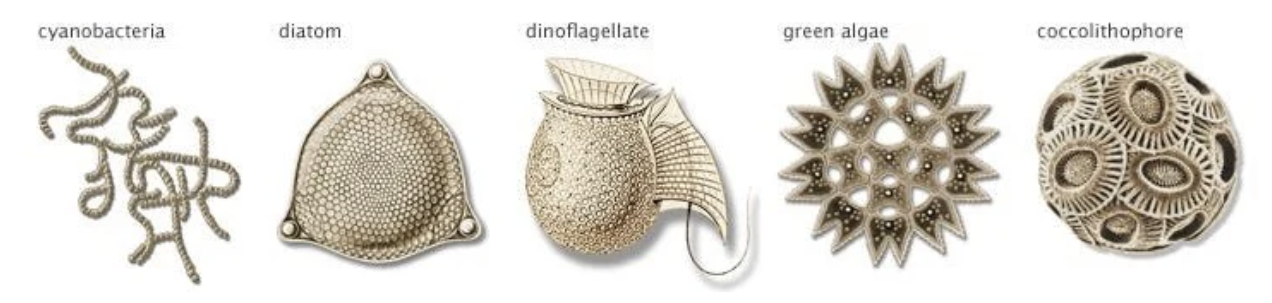
Phytoplankton VI?…do you think these Five are the basis of Life Itself? Source: https://earthobservatory.nasa.gov/features/Phytoplankton
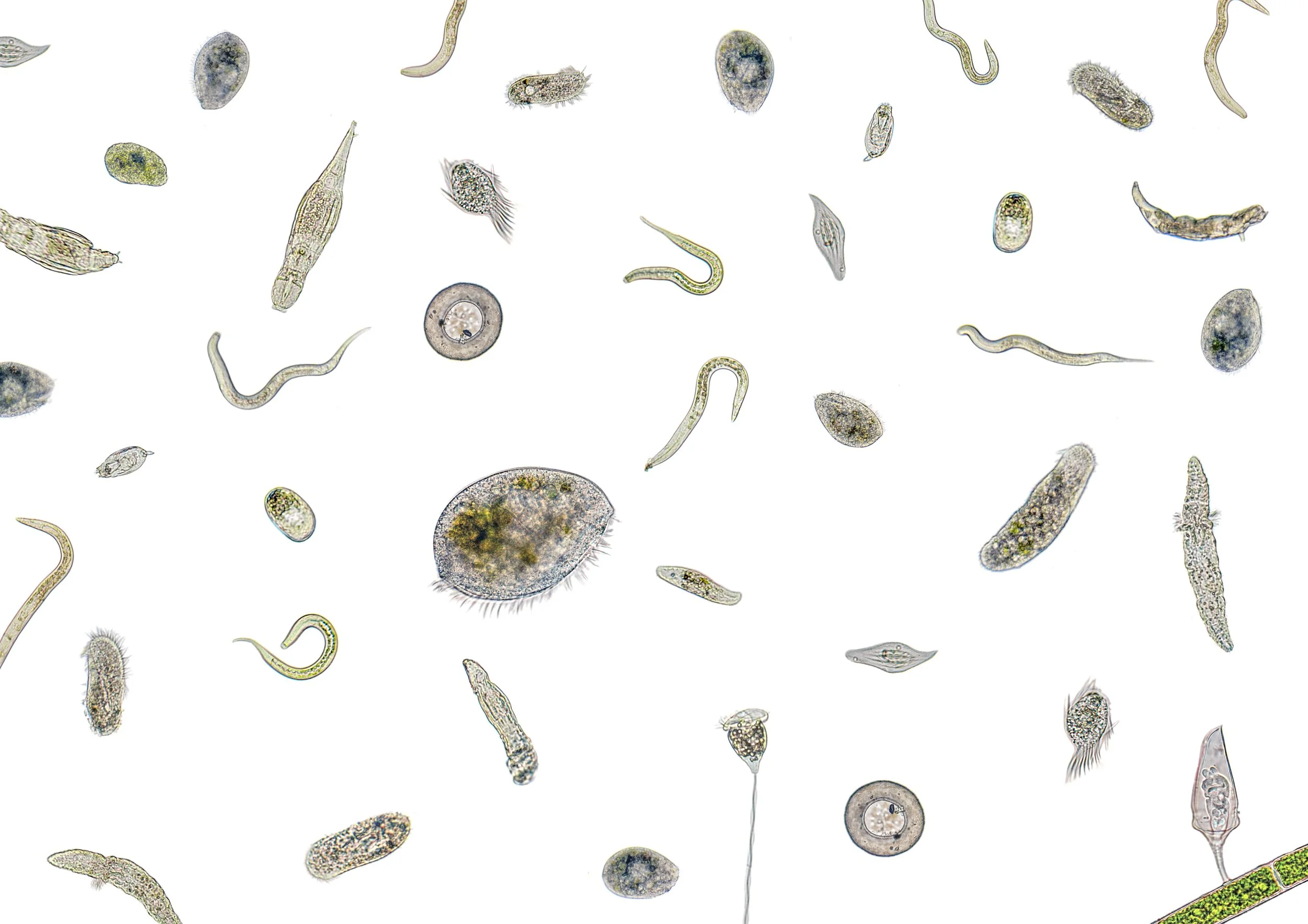
Phytoplankton VII?…more diversity or something? I’m not a scientist, just a curious person about how life began! Image by Freepik
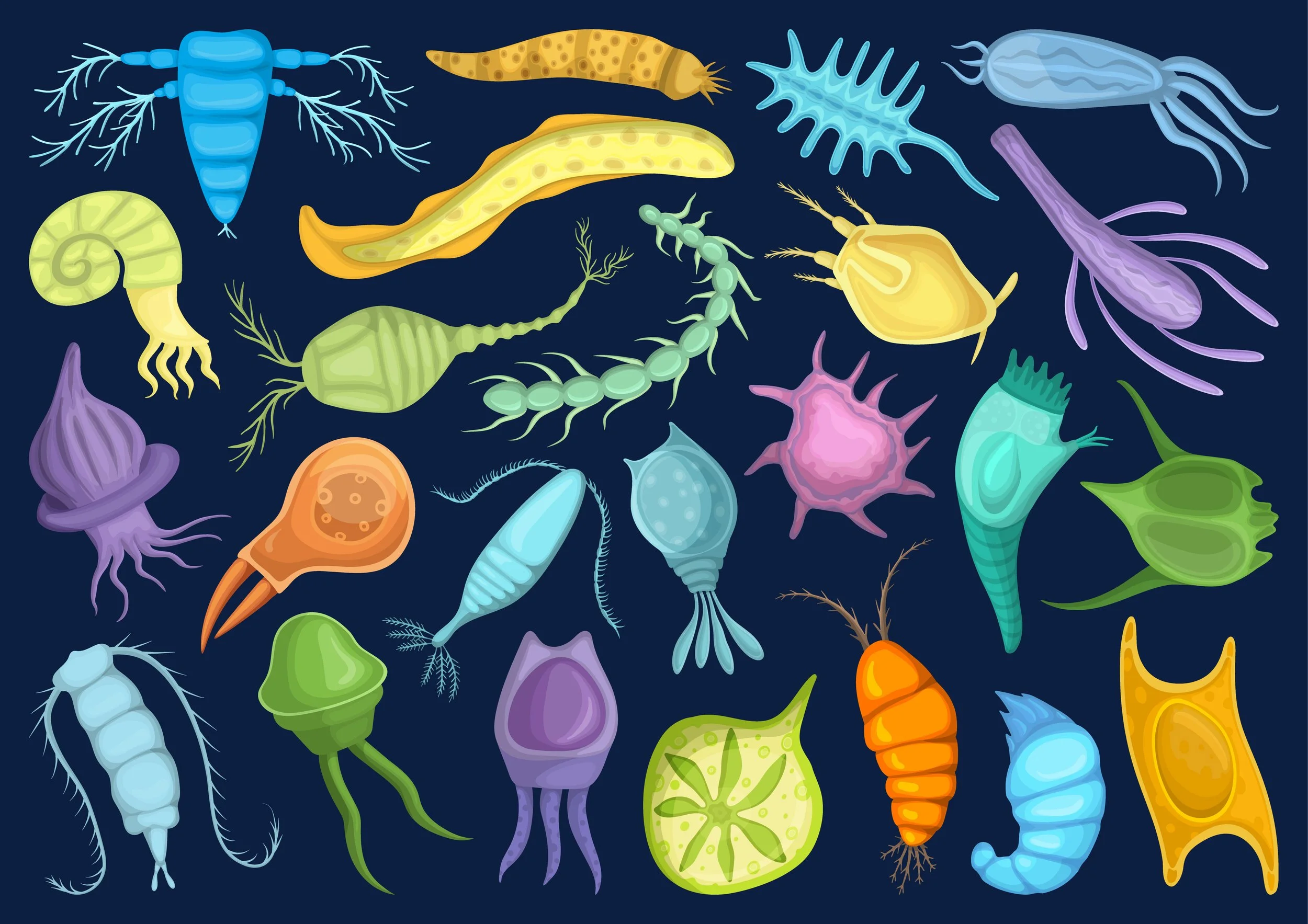
Phytoplankton VIII?…even more diversity, even more nuances, variations. Eventually leading to fish, to mammals, to monkeys, to apes, to homo sapiens. Image by Freepik
Now back to the article by the National Museum of Natural History at the Smithsonian
“However, other innovations were occurring. While they can process lots of chemicals, microbes did not have the specialized cells that are needed for complex bodies. Animal bodies have various cells — skin, blood, bone — which contain organelles, each doing a distinct job. Microbes are just single cells with no organelles and no nuclei to package their DNA.
Something revolutionary happened as microbes began living inside other microbes, functioning as organelles for them. Mitochondria, the organelles that process food into energy, evolved from these mutually beneficial relationships. Also, for the first time, DNA became packaged in nuclei. The new complex cells (“eukaryotic cells”) boasted specialized parts playing specialized roles that supported the whole cell.
Cells also began living together, probably because certain benefits could be obtained. Groups of cells might be able to feed more efficiently or gain protection from simply being bigger. Living collectively, cells began to support the needs of the group by each cell doing a specific job. Some cells were tasked with making junctions to hold the group together, while other cells made digestive enzymes that could break down food.”
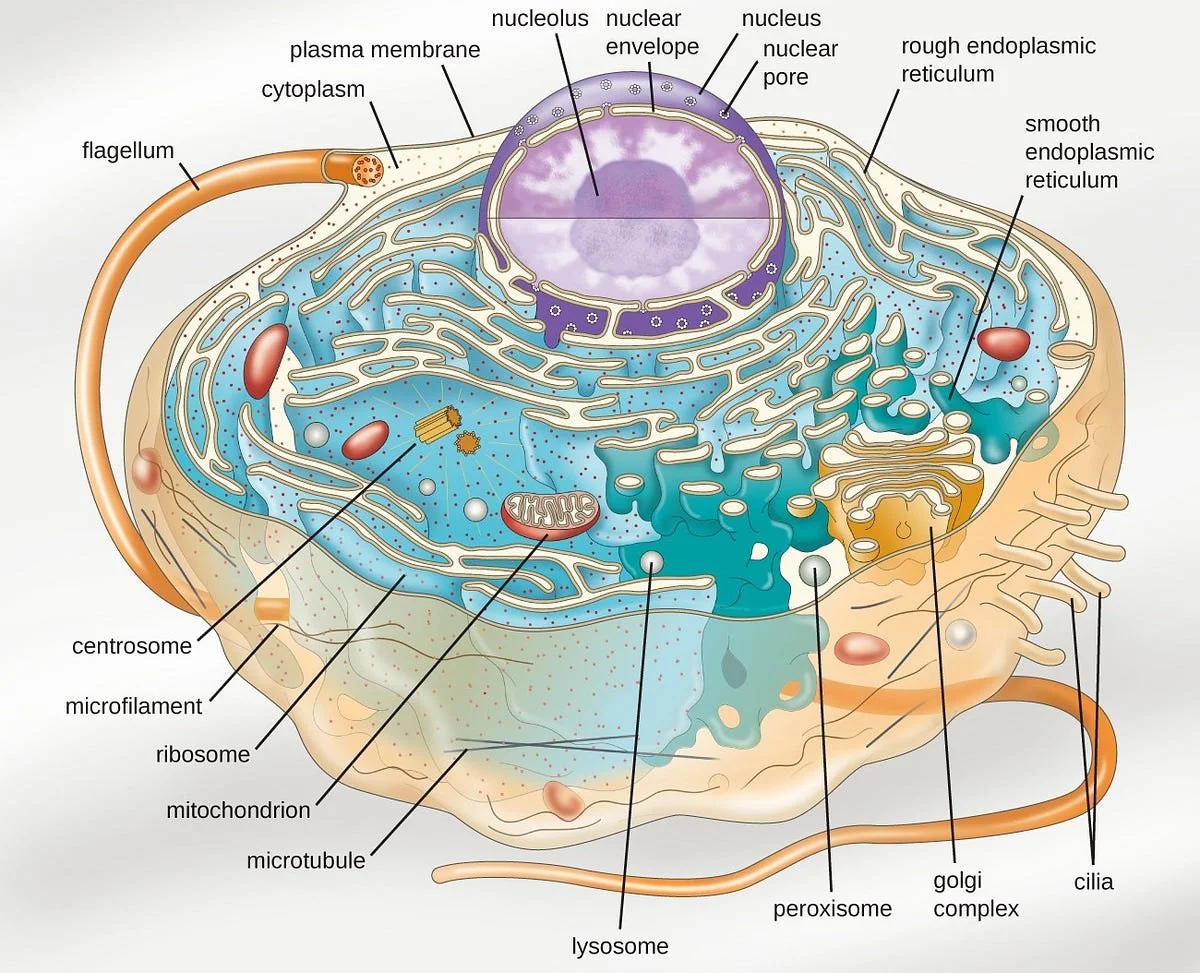
Eukaryotic Cells, The Foundations of Life, Cooperation amongst different types of organisms, eventually leading to the evolution of animal species! Image by https://courses.lumenlearning.com/suny-microbiology/chapter/unique-characteristics-of-eukaryotic-cells/
“These clusters of specialized, cooperating cells eventually became the first animals, which DNA evidence suggests evolved around 800 million years ago. Sponges were among the earliest animals. While chemical compounds from sponges are preserved in rocks as old as 700 million years, molecular evidence points to sponges developing even earlier.
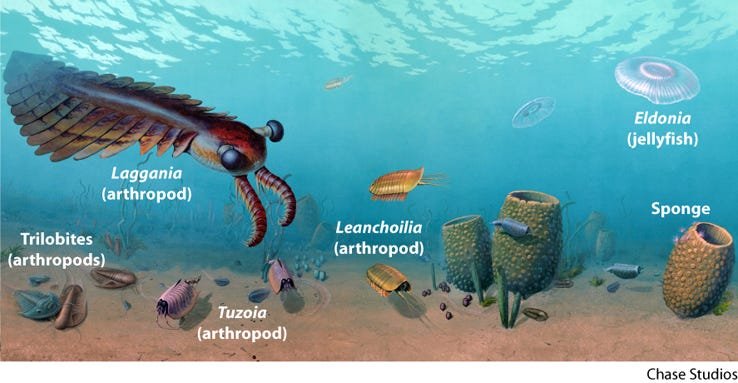
Sponges were among the earliest animals! Wow! https://samnoblemuseum.ou.edu/common-fossils-of-oklahoma/paleocommunities/marine-communities/cambrian-communities/
Oxygen levels in the ocean were still low compared to today, but sponges are able to tolerate conditions of low oxygen. Although, like other animals, they require oxygen to metabolize, they don’t need much because they are not very active. They feed while sitting still by extracting food particles from water that is pumped through their bodies by specialized cells.
The simple body plan of a sponge consists of layers of cells around water-filled cavities, supported by hard skeletal parts. The evolution of ever more complex and diverse body plans would eventually lead to distinct groups of animals.
The assembly instructions for an animal’s body plan are in its genes. Some genes act like orchestra conductors, controlling the expression of many other genes at specific places and times to correctly assemble the components. While they were not played out immediately, there is evidence that parts of instructions for complex bodies were present even in the earliest animals.
Thanks to their hard skeletons, sponges became the first reef builders on Earth. Scientists like Smithsonian’s Dr. Klaus Ruetzler are working to understand the evolution of the thousands of sponge species living on Earth today.”
“The Cambrian Period (541–485 million years ago) witnessed a wild explosion of new life forms. Along with new burrowing lifestyles came hard body parts like shells and spines. Hard body parts allowed animals to more drastically engineer their environments, such as digging burrows. A shift also occurred towards more active animals, with defined heads and tails for directional movement to chase prey. Active feeding by well-armored animals like trilobites may have further disrupted the sea floor that the soft Ediacaran creatures had lived on.” — National Museum of Natural History at the Smithsonian
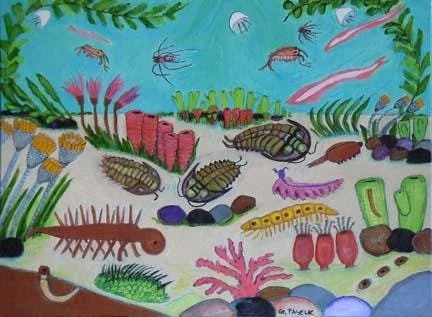
Cambrian Period Life Forms, Source: https://natmus.humboldt.edu/exhibits/life-through-time/visual-timeline/cambrian-period
I hope you find this as fascinating as me :)
World Evolution of Animals (and us too!) (Evolution Series Part II)
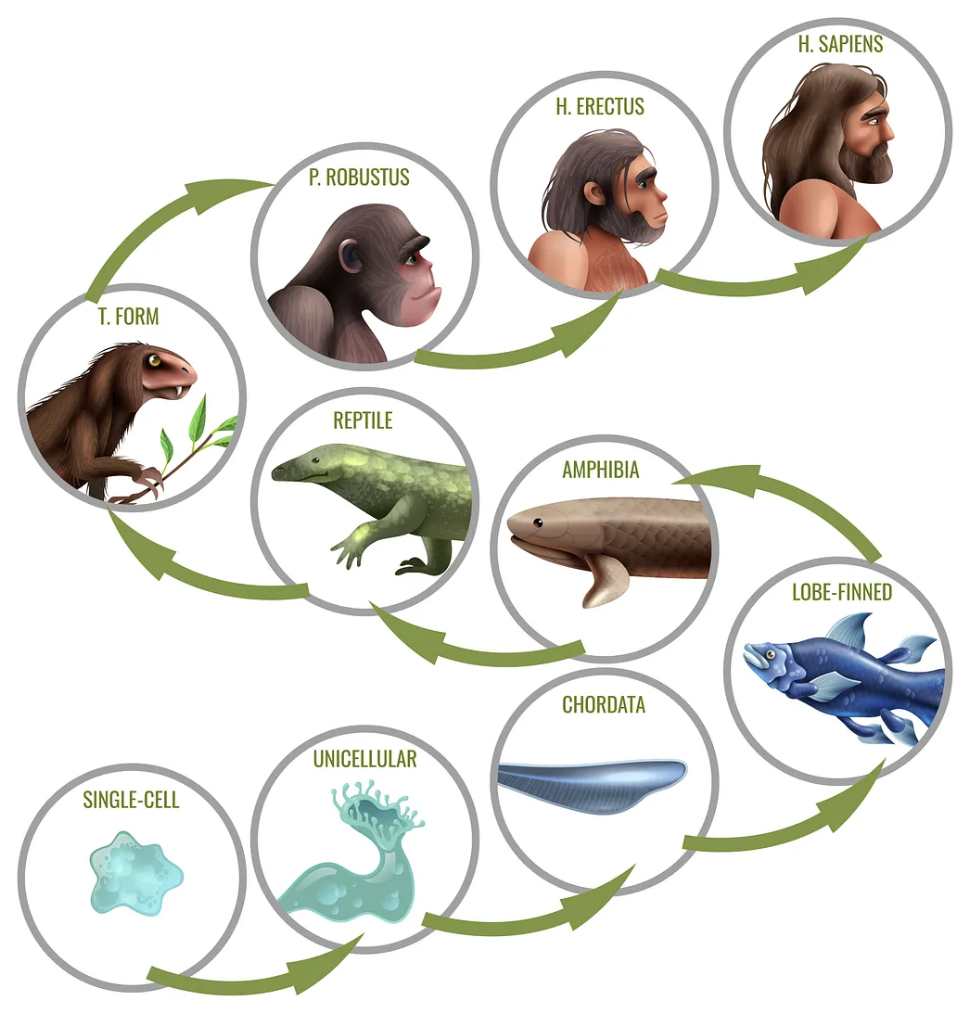
What if we were to respect this sacred symphony of life that was created over millions of years?
Image by Freepik
(You can also listen to this article on Apple Podcasts here, and print out this document for people to see the photos as well, which is important!)
As humans, our brains have difficulty understanding time. We live in our current reality, and most people don’t consider the sacredness of this earth and the long evolutionary development of animals and our own human species.
What if we were to take this timeline below more seriously?
What if we were to respect this sacred symphony of life that was created over millions of years?
We currently are in a phase of delusion. Polluting with petroleum, fertilizers, pesticides, burning of trash, throwing trash in the ocean.
This incredibly beautiful earth, really a paradise, or a heaven, is so precious.
Do we even logically, rationally, emotionally know what we’re doing? We’re literally killing ourselves and all of these incredible species.
The United Nations is supposed to help the world, but countries are not following the Net Zero Carbon Emissions suggestions. Poverty seems to be a major cause of this. Clearly, brave and bold leadership is needed. Distribution of wealth and investment in green technology is needed.
As you read through this timeline below, perhaps meditate on the sacredness of how life created these precious, unique animals.
560 million years ago
Sponges
Read about how earth used to be methane, and then eventually oxygen was formed and sponges became the first animals in Part I of this series here.
530 million years ago
The first fish appeared on Earth around 530 million years ago. These early fish were jawless and belonged to the Agnatha group. — Google AI
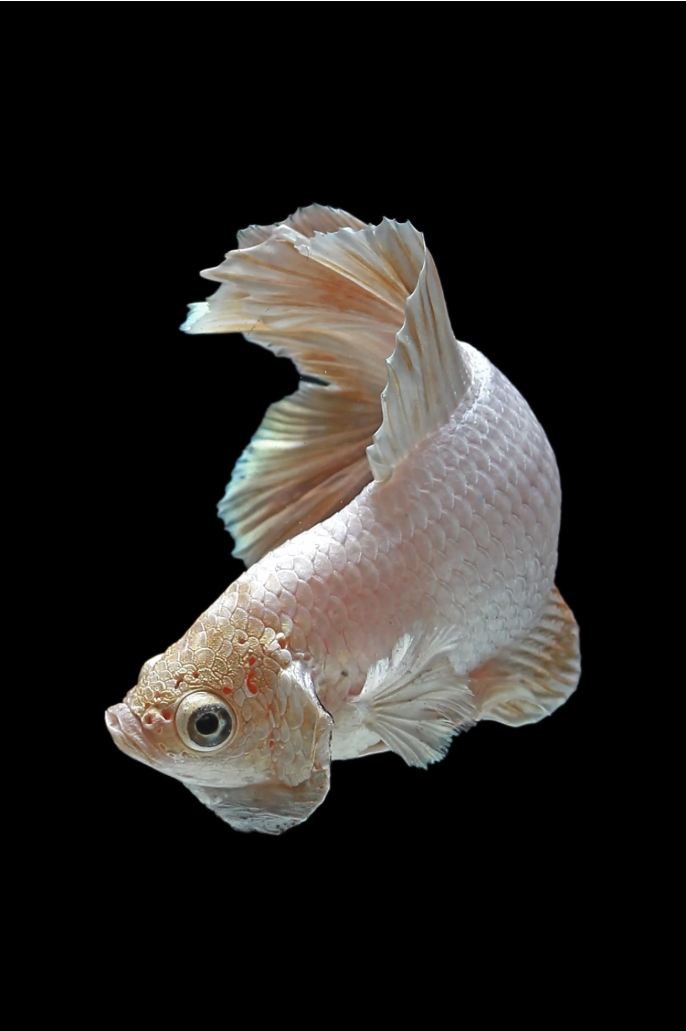
Wow, incredible. Evolution of fins to swim! Image by Freepik
370 million years ago
The first amphibians appeared around 370 million years ago during the Devonian period. They evolved from lobe-finned fish that had multi-jointed fins and primitive lungs.
330 million years ago
The oldest-known octopus relative appeared on Earth around 330 million years ago, before the age of dinosaurs.
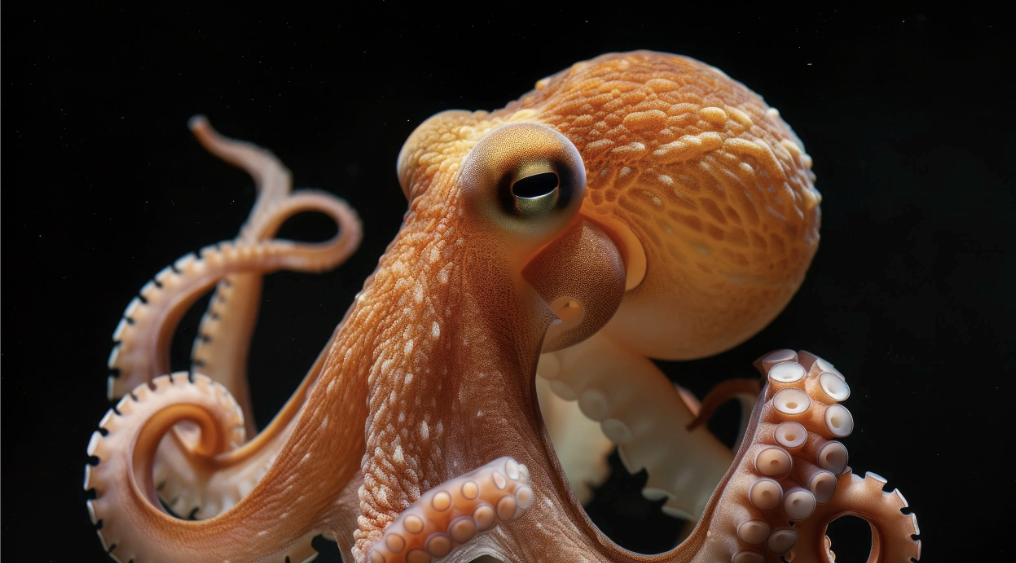
Woooow, such a unique first animal with so many tentacles! Image by Freepik
315 million years ago
The first reptiles appeared on Earth around 315 million years ago during the Carboniferous period. These reptiles were small, lizard-like animals that evolved from amphibians.
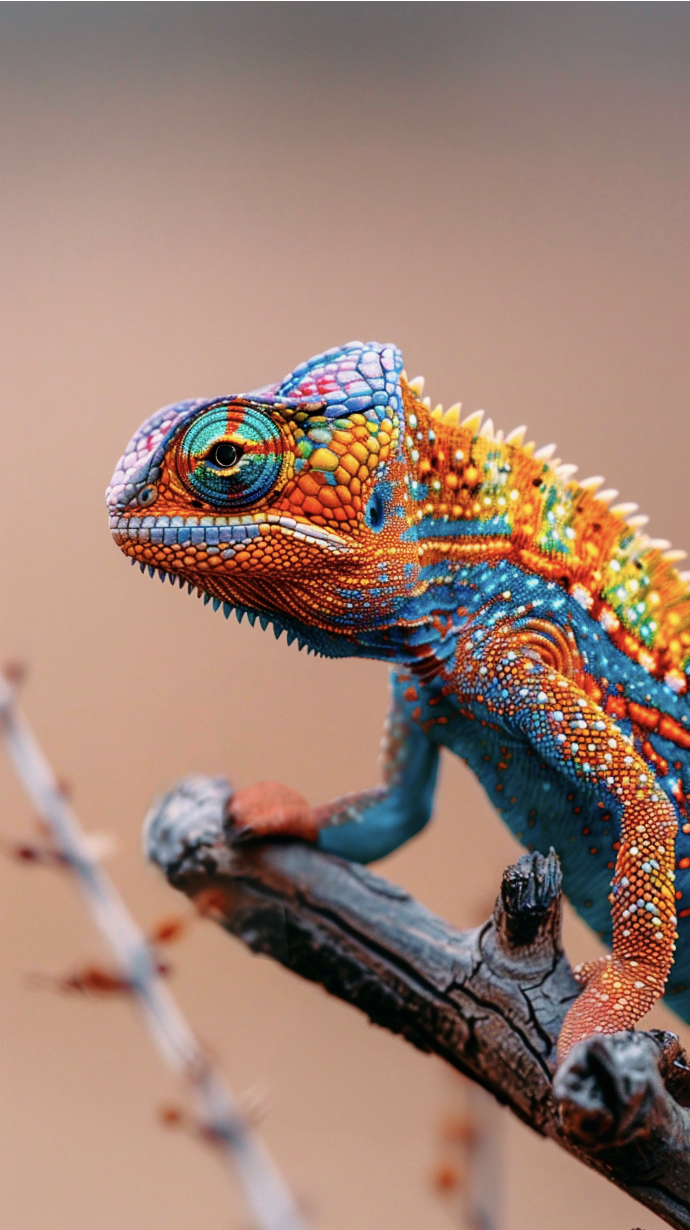
Whoah, look at those colors! Image by Freepik
245 million years ago
Dinosaurs first appeared on Earth around 245 million years ago, during the Triassic period. They were dominant land vertebrates for millions of years, until the Cretaceous–Paleogene extinction event about 66 million years ago. — Google AI
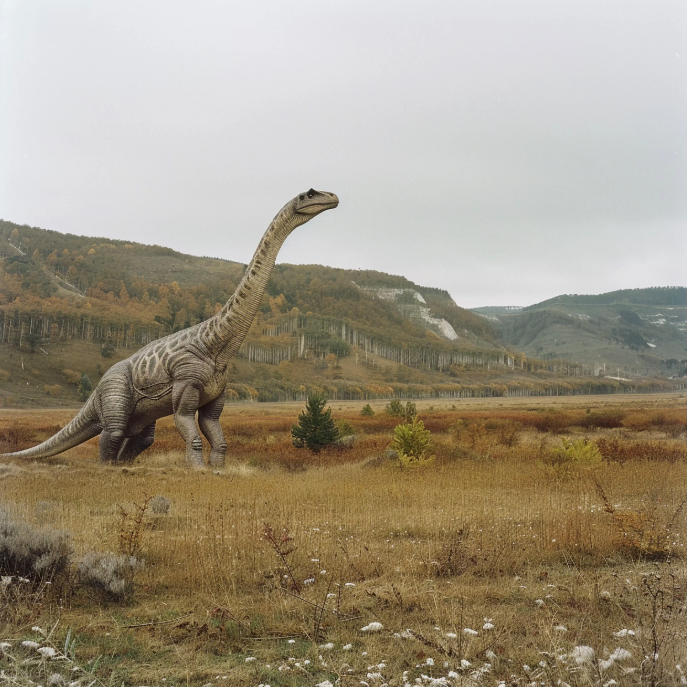
Wow, how cool, huh? A rendition, because we only have fossil records due to the asteroid that killed these incredibly unique species. Image by Freepik
230 million years ago
Turtles have been on Earth for around 230 million years, making them one of the oldest reptile groups.
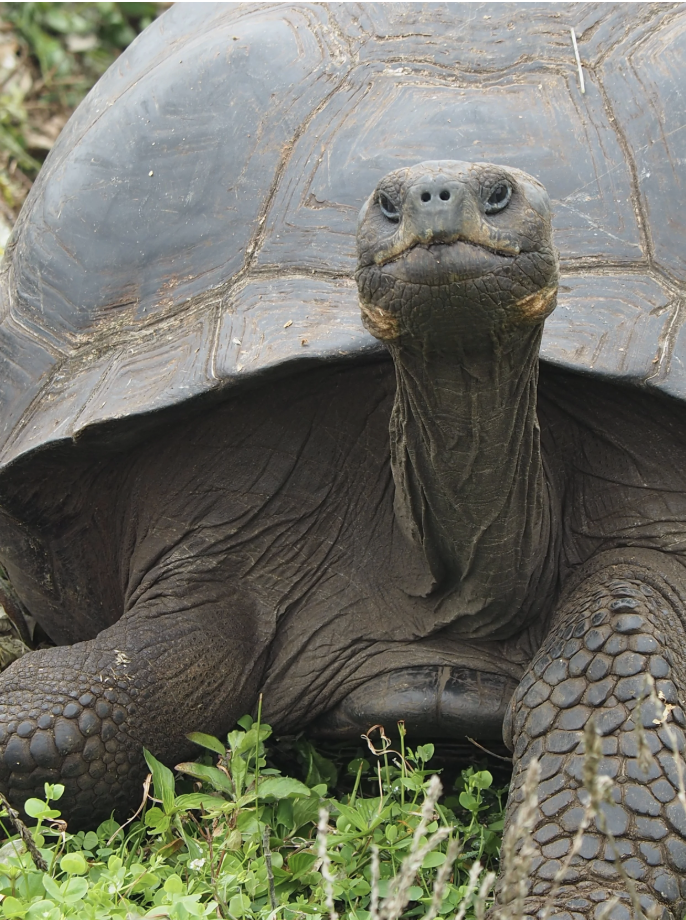
Doesn’t s/he look wise? 230 million years of living on this Earth!
Image by Freepik
225 million years ago
The first mammals appeared during the late Triassic period, about 225 million years ago. The earliest known mammal is Brasilodon quadrangularis, a small shrew-like animal.
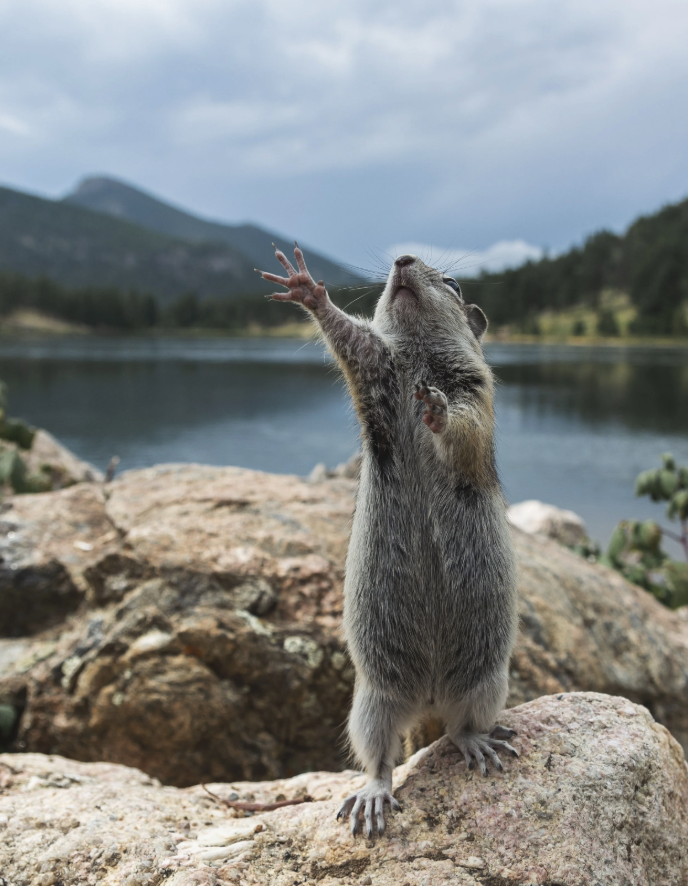
Wow! So cute, huh! First mammalian species. Love with fur :) Image by Freepik
175 million years ago
Pangea started to fracture and disperse due to tectonic plates
165 million years ago
Birds evolved from theropod dinosaurs during the Jurassic period, around 165–150 million years ago. However, the earliest known bird fossil is the 150-million-year-old Archaeopteryx.
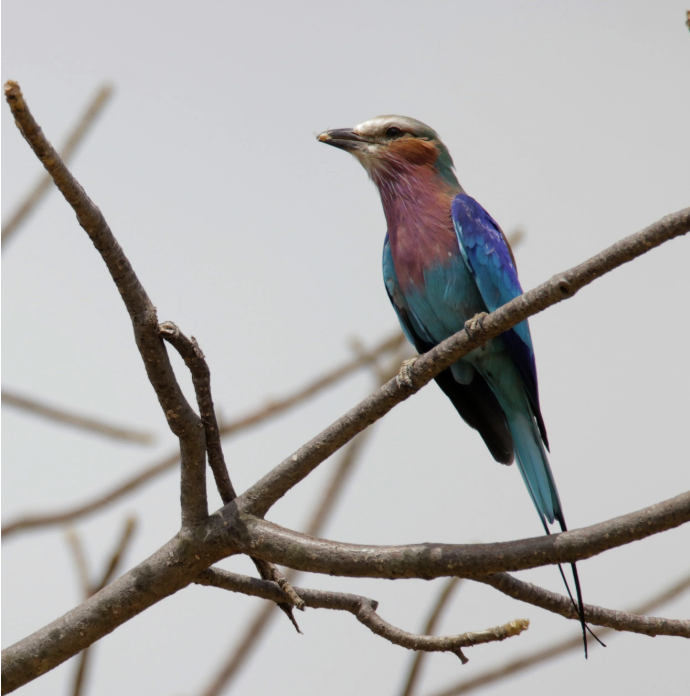
Whoah, the evolution of wings! And so much color. Wowowoweewow :)
Image by Freepik
124 million years ago
The first bees appeared around 124 million years ago, during the Early Cretaceous period. They likely originated in South America or Africa on the supercontinent of West Gondwana.
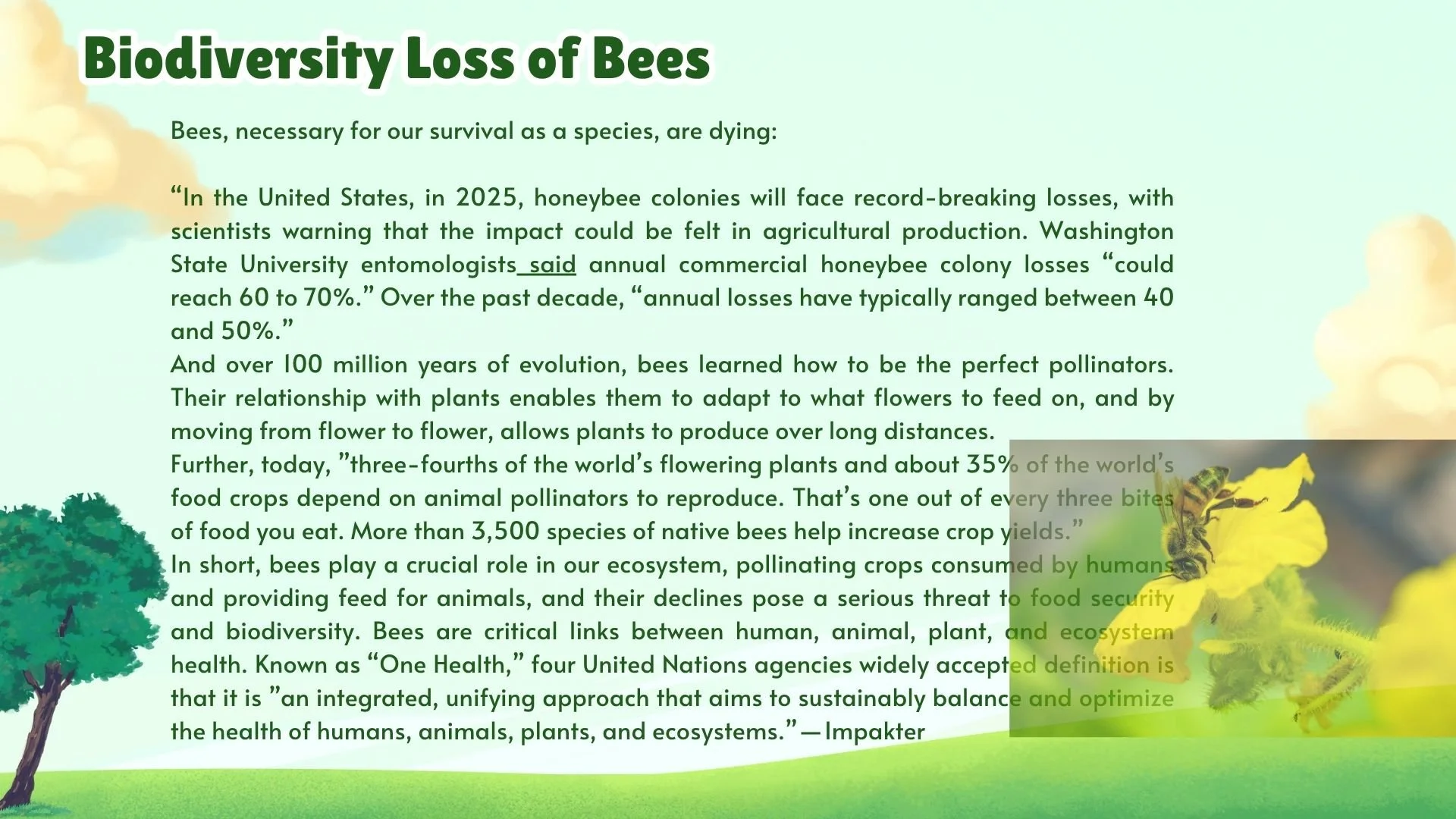
Did you know we need bees to survive?
“Without bees (and thousands of other insect species that call the UK home), it wouldn’t be long before our ecosystem collapsed. Bees pollinate our wild trees and wild flowers, which then support other insects, which then support birds, bats, mammals and everything up the food chain with food and shelter.” — Woodland Trust
Yet, we’re literally killing ourselves, because of pollution, bees are dying, so we are dying too. The Circle of Life.
“Worldwide bee species have declined significantly, with one study noting a 25% reduction in species between 2006 and 2015 compared to before 1990, though rates vary regionally and species of managed honeybees have generally increased. However, the number of bee colonies per person has dropped by over 23% globally, and climate change threatens to reduce the distribution of many bee species.” — Google AI
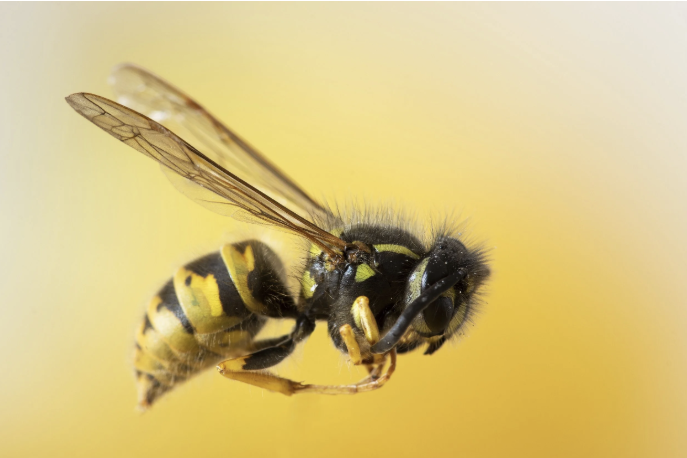
Wow, did you know that we need bees to survive?
Image by Freepik
100 million years ago
Butterflies first appeared on Earth around 100 million years ago in North or Central America. This was during the Cretaceous period, when dinosaurs were still dominant.
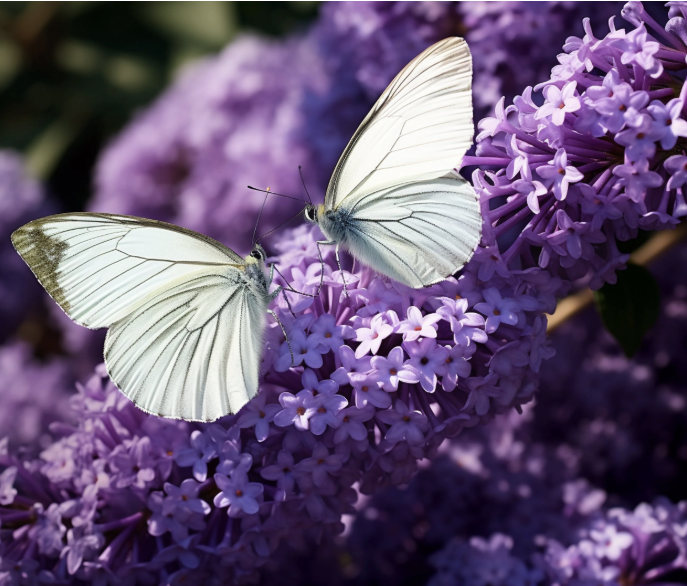
Aren’t butterflies beautiful and so unique?
Image by Freepik
However, unfortunately, we are not taking care of this precious Earth and animals. As I said, there’s like a malfunction in our brains that is not calculating the survival of animals nor our own species.
“Between 2000 and 2020, total butterfly populations fell by 22% across the 554 recorded species. Species level population declines are widespread with 13x as many species declining as increasing.” — Google AI
Butterflies are beautiful. Why are we not caring about our impact on the environment, ecology, the beauty of our planet, The Circle of Life, our own Survival?
66 milllion years ago
“A large asteroid impact played a significant role in the extinction of dinosaurs and many other plant and animal species that hit Mexico. Despite the widespread extinction, some species, including birds (who are direct descendants of theropod dinosaurs), mammals, reptiles, and certain types of plants, survived the extinction event. The surviving species were likely those that were smaller in size, had diverse diets, or were able to adapt to the changing environmental conditions.” — Google AI
65 million years ago
Rodents, which include mice, have been around for at least 56 million years. The first rodents likely evolved from a small mouse-like mammal that lived around 65 million years ago.
60 million years ago
The earliest known Elephant ancestors, called proboscideans, first appeared in Africa around 60 million years ago.
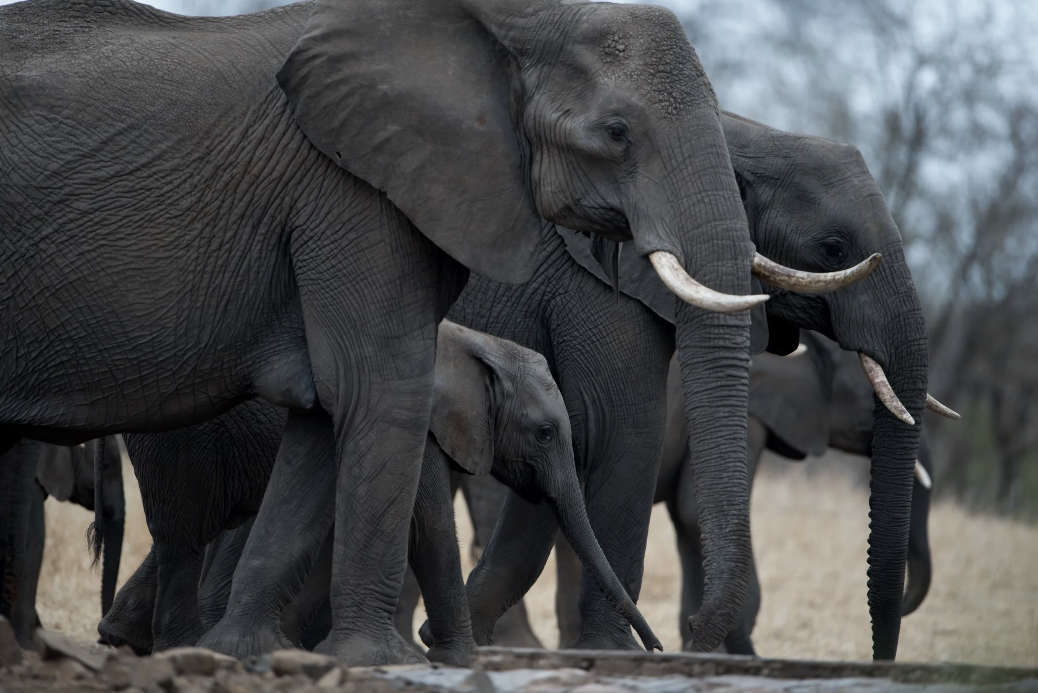
Wow, incredible species, extremely intelligent too. Caring for their young and the survival of their species. Maybe one day us too?
Image by Freepik
55 million years ago
The first primates, which include the ancestors of modern monkeys, apes, and humans, appeared in the fossil record around 55 million years ago. These early primates were mouse-sized and lived in forests across Asia, Europe, and North America. It is theorized that they rafted on vegetation and debris, floating hundreds of miles across oceans to Africa to then become apes?
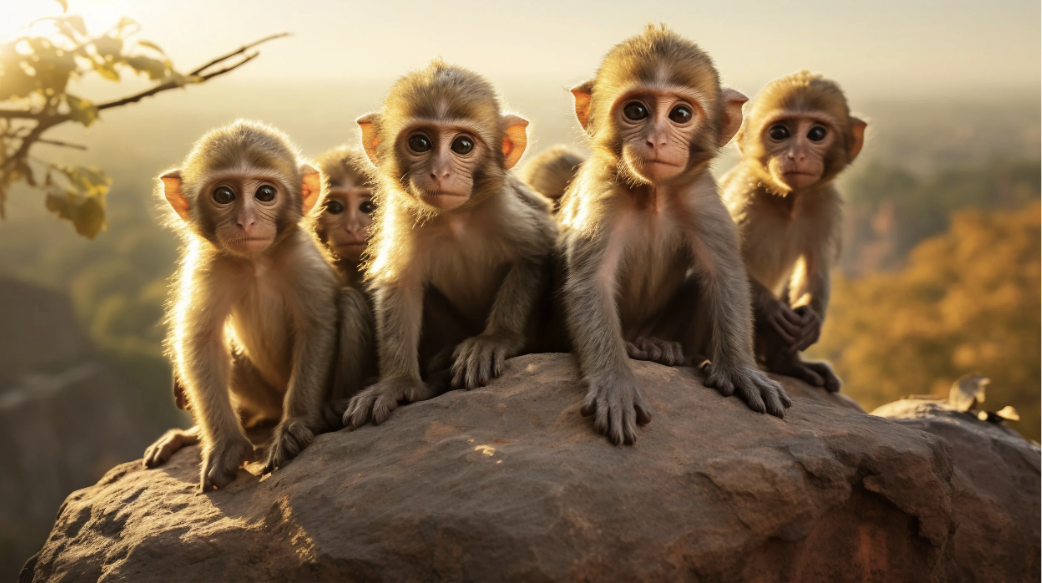
Look at those eyes. Wow. Our first ancestors! Our Monkey/Ape Family! ❤
Image by Freepik
50 million years ago
Whales first appeared on Earth about 50 million years ago. This was during the Eocene epoch, after the extinction of the dinosaurs but before the first humans.
Did you know that whales (and dolphins are mammals? They breathe oxygen in the air!
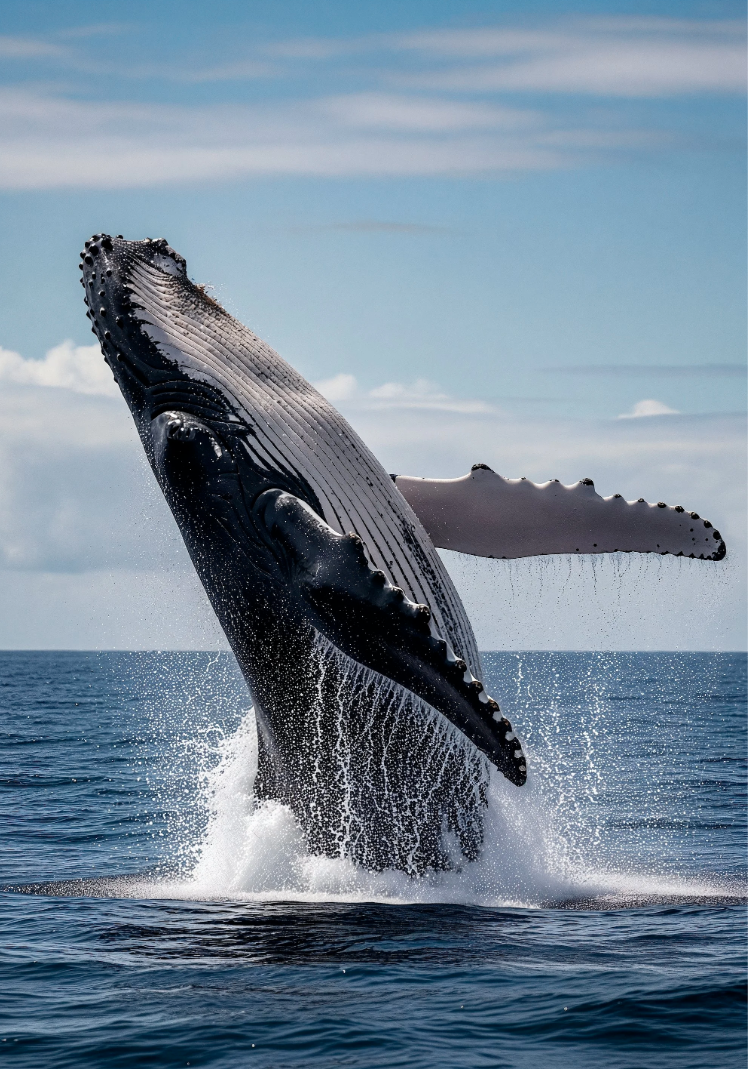
Incredible animals to be respected!
Image by Freepik
40 million years ago
Monkey-like fossils appear in Africa around 40 million years ago. However, the oldest true primates are not African.
25 million years ago
Apes first appeared in Africa around 25 million years ago. The earliest known ape is the Proconsul, which lived in East Africa 20 million years ago.
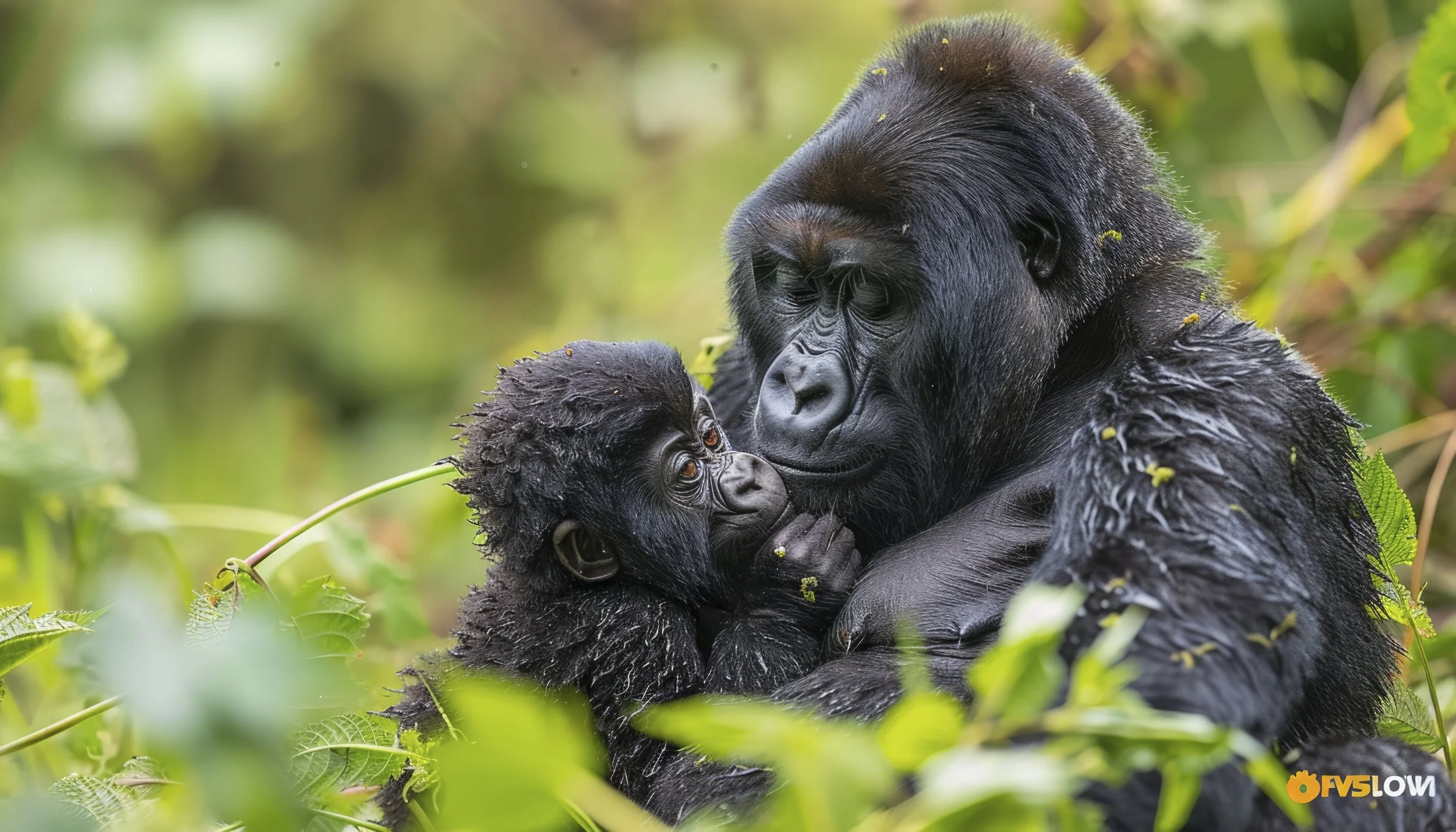
How beautiful and caring! Another of our original ape ancestors. Our Ape Family! ❤
Image by Freepik
25 million years ago
Proailurus, an ancient cat species that eventually evolved into Lions
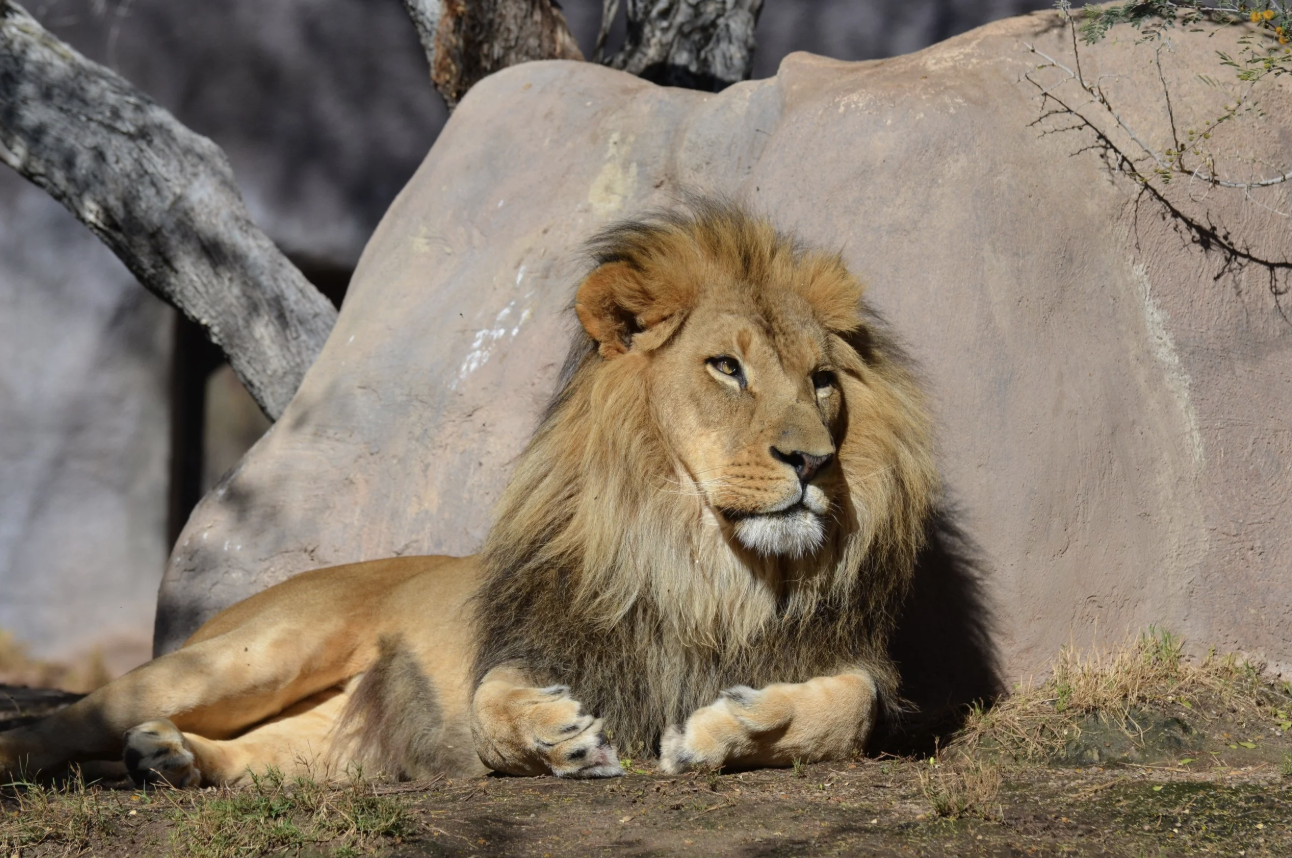
Elegant animal. Wow. Image by Freepik
12 million years ago
The genus Gorilla first appeared between 8.8 and 12 million years ago. This was when the group of primates that would evolve into gorillas split from their common ancestor with humans and chimps.
8 million years ago
Chimpanzees likely evolved between 5 and 8 million years ago, around the same time that humans and chimpanzees shared a common ancestor.
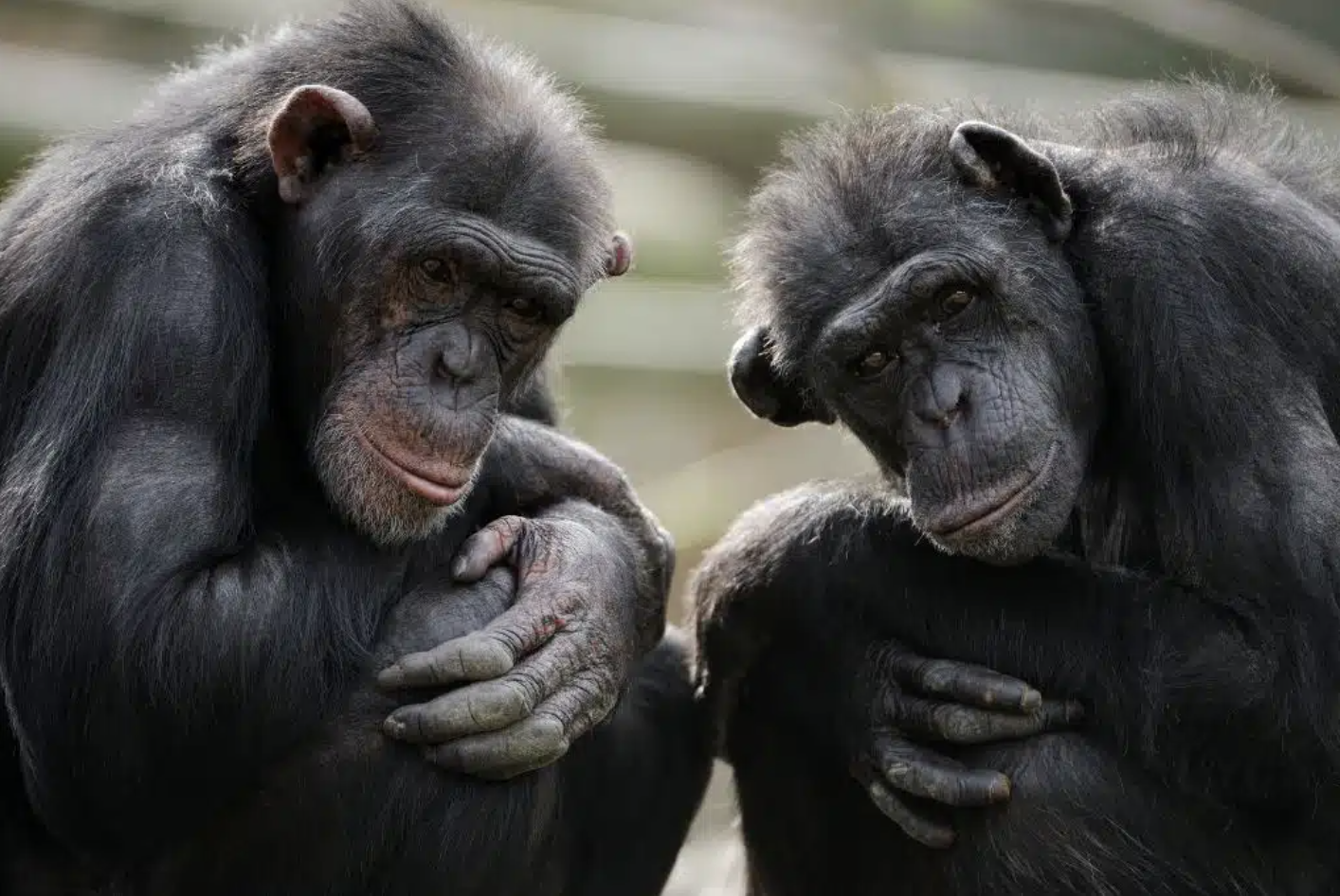
Chimpanzees, along with Bonobos, are who we evolved from. Our Ape Family. ❤
Image by Earth.org
6 million years ago
The earliest mammoths appeared in Africa around 6.2–5.3 million years ago. The earliest known species is Mammuthus subplanifrons. They crossed Beringia into North America about 100,000 years ago. “Mammoths went extinct due to a combination of factors, primarily climate change, habitat loss, and human hunting.”
5–2 million years ago
The earliest Lion-like cats appeared in East Africa around 5 million years ago. The earliest fossils of Lions that are recognizable were found in Tanzania and are estimated to be up to 2 million years old.
2.6 million years ago
Bison first appeared in Asia around 2.6 million years ago. They migrated to North America between 195,000 and 135,000 years ago.
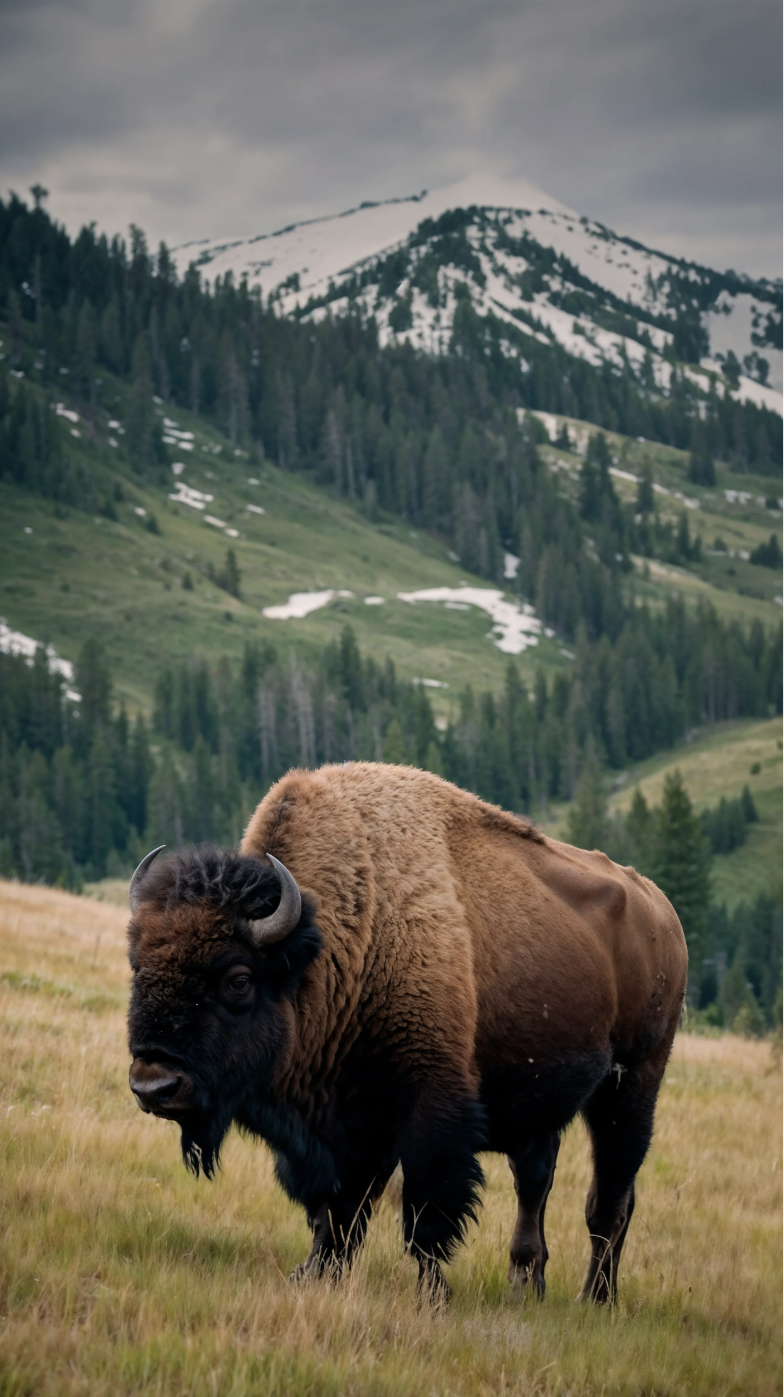
Incredible animal! Beautiful mountains!
Image by Freepik
1.7 million years ago
The bonobo species diverged from the common chimpanzee line about 1.7 million years ago. This means that bonobos are closely related to chimpanzees, and both are sister species. The Congo River is believed to have formed between 1.5 and 2 million years ago, separating and leading to the divergence of chimpanzees and bonobos.
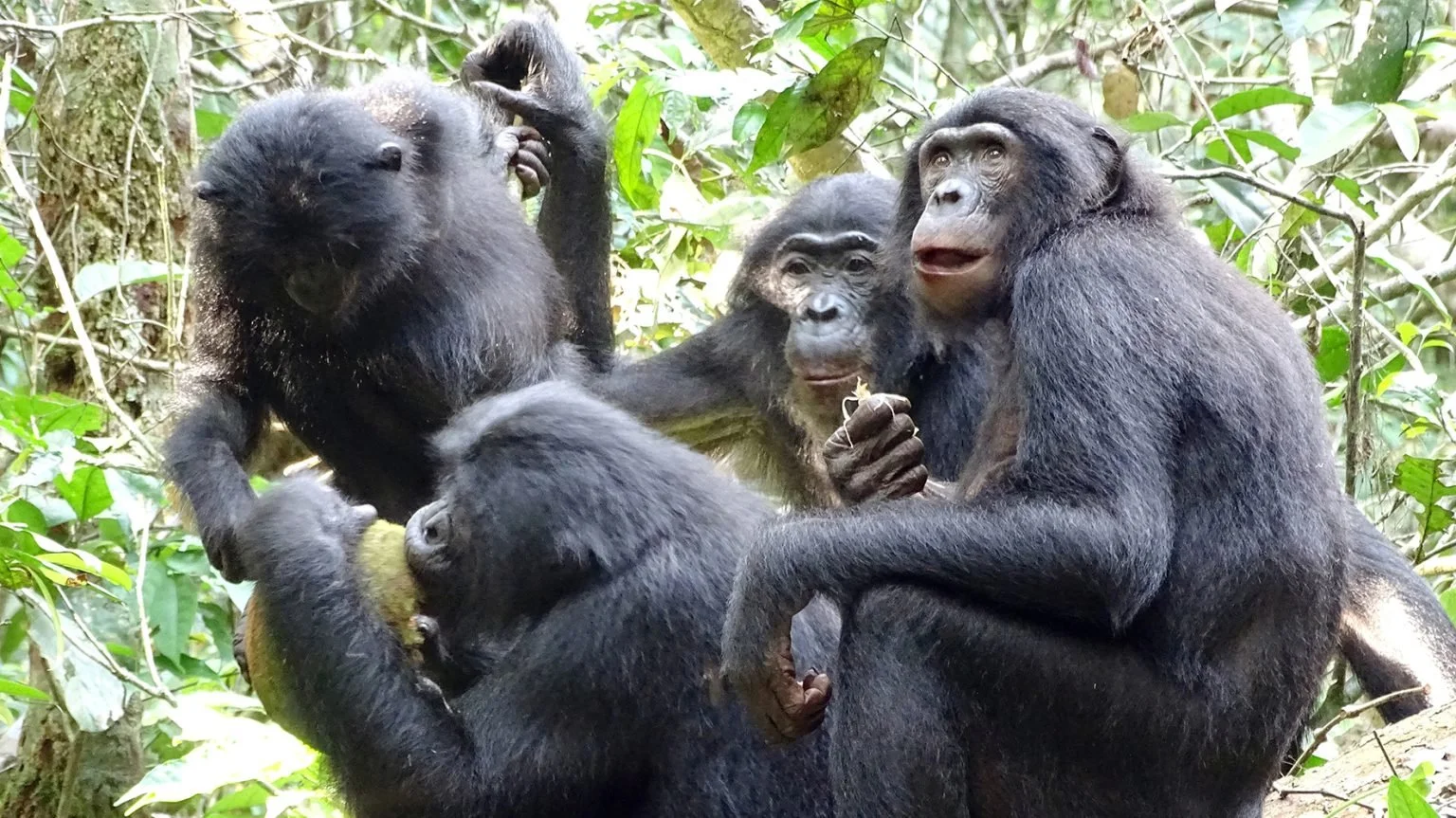
Here is a photo of Bonobos, along with Chimpanzees, are who we evolved from.
Our Ape Family! ❤
Image by Sapiens.org
1 million years ago
Wolves first appeared in Eurasia about one million years ago. They evolved from smaller dog-like canids that were native to the region.
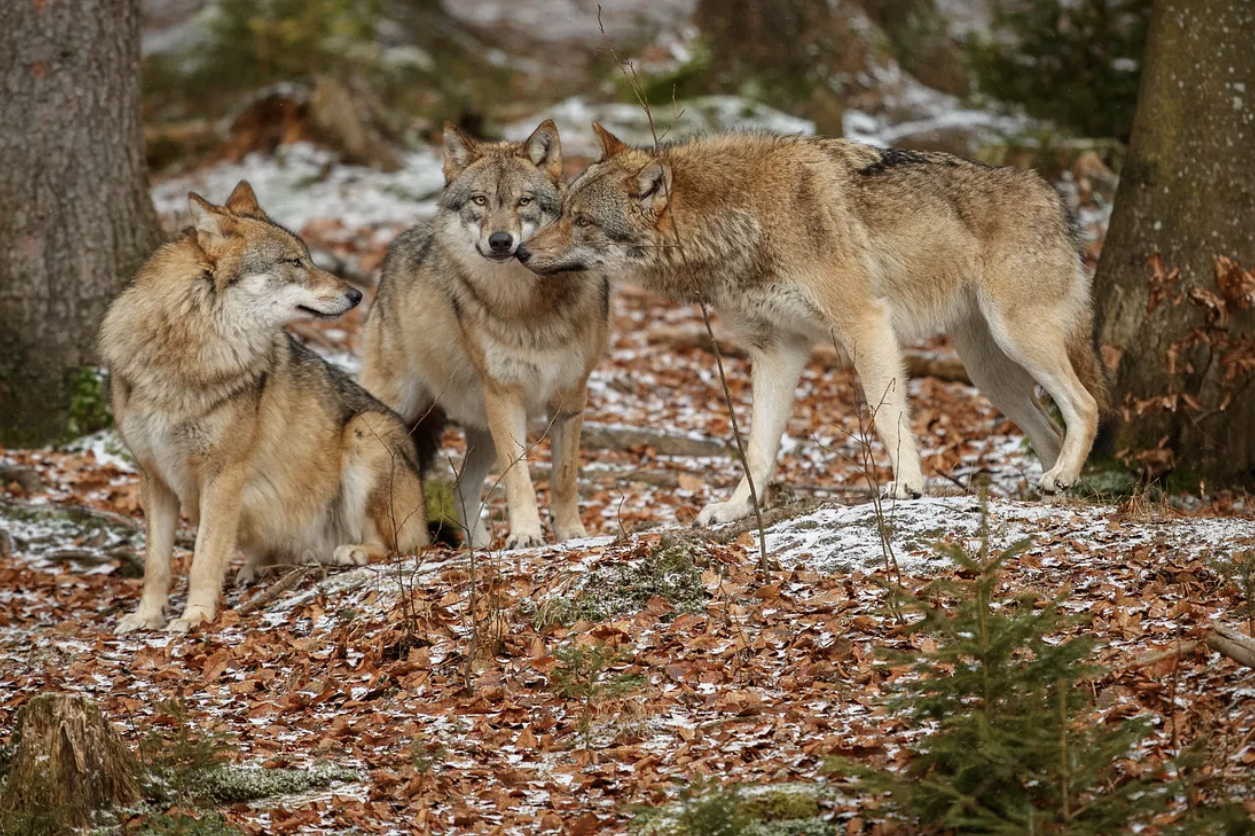
Eurasian Wolves. Extravagant. Extremely intelligent animals too. Pack animals that learned to cooperate really well!
Image by Freepik
300,000 years ago
Homo sapiens, the species that includes all modern humans, first appeared in Africa around 300,000 years ago.
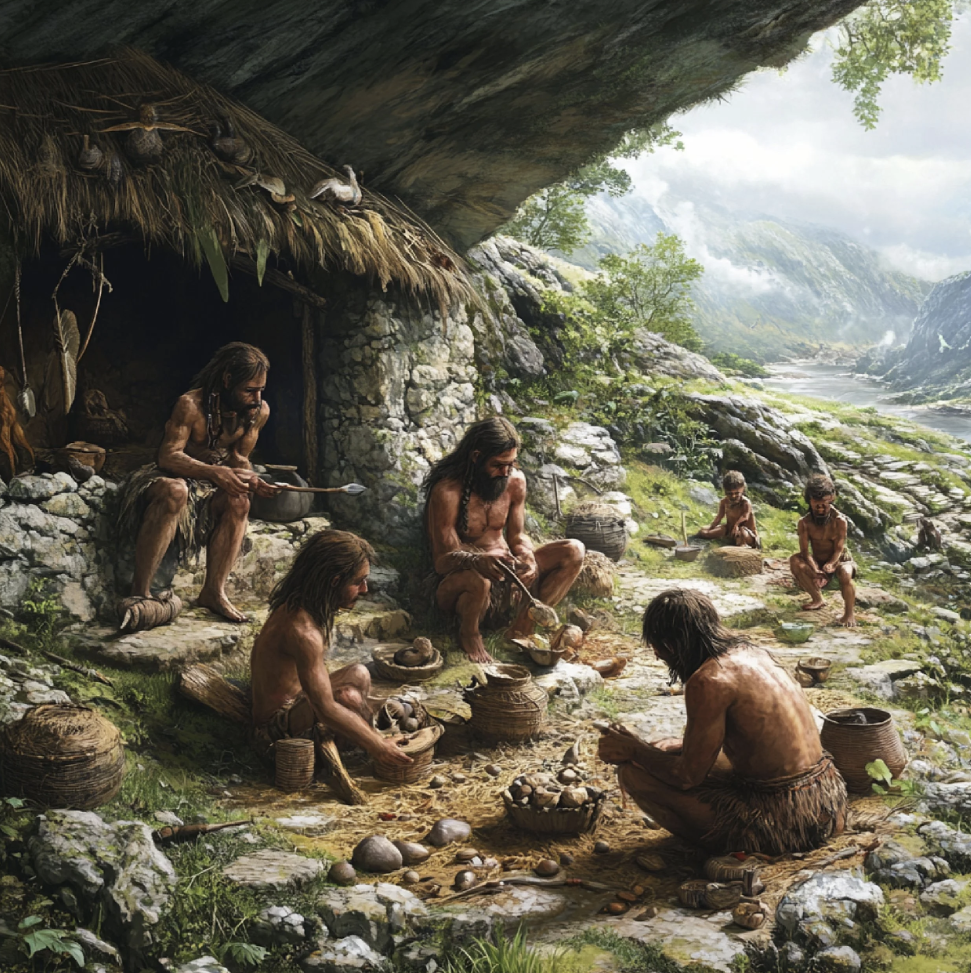
Tribal Family. Don’t we miss that bonding? Industrialism can be lonely, huh? ❤
Image by Freepik
30,000 years ago
People starting migrating across the Bering Land Bridge into America; i.e. they became the indigenous people of North and South America, living with the Earth.
Notice this large difference in the timeline, from 300,000 years to 30,000 years to 1,500 years ago.
1,492 years ago
People started “migrating” i.e. “colonizing” America from Europe. This devastated the local indigenous population. There was genocide. There were diseases spread that killed millions. These indigenous people are still struggling today and many have forgot about their ancient intelligent civilizations. The Lakota, The Mayans, The Aztecs, and The Incans all had extremely advanced knowledge. The Europeans had no idea. So a lot of that ancient knowledge is lost. Huge bummer. Some archaeologists and people interested in science, spirituality, and culture are trying to uncover these ancient secrets they discovered about our universe. Thank you!
Conclusion
It is helpful to upgrade your consciousness to a new level of understanding that homo sapiens are new to the earth compared to other animals. And now we’re destroying these precious creatures and ourselves. Again, we are literally killing ourselves.
I believe we are disconnected from the earth, animals, and the environment due to industrialization and urbanization, and many other factors that scientists could study. These buildings have separated us from Life Herself and put us in boxes of superficiality instead of being caring individuals for the world and its animals, plants and people.
“The Amazon rainforest is now emitting more carbon dioxide than it is able to absorb, scientists have confirmed for the first time. The emissions amount to a billion tonnes of carbon dioxide a year, according to a study. The giant forest had previously been a carbon sink, absorbing the emissions driving the climate crisis, but is now causing its acceleration, researchers said. Most of the emissions are caused by fires, many deliberately set to clear land for beef and soy production. But even without fires, hotter temperatures and droughts mean the south-eastern Amazon has become a source of CO2, rather than a sink. Growing trees and plants have taken up about a quarter of all fossil fuel emissions since 1960, with the Amazon playing a major role as the largest tropical forest. Losing the Amazon’s power to capture CO2 is a stark warning that slashing emissions from fossil fuels is more urgent than ever, scientists said.” — The Guardian
I think it’s time we create a Caring, Preventative and Proactive, Survival Consciousness! Yikes!
Bible Verses from God about The Environment and Animals and Plants that may inspire you to be a good steward of this earth:
Genesis 2:15:
“The Lord God took the man and put him in the garden of Eden to work it and take care of it”.
Genesis 1:26
“Then God said, ‘Let us make mankind in our image, in our likeness, so that they may care over the fish in the sea and the birds in the sky, over the livestock and all the wild animals, and over all the creatures that move along the ground.’”
Numbers 35:33:
“Do not pollute the land where you live, for blood pollutes the land, and no atonement can be made for the land for the blood that is shed in it, except by the blood of the one who shed it.” (reminds me of karma in Hinduism, the cycle of birth and death because of one’s sins)
Psalm 24:1:
“The earth is the Lord’s and everything in it, the world, and all who live in it”.
Psalm 89:11
“The heavens are yours, and yours also the earth; you founded the world and all that is in it.”
Proverbs 12:10
“The righteous care for the needs of their animals.”
Jeremiah 2:7:
“I brought you into a fertile land to eat its fruit and rich produce. But when you came in, you defiled my land and made my heritage an abomination”.
Ephesians 1:8–10
“With all wisdom and understanding, he made known to us the mystery of his will according to his good pleasure, which he purposed in Christ, to be put into effect when the times reach their fulfillment — to bring unity to all things in heaven and on earth under Christ.”
Revelation 4:11
“You are worthy, our Lord and God, to receive glory and honor and power, for you created all things, and by your will they were created and have their being.”
My solutions for the world and this Environmental Emergency can be found on my Website or on Medium. I welcome your thoughts, collaboration, and feedback!
World Evolution of Homo Sapien’s Spirituality and Culture (Evolution Series Part III)

This article is about the evolution of our spirituality. Our desire to care for each other. Our ability to understand life and the universe. To question. To Become.
Image by Freepik
(You can also listen to this on Apple Podcasts here, and print out this article to view the photos.)
I am fascinated by our earth and the evolution of animals and our species. I took two classes on evolution at Harvard, and one was PHD-level. I’ve continued my fascination with this topic, and have been documenting the evolution of animals and homo sapiens. I thought I’d share my research with you all.
As most of you know, humans first evolved in Africa, and most of human evolution occurred there. You may not know though, that the evolution of Homo Species began with Chimpanzees and Bonobos mating around 8,000,000 BC, or eight million years ago.
The first early humans migrated out of Africa into Asia between 100,000 years ago, and into Europe between 50,000 years ago.
The modern human species, Homo Sapiens, evolved and coexisted with other ape species, including:
Neanderthals
Homo Heidelbergensis
Homo Erectus
Homo Floresiensis
Homo Ergaster
Homo Erectus Sensu Lato
Homo Habilis
Homo Rudolfensis
Paranthropus Boisei
Australopithecus (4.18–2 million years ago)
However, Homo Sapiens are now the only surviving human species. We obviously though contain some of these gene codes from these different ape species above that evolved from chimpanzees and bonobos. Plus, we have migrated around the earth due to trade, war, the environment, etc. So that means our DNA is super complex and diverse.
This article is also about the evolution of our spirituality. Our desire to care for each other. Our ability to understand life and the universe. To question. To Become.
Here is Our Homo Sapien Timeline:
8,000,000 BC
Evolution of Homo Species from Chimpanzees and Bonobos began
4,180,000 BC
Australopithecus, brains 35% of modern homo sapien brain
2,500,000 BC
Homo Rudolfensis, Africa
2,400,000 BC
Homo Habilis, first species to make stone tools, Africa, this allowed for hunting animals, freeing up time for us to do and think and feel other things
2,300,000 BC
Paranthropus Boisei, Africa
Homo Sapians began cooking around 1.8 million years ago, a major turning point in human evolution, freeing up time to do and think and feel other things
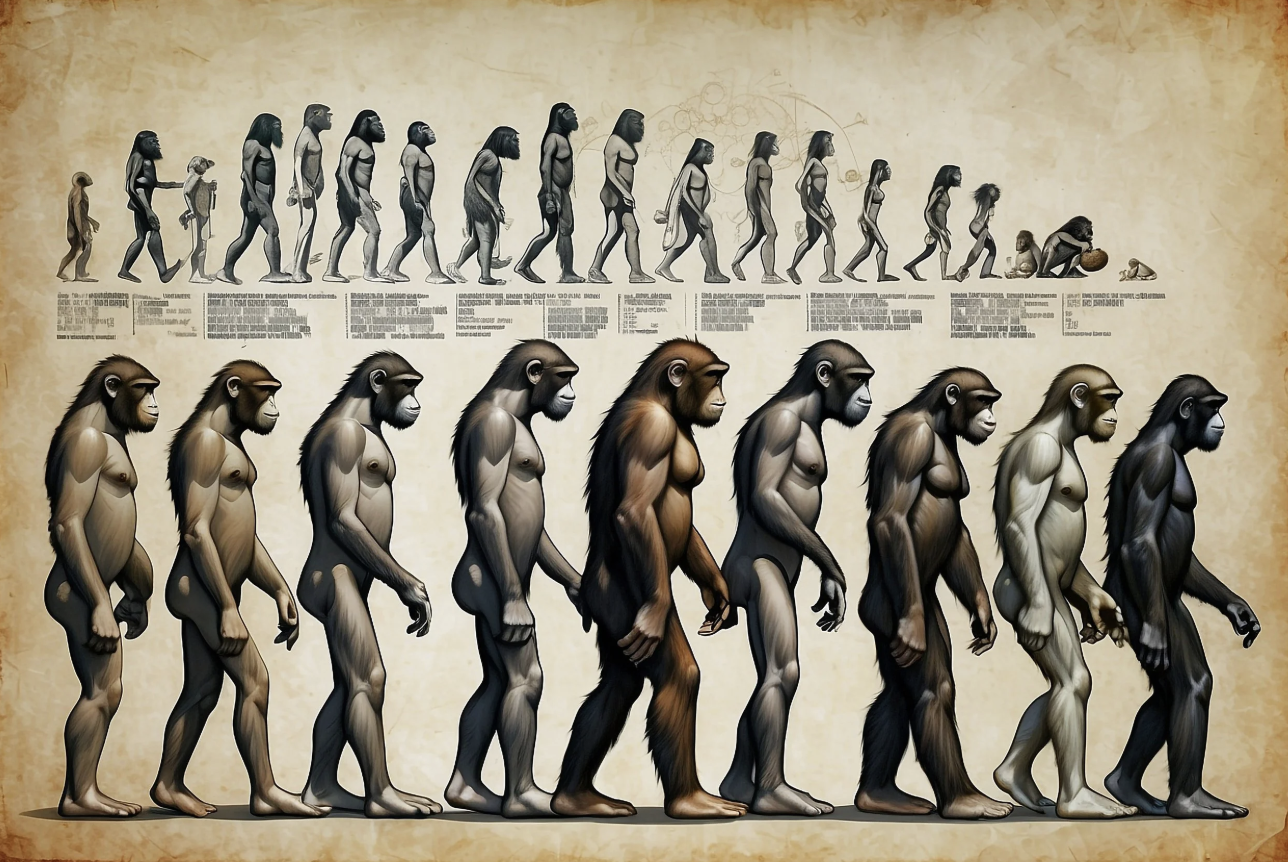
There were many unique ancestries of Homo Sapiens from many different types of Apes.
Image by Freepik
1,800,000 BC
Homo Ergaster, Africa
Similar to
Homo Erectus Sensu Lato and Stricto, Asia
500,000 BC
Anunnaki, extraterrestrials, arrived on Earth, eventually changing some people’s DNA to create laborers for mining gold for their own planet that was in need and had some ecological challenges.
430,000 BC
Neanderthals, Europe and Asia
300,000 BC
First Homo Sapiens, Africa
190,000 BC
Homo Florensiensis, in Asia, faced starvation and deformations
100,000
Brain Shape of Homo sapiens essentially modern
100,000 BC
Earliest Known Human Burial in Middle East
Wow, this is a unique and special turning point. Isn’t it interesting that it is where the Abrahamic Faith also began?
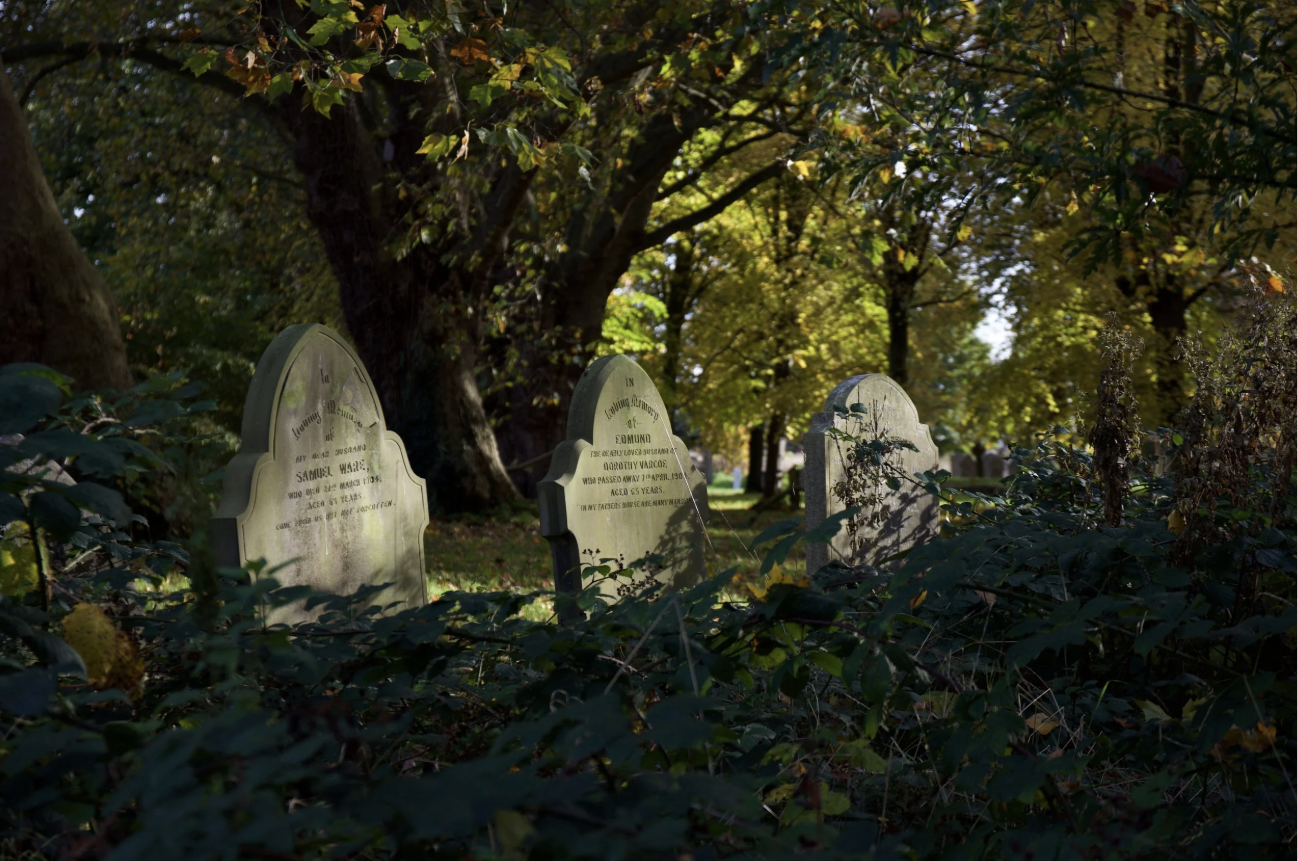
Homo-Sapien-Apes first started burials. The beginning of spirituality?
Image by Freepik
30,000 BC
Native Americans Immigration to America
14,000 BC
Queen Nefertiti and King Akhenaten promoted Atenism, Sun God, monotheism
10,000 BC
Baghor Stone of the Kali Yantra in India
This seems like a special time period where spirituality and our understanding of life and this universe was increasing.

Kali Yantra, Image by Freepik
9,000 BC
Tetragrammaton, the four-letter name of God in Hebrew; also includes opposites, elements, and other esoteric knowledge

Tetragrammaton; Learn more about this sacred symbol here.
5,000 BC
Ayn Ghazal Statues made in Jordan
4,000 BC
Ancient Egyptians who had numerous scientific and spiritual discoveries
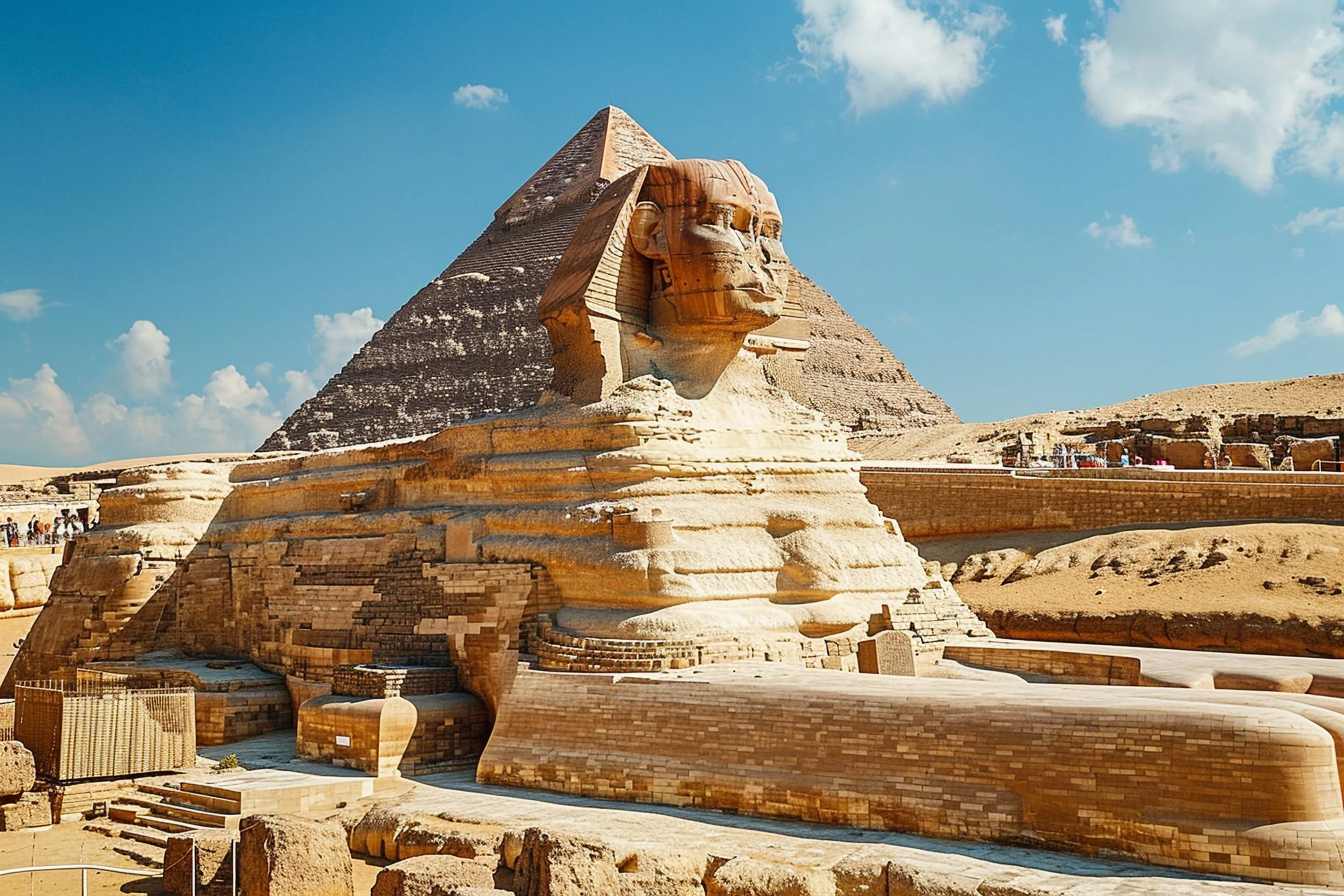
Spinx and Pyramids of Ancient Egypt; Image by Freepik
4,000 BC
Hinduism, which discovered the Law of Karma of the Universe and many other fascinating spiritual insights

Sri Yantra; Hindus understood there’s Sacred Geometry in the Universe.
Image by Freepik
3,100 BC
Stonehenge
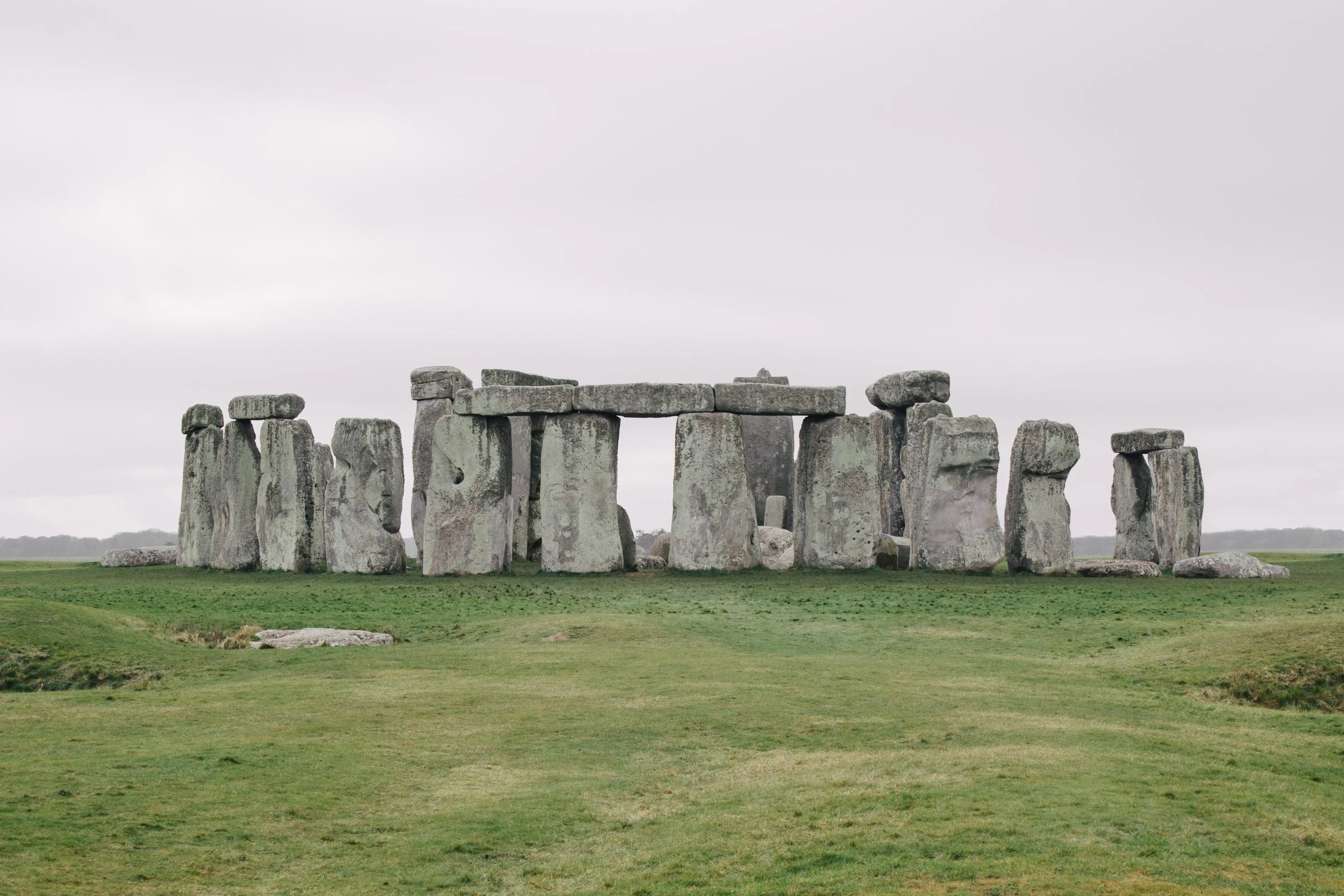
Stonehenge in present-day UK; Image by Freepik
3,000 BC
Greek Gods
2,560 BC
Great Pyramid of Giza, Ancient Egypt
2,400 BC
Pyramid Texts of Ancient Egypt
2,000 BC
Algebra originated in Babylonia, the Middle East
2,000 BC
Mayan Civilization
“The Maya civilization is important for its contributions to math, astronomy, writing, and architecture, including the invention of zero and complex calendars, and the construction of impressive cities like Tikal and Chichen Itza. They developed sophisticated writing systems and a deeply rich cultural and spiritual life.
The Maya developed a sophisticated base-20 (vigesimal) number system and were among the first civilizations to use the concept of zero as a placeholder, which was crucial for complex calculations.
Their advanced astronomical knowledge allowed them to create highly accurate and complex calendars that were used for agricultural planning and tracking religious cycles.
They developed a unique hieroglyphic writing system, leaving records of their history and beliefs on stelae, codices, and other artifacts.” — Google AI
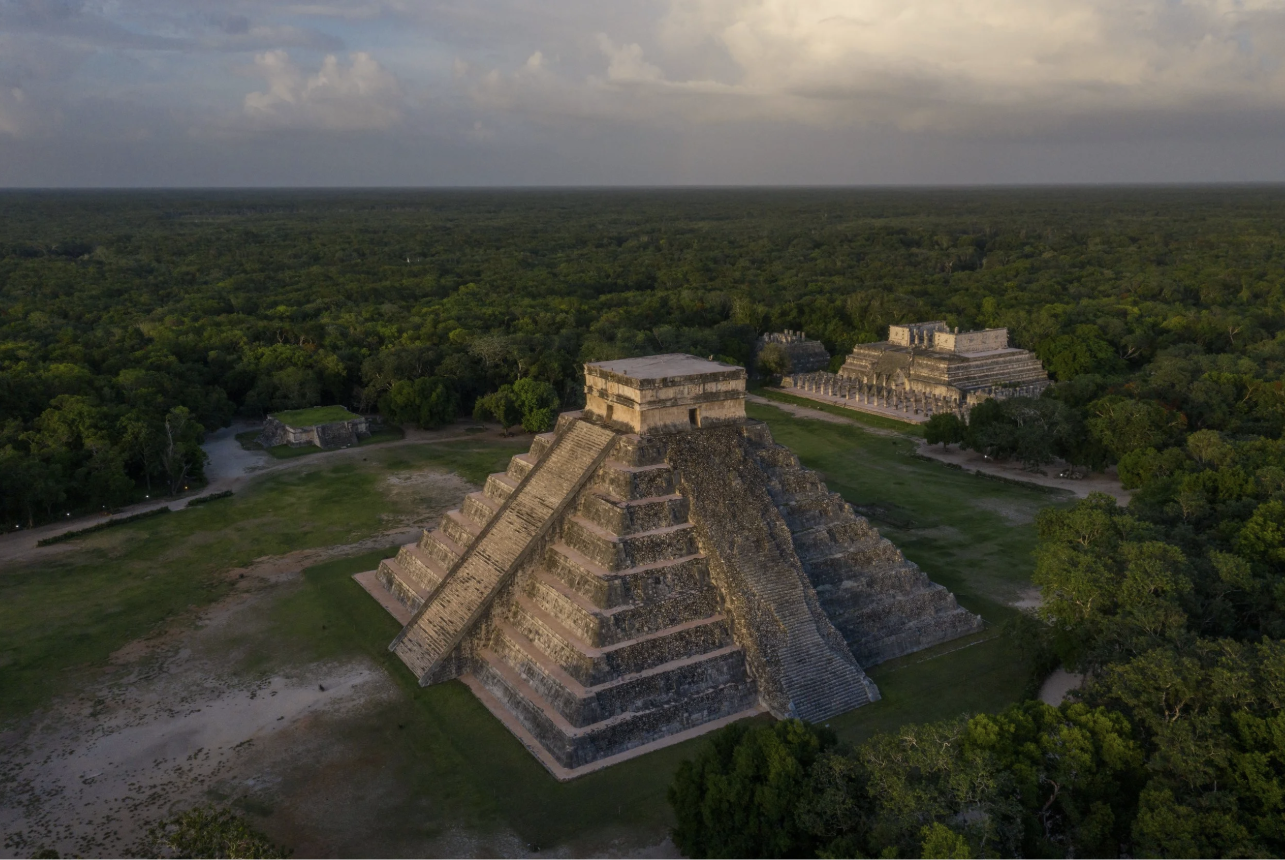
Mayan Civilization; Image by Freepik
1,800 BC
Judaism and the Ancestral Tribes of the Abrahamic Faiths of Christianity and Islam
1,500 BC
Vedic Period Begins in India
1,200 BC
Passover and the Ten Commandments from God
1,000 BC
King David’s Reign as King of Jerusalem and brings the the Ark of the Covenant there [which holds Jewish (Abrahamic) sacred texts]
1,000 BC
The I Ching of China, Fu Hsi and his wife Nüwa; 64-fold geometry, making a holographic microcosm of the entire cosmos using Yin and Yang principles of binary patterns; the two were sent as a bridge between heaven and earth
800 BC
The Upanishads of Hinduism written
600 BC
Zoroastrianism in Persia
“In Zoroastrianism, Asha represents the cosmic order, truth, righteousness, and the right way of living. Asha is also seen as reflecting the natural laws and rhythms of the universe, from the order of the seasons to the workings of the natural world. It is the counterpart of Druj, which represents falsehood and chaos. Zoroastrianism emphasizes the importance of good thoughts, words, and deeds, as these actions determine one’s fate in the afterlife.” — Google AI
551 BC
Confucianism of China
500 BC
The Bhagavadita of Hinduism written
550 BC
Pythagoras of Greece
455 BC
Buddhism of China
400 BC
Socrates and Plato of Greece
375 BC
Taoism and Tao Te Ching of China
350 BC
Aristotle
300 BC
Nubia Sudan Pyramids of the Kushite Kingdom
0 AD
Christianity, Jesus Christ, God came to Earth and then the New Testament of the Bible was written by His followers
0 AD
White Buffalo Calf Woman of the Lakota Sioux who introduced
“The White Buffalo Calf Woman taught the Lakota (Sioux) people the Seven Sacred Rites, including the Sweat Lodge, Vision Quest, and Sun Dance, along with the Sacred Pipe (Chanunpa) to foster unity and spirituality. Her teachings also emphasized living in harmony with nature, respecting all beings, and embracing values like generosity, compassion, and wisdom to achieve balance and peace.” — Google AI
0 AD
Buddhism introduced to China by extension of Kuan Yin; first appeared as masculine
200 AD
Diophantus
Diophantus was a Greek mathematician who was the author of the Arithmetica in thirteen books, made up of arithmetical problems that are solved using algebraic equations.
According to Google AI he is considered by them to be the “father of algebra”. It is fascinating though, that he also follows a rhythm, a beat of the universe!
Read this from Wikipedia:
“The only definitive piece of information about his life is derived from a set of mathematical puzzles attributed to the 5th or 6th century CE grammarian Metrodorus preserved in book 14 of the Greek Anthology. One of the problems (sometimes called Diophantus’ epitaph) states:
“Here lies Diophantus, the wonder behold. Through art algebraic, the stone tells how old: ‘God gave him his boyhood one-sixth of his life, One twelfth more as youth while whiskers grew rife; And then yet one-seventh ere marriage begun; In five years there came a bouncing new son. Alas, the dear child of master and sage After attaining half the measure of his father’s life chill fate took him. After consoling his fate by the science of numbers for four years, he ended his life.”
“This puzzle implies that Diophantus’ age x can be expressed as
x = x/6 + x/12 + x/7 + 5 + x/2 + 4
which gives x a value of 84 years. However, the accuracy of the information cannot be confirmed.”
Isn’t it interesting that the highlighted part is actually poetry? So Diophantus was also in rhythm with the universe, and so able to be a scientific genius.
Read more about this topic by me here:
The Rhythm and Cadence of The Universe Found in Mathematics
The story of algebra and its foundations
300 AD
Avolakiteshvara in India (masculine version of Kuan Yin, the deity and symbol of Compassion)
483 AD
Emperor in China had a vision of a Feminine Kuan Yin, the deity and symbol of Compassion
610 AD
Islam, which you can read more about here:
An Introduction to Islam, from a Different Perspective
Frequencies, prayer, fasting, tithing and the Sound of the Heart
820 AD
Al-Khwarizmi
wrote his foundational algebra text, Hisab al-jabr w’al-muqabala, (The Compendious Book on Calculation by Completion and Balancing)
Then we have al-Khwarizmi, an Arab mathematician. This is a super fascinating story. Instead of using numbers, he used words, he used Arabic! It is called rhetorical algebra:
Al-Khwarizmi’s work, particularly his Al-jabr, used full sentences to describe algebraic problems and their solutions. For example, instead of writing “x + 2 = 4”, he would have written “A thing plus two equals four”.
This is really complex. He must have been in rhythm with the cadence of Arabic, and used the words rather than numbers to teach these concepts and understand them, which would align with the rhythm of the Universe.
What’s even more interesting is that he was able to use rhetorical algebra to do quadratic equations. “A quadratic equation is a polynomial equation of the second degree, meaning it contains a term where the variable is raised to the power of two. The general form of a quadratic equation is ax² + bx + c = 0, where ‘a’, ‘b’, and ‘c’ are constants, and ‘a’ cannot be zero.”
Also, al-Khwarizmi uses the term “completion, or restoration.” This is fascinating, spiritually and scientifically.
al-Khwarizmi’s Treatise:
In the 9th century, al-Khwarizmi’s book, al-Kitāb al-Mukhtaṣar fī Ḥisāb al-Jabr wal-Muqābalah, introduced the systematic solution of linear and quadratic equations using the concept of “al-jabr” (restoration or completion).As a spiritual person, this is really interesting. Mathematicians have been trying to understand the universe and equal their equations to zero. Could there be clues here? For quantum physicists and others?
Al-Khwarizmi also “wrote on Indian numerals, which were the basis for the decimal system. In the 12th century, Robert of Chester translated Al-Khwarizmi’s “Hisab al-jabr w’al-muqabala” into Latin, making it accessible to European scholars.
This translation, and others of Al-Khwarizmi’s works on Indian numerals, were instrumental in bringing the decimal system (including the concept of zero) to Europe, revolutionizing mathematical practices.
Fibonacci, another influential mathematician, further popularized the decimal system in Europe after learning about it in North Africa and through studying Al-Khwarizmi’s work.” — Google AI
1,200 AD
Incan Civilization
“The Incas were important for building the largest empire in South America, known for advanced engineering, sophisticated agricultural techniques like terracing, and a highly organized society. Their extensive road network, intricate architecture (including Machu Picchu), and complex governance provided a model for a resilient and prosperous empire in a challenging environment. The Inca legacy continues to influence Andean culture, and their achievements remain a significant part of world history.” — Google AI
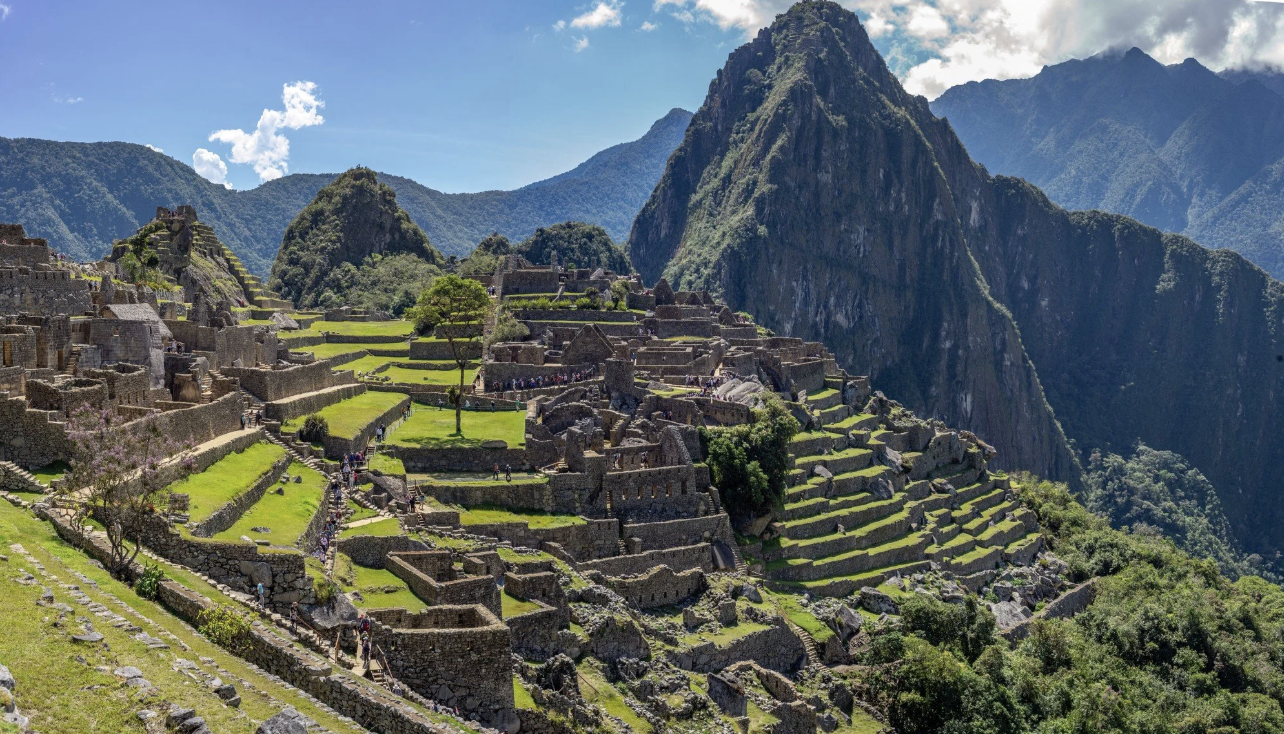
Machu Micchu; Inkan Civilization
Image by Freepik
1,325 AD
Aztecs and the Sun God, Tonatiuh
“The Aztecs were important for their advanced agricultural techniques like the chinampas (floating gardens), their sophisticated urban planning and engineering, particularly in building the capital city of Tenochtitlan, and for their distinct cultural achievements in art, religion, and a complex calendar system. They also had a profound and lasting influence on modern Mexican culture, leaving a significant legacy in areas such as cuisine and architecture.” — Google AI
1,840 AD
Ada Lovelace(a female) is considered the first computer programmer, having written the first algorithm for a machine in the 1840s to calculate Bernoulli numbers for Charles Babbage’s Analytical Engine. While the machine was never completed in her lifetime, her work is recognized as the first computer program and laid the groundwork for modern coding concepts.” — Google AI
Ada Lovelace; Source: https://es.wikipedia.org/wiki/Archivo:Ada_Lovelace_portrait_circa_1840.jpg
1,844 AD
The Bahá’í Faith
“The Baháʼí Faith stands for the oneness of God, the unity of religion, and the unity of humanity, advocating for a world free from prejudice, racism, and nationalism, and promoting gender equality, education, and a unified global society. Founded in Iran in the mid-19th century by Baháʼu’lláh, the faith teaches that major world religions are part of a progressive divine plan from one God, and its goal is to establish a just and peaceful global order.” — Google AI
1,955 AD
The Urantia Book
“The Urantia Book is a philosophical and religious text published in 1955 that claims to be a spiritual revelation from celestial beings, presenting enlarged concepts of God and the universe. It aims to unite religion, science, and philosophy by detailing the origin of the universe, mankind’s place within it, the life of Jesus, and the spiritual evolution of individuals and society.” — Google AI
2,000 AD
The New Age Movement
“The New Age movement is a diffuse collection of spiritual and philosophical ideas, not a single organized religion, that emerged in the 1970s, blending Eastern mysticism, esotericism, science fiction, and nature-based beliefs to promote personal spiritual growth, holistic healing, and self-discovery. Adherents often pick and choose eclectic beliefs and practices, such as astrology, meditation, energy healing, and reincarnation, to achieve a feeling of oneness with the universe and fulfill their spiritual potential.” — Google AI
I personally suggest feeling into your heart and what is best for you. Then you can build your own spirituality based upon different sources that you feel comfortable with.
You can try different churches, synagogues, mosques, buddhist centers, Hindu centers, etc. and see if if there is a teacher who resonates with you. Sometimes it’s not the content, it’s the character of the person leading the congregation, who can lead you towards healing and love. So you may have to explore different spaces to see what feels right for you. Is there a harmonious sense of community there?
You can also read books. There are many audio books too on different spiritual traditions, new scientific discoveries, and esoteric knowledge. You can also form a group and study a book together, or read it on your own. I did this with a friend and a “Read the Bible in a Year” book and it made it more fun! I recommend at least reading Matthew, Mark, Luke or John in the New Testament of the Bible to hear God’s Word.
Here are some other book recommendations too you may enjoy:
The End of Your World: Uncensored Straight Talk on the Nature of Enlightenment by Adyashanti
Letting Go: The Pathway of Surrender by David R. Hawkins
Tao Te Ching by Lao Tzu
Dancing Wu Li Masters: An Overview of the New Physics by Gary Zukav
Love Poems from God: Inspirations from Twelve Sacred Voices of the East and West (Compass) by Daniel Ladinsky
Next Chapter: Solutions for Saving the Earth!
3) Solutions for How to Help
Solution: Rebuilding the Ozone Layer Could Save the Earth!
Solution: Hemp and 3D Printing Can Save the Earth from Climate Change and be Profitable because it can make basically any Product!
Solution: Organic, Sustainable, Community-Orientated Farms for theWorld
Solution: The Compassion Network
Solution: What Needs to Be Done Now to Save the Earth
Solution: Rebuilding the Ozone Layer Could Save the Earth!
It’s entirely possible! Wow! Yay! Read this article to learn more.

Image by Freepik
We are a human species that is just getting used to this concept of being One World.
The water cycle is One.
The air we breathe, the water underground, the rain, the glaciers, the ocean, the rivers. It’s all interconnected.
We are in an emergency climate change situation. Africa could become completely barren, uninhabitable for people and animals and plants. You can read my chapter on Africa to learn more. However, did you know that we can take preventative and positive action to heal the Ozone Layer?
From Google AI:
The ozone layer, which protects Earth from harmful UV radiation, is currently healing due to the global phase-out of ozone-depleting substances (ODS) like chlorofluorocarbons (CFCs) under the Montreal Protocol.
Many plants and trees help mitigate ground-level ozone pollution (a major component of smog) and absorb toxins that contribute to environmental degradation.
Hemp as a Solution!
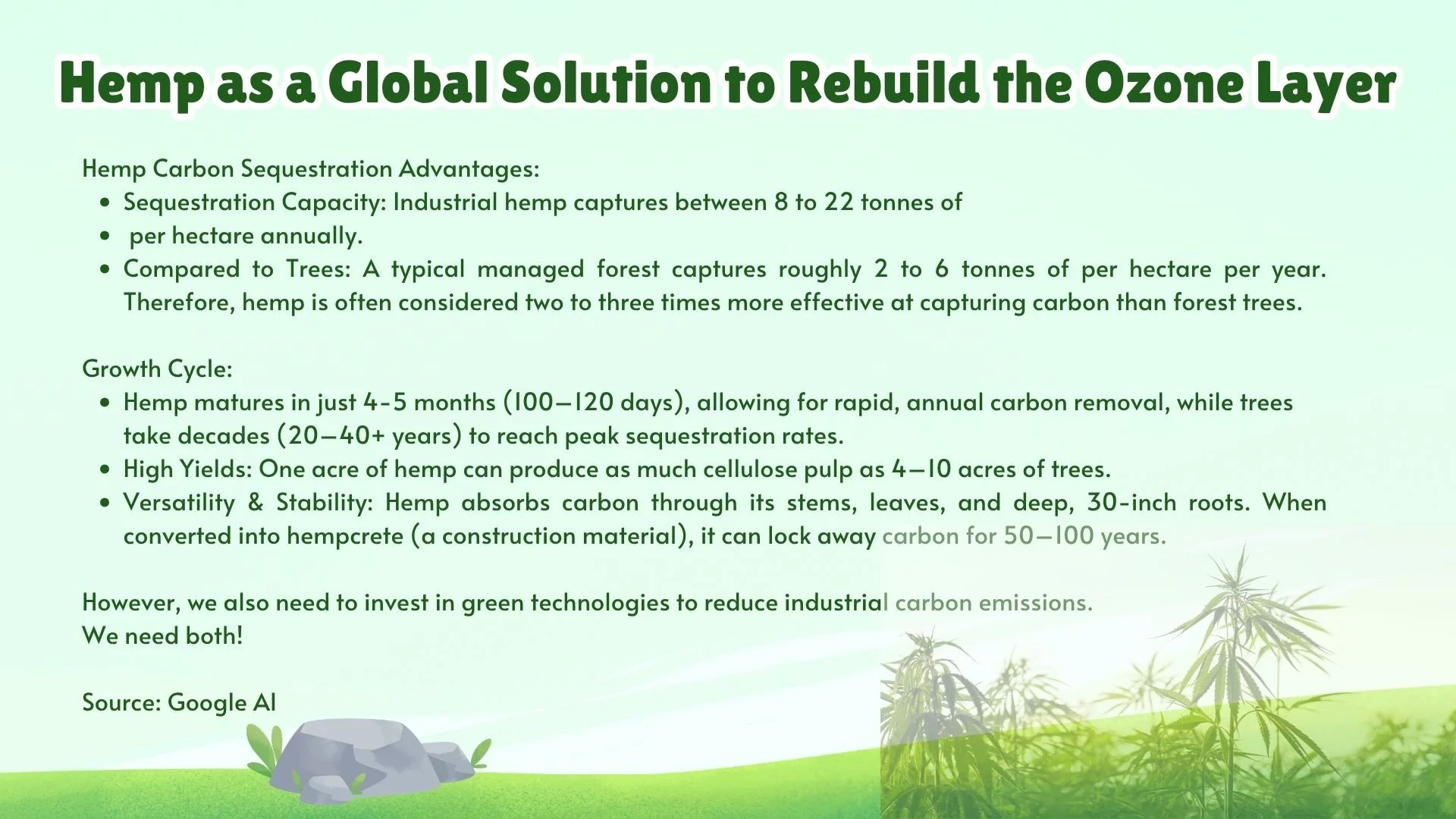
Hemp can absorb twice as much CO2 per hectare as forests and significantly more than conventional crops like cereals.
Hemp vs. Other Plants: CO2 Absorption Rates
Hemp: One hectare of industrial hemp can absorb between 8 and 22 tonnes of CO2 during its growing season, which typically lasts for about 100 days. This high rate is due to its rapid growth and efficient conversion of CO2 into biomass.
Here are other plants and trees known for improving air quality and combatting harmful ozone (from Google AI):
Top Houseplants for Removing Indoor Ozone & Pollutants:
Studies, including research from NASA, have shown that certain houseplants can absorb ground-level ozone and volatile organic compounds (VOCs):
Golden Pothos (Epipremnum aureum): Highly effective at absorbing ozone and other toxins.
Snake Plant (Sansevieria trifasciata): Excellent for removing VOCs and, according to research, capable of reducing indoor ozone levels.
Spider Plant (Chlorophytum comosum): Effective at reducing various indoor air pollutants and absorbing toxins.
Peace Lily (Spathiphyllum): Known to absorb a wide range of toxins, including benzene, formaldehyde, and ammonia.
Areca Palm (Dypsis lutescens): Known to absorb toxins and add humidity to the air, helping to keep indoor air clean.
Trees that Help Protect the Atmosphere
Trees play a vital role in cleaning the air and fighting climate change, which supports the overall health of the atmosphere:
Neem Tree: Known for its ability to absorb carbon dioxide and release oxygen.
Peepal Tree (Ficus religiosa): An effective, 24-hour oxygen-releasing tree that helps purify the air.
General Trees: Trees in general absorb nitrogen oxides (𝑁𝑂𝑥), which are key precursors to the formation of ground-level ozone.
Plants as Biological Indicators
Some plants are highly sensitive to ozone and act as “bioindicators,” allowing scientists to monitor air quality by observing damage to their leaves:
Cutleaf coneflower (Rudbeckia laciniata)
Trumpet creeper (Campsis radicans)
Black cherry (Prunus serotina)
American sycamore (Platanus occidentalis)
How Plants Help
Stomatal Absorption: Plants take in polluted air (including low-level ozone) through tiny pores in their leaves called stomata, metabolizing low doses without damage.
Soil Microorganisms: The roots of plants and the associated microorganisms in the soil are responsible for breaking down many of the toxic compounds absorbed from the air.
While plants help purify the air we breathe, the primary solution for healing the ozone layer remains the reduction of industrial emissions.” — Google AI However, unfortunately almost all countries are not fulfilling their promises to reduce emissions.
From Google AI:
Most countries are not currently on track to meet the Paris Agreement goals, as global emissions continue to rise rather than decline. While over 145 countries have net-zero pledges covering 77% of emissions, only a few have “acceptable” plans. Significant gaps remain between pledges and the actions required to limit warming to 1.5∘C.
Key Findings on Global Progress
Emissions Growth: Despite decarbonization plans in 35 nations, global fossil carbon emissions continue to rise, with a projected 1.1% increase in 2025.
Gap to 1.5°C: Current climate policies and pledges (NDCs) would only reduce emissions by about 10–12% by 2035 compared to 2019 levels, far short of the required 55% reduction needed for the 1.5°C target.
Major Emitters: While some countries like Australia and Germany show significant declines, major emitters have mixed results. China’s emissions are growing slower, but are still rising, while the US is expected to see emissions grow above recent trends.
Net-Zero Plans: While 145 countries have announced net-zero targets, only six of 41 assessed countries have robust plans deemed “acceptable” by experts.
Leaders and Laggards
Progressive Action: Sweden, Norway, and the UK were among the first to commit to net-zero targets.
Lagging Efforts: Many countries have failed to update their 2030/2035 climate plans, and even developed nations like Canada are currently projected to fall short of their targets.
The UNEP 2025 report indicates that to keep warming below 1.5∘C, countries must urgently strengthen their commitments and shift from pledges to implementation.” — Google AI
Solution: Hemp and 3D Printing Can Save the Earth from Climate Change and be Profitable because it can make basically any Product!
A really unique, simple, quick solution to help the environment; Hemp!
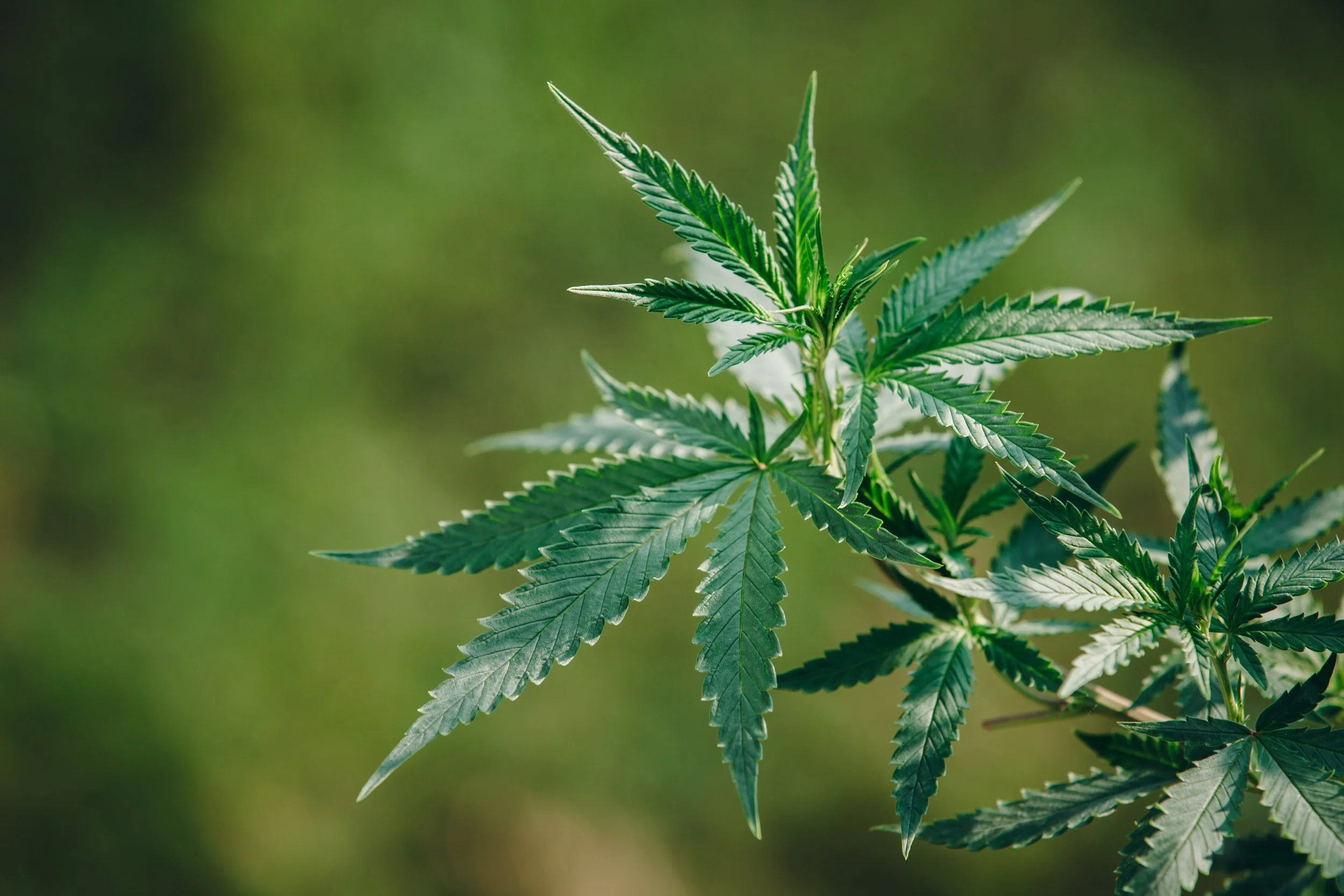
Image by Freepik
Why don’t we change our consciousness from one of adaptation to one of prevention?
This is a key point in my of my articles. We have solutions.
Why are we not acting NOW to prevent these awful situations? Aren’t we intelligent enough?
I believe growing hemp around the world is the preventative solution to this emergency climate crisis.
Please share this article with anybody who can help. Consider your own responsibility in this situation. Send me any questions, ideas, or insights.
Solutionality:
Hemp has a very interesting history in the United States of America. It is not cannabis/marijuana. It is actually useful to make many different products out of.
Hemp-Made, Biodegradable, good-for-the-environment, products that are the fastest CO2 absorbers can possibly save Africa from being uninhabitable due to climate change if we take preventative action and plant quickly!
Hemp absorbs tons of CO2 — twice as much CO2 per hectare as forests. Wow! What a massive positive shift for the environment this could be if people started growing hemp everywhere!
Please read below:
“Hemp can absorb twice as much CO2 per hectare as forests and significantly more than conventional crops like cereals.
Hemp vs. Other Plants: CO2 Absorption Rates
Hemp: One hectare of industrial hemp can absorb between 8 and 22 tonnes of CO2 during its growing season, which typically lasts for about 100 days. This high rate is due to its rapid growth and efficient conversion of CO2 into biomass.
Forests/Trees: Forests typically capture 2 to 6 tonnes of CO2 per hectare per year. While a single, mature tree can store a large amount of carbon over its 40-year lifespan, the rapid annual growth cycle of hemp means it can achieve a much faster CO2-to-biomass conversion rate per year of cultivation.
Cereals: In comparison, cereals store about 1 tonne of CO2 per hectare per year.
Bamboo: Bamboo is another fast-growing plant known for binding large amounts of CO2.
Key Advantages of Hemp for Carbon Sequestration
Rapid Growth: As one of the fastest-growing plants in the world, hemp can reach up to 4 meters in approximately 100 days, allowing for a rapid carbon turnaround and even two crops per year in ideal conditions.
Efficient Photosynthesis: Hemp is a C4 plant, which makes it more efficient in carbon dioxide absorption compared to C3 plants (like many trees and traditional crops).
Long-Term Storage Potential: The absorbed CO2 is stored within the plant’s fibers and woody core, which can be processed into long-lasting products like building materials (e.g., “hempcrete”), textiles, and car parts. This locks the carbon away for a long time, potentially resulting in carbon-negative materials.
Soil Health: Hemp’s deep taproot system improves soil health, aids in nutrient uptake, helps prevent soil erosion, and can even perform phytoremediation (absorbing toxins from the soil).” — Google AI
Read the image below:
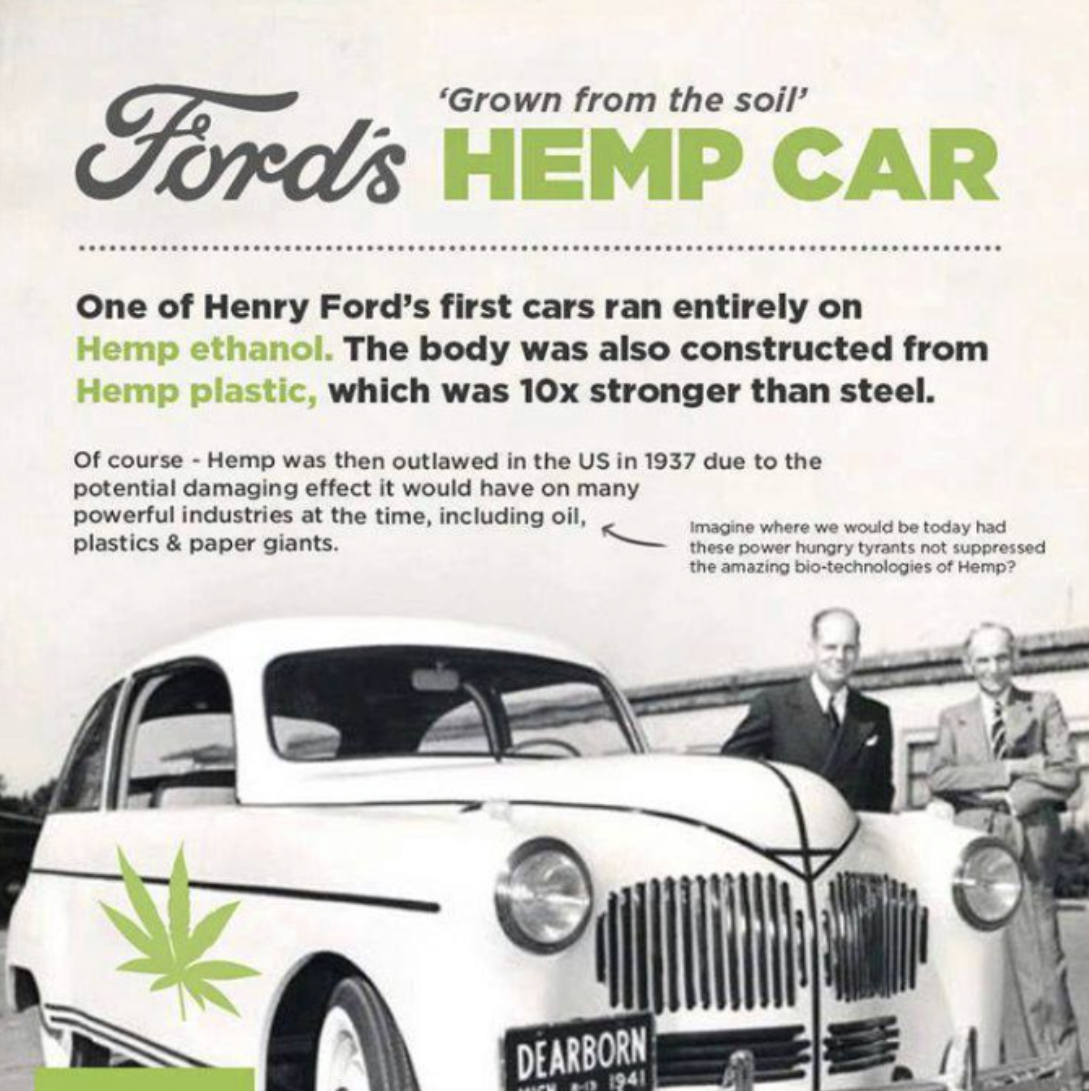
10X stronger than steel, wow!!!!
You can read online about the manipulation that happened around the usage of hemp in the 1930s due to capitalistic egotistical non-environmental, non-futuristic thinking. Pay-offs. Prostitution of congress people by the proletariat, basically.
Hemp was finally legalized in 2018. Yay! It’s so funny, because it’s so harmless and so useful. Why was it even considered to be illegal?
Here is one summary of what happened from Citizen Wolf:
“In fact hemp is a significant part of America’s history and agriculture with the very first American flag being made from hemp fibre. And during the Second World War, Uncle Sam even produced a propaganda film called ‘Hemp For Victory’ to encourage farmers to grow hemp.
With the rise of cotton and synthetic fabrics, combined with America’s harsh ‘War on Drugs’, hemp was outlawed in the 1970s along with it’s more gregarious cousin marijuana. Hemp plants were sensationalised by the media, politicians and corporations as being responsible for poor health and rebellion whereas in reality hemp itself has zero drug value.
With the twin worries of climate change and waste, hemp has (rightfully) started to come back around as the need for alternative eco-friendly materials is in growing demand. In America, campaigners have worked hard to finally legalise hemp and marijuana plants to be grown in 8 states, and in Australia there have been recent changes to allow the cultivation of hemp.
America and Australia are unfortunately quite far behind in the hemp textile industry, with China currently responsible for growing the majority of the global crop.” — Citizen Wolf
https://www.youtube.com/watch?v=QMj69jVHRoY
You must understand that hemp is not cannabis/marijuana, which contains THC and CBD, sacred medicinal herbs that you can read more about in my article here: How to Heal Yourself with Cannabis (Also known as 大麻 / Dàmá / قنب هندي / THC / Μαριχουάνα/ Santa Maria), which has been used by spiritual traditions throughout the centuries.
Now that hemp has been legalized, some incredible entrepreneurs and engineers are starting to build hemp cars. Here is an incredible new version below:
(Also note: Throughout this article, I include websites under each photograph. You can click on them to learn more about hemp, purchase their products, or get creative ideas for your own project.)

Hemp can also be used in construction materials:
Read this article: 3D Printed Hemp Buildings Could Transform the Construction Industry and Solve a Housing Crisis (wow!):
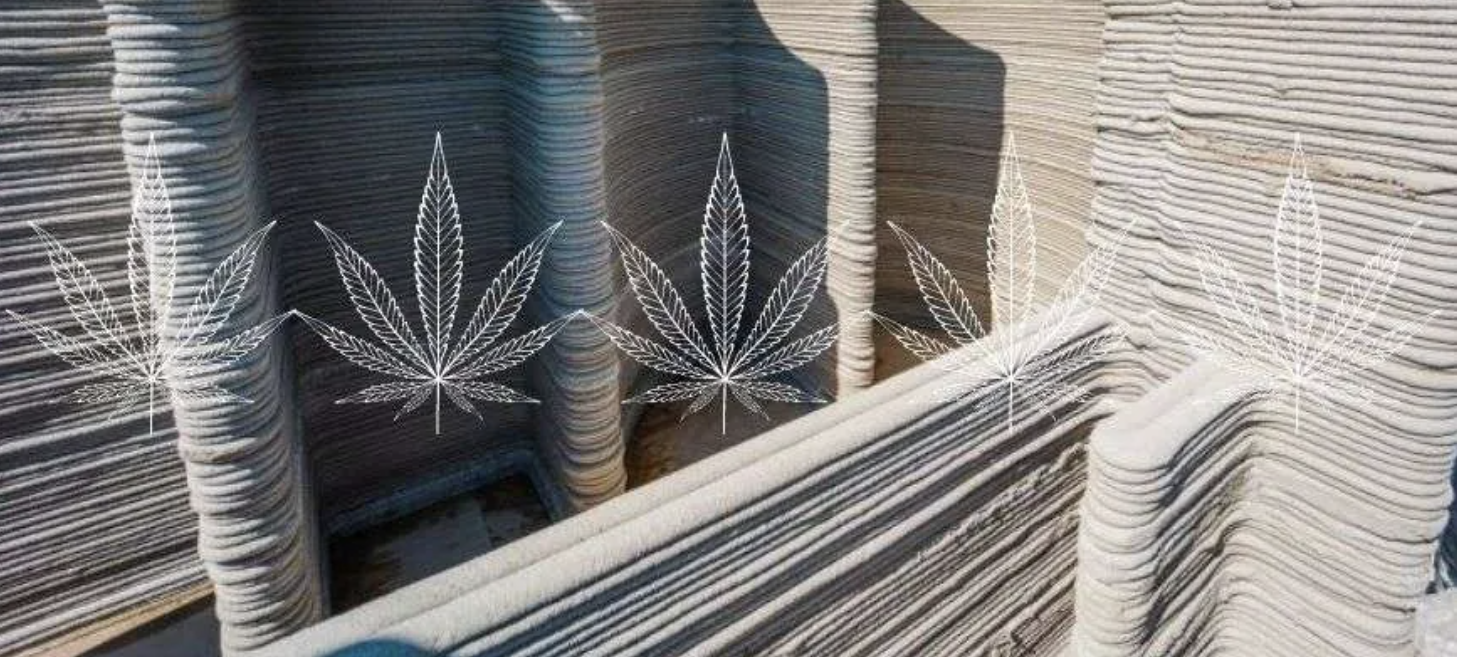
“The efficiency of 3D printing outpaces traditional building times and methods. The amount of time to construct a 1,600-square-foot building using the 3D hemp ink model takes around 30 hours compared to the 2-4 months using conventional methods and materials. And with only a fraction of the physical labor and onsite workforce.” —CannabisTech
And look at these super cool hemp-made modern-looking houses. Wow! What is possible!?
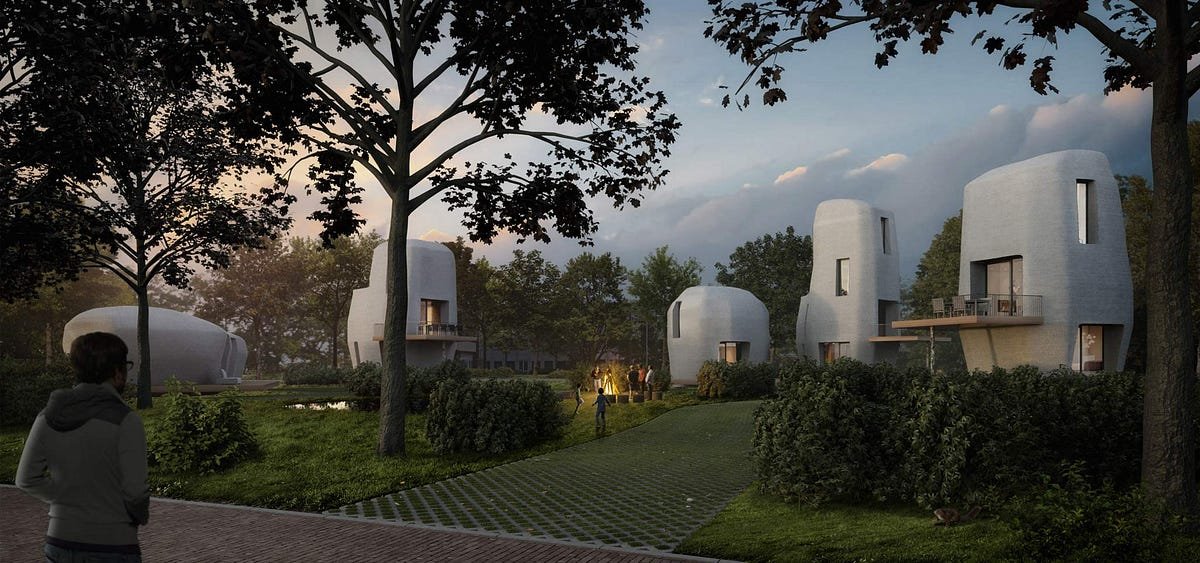
Also, I have the idea of using 3D printing anywhere in the world. That way you can be independent, sustainable, creative, and versatile in your construction abilities.
Also, another idea from me, why not make the 3D Printing all solar-paneled, free-energy?! Wow! How environmentally-conscious and independently sustainable would that be! No matter what happens in the world you are safe. Make sure to include greenhouses of food.
Read below about the benefits from Future Earth:
“The 3D printing of buildings as well as hemp-panelled homes are among the green building trends sweeping the world.
Thanks to pioneering technology, an Australian company, Mirreco is planning to roll out 3D-printed hemp homes that could transform residential and commercial buildings.
A Perth-based biotechnology company envisions a world where “the dire consequences of global warming will not be realized since we have taken action”.
Mirreco has developed innovative, carbon-neutral hemp panels for residential and commercial building. These can be 3D-printed into floors, walls and roofs.
The fast-growing plant hemp absorbs large amounts of CO2, making it an environmentally friendly and efficient building material. It’s the merger of hemp and 3D printing that gives them the edge.
In addition to its potential use, hemp’s associations, and confusion with marijuana have attracted considerable attention. Since the first fibre of hemp was spun over 10,000 years ago, hemp has been used to various degrees.
Since then, its uses have continued to multiply as it continues to prove to be an incredibly versatile material, including for 3D printing.
The panels are “structurally sound, easy to produce, and provide superior thermal performance” in comparison with traditional building materials.
“Just imagine living and working in buildings that are 3D-printed and available to move into in only a matter of weeks.”
Applications of 3D Printed Constructions
This sort of low cost sustainable approach to construction is perfectly suited for the following and more.
- The social housing sector,
- Indigenous and regional communities,
- Mining Camps,
- Accommodations in case of emergency
- Homes for residential use,
- Acoustic panels for roadside use, office partitions, and industrial pallets are all commercial applications.
*(I would add for the homeless too! — Ashley Michelle Heacock)
In a project described as “Aussie ingenuity at its best,” the company recently unveiled a hemp home concept designed by Perth-based Arcforms.
“The floors, walls and roof will all be made using hemp biomass, and the windows will incorporate cutting-edge technology that allows light to pass through glass where it is converted into electricity.”
-Mirreco
It was recently announced that Bosrijk, A town in the south of the Netherlands, will host the world’s first inhabitable 3D-printed houses.
Five concrete houses will be built as part of the project’s milestone, and the first residents should move in as soon as next year.
In its final stage, the project will be carried out by a consortium of partners and spearheaded by Eindhoven University of Technology. Developers have described the project as a “game changer” that could “stimulate 3D building” all over the world.
“With this technology we can do things we couldn’t do before. In design, for instance, we can create shapes that normally can hardly be made, and that if they can be made, are only produced in large quantities. But here we can do unique industrial custom-made work.”
-Professor Theo Salet
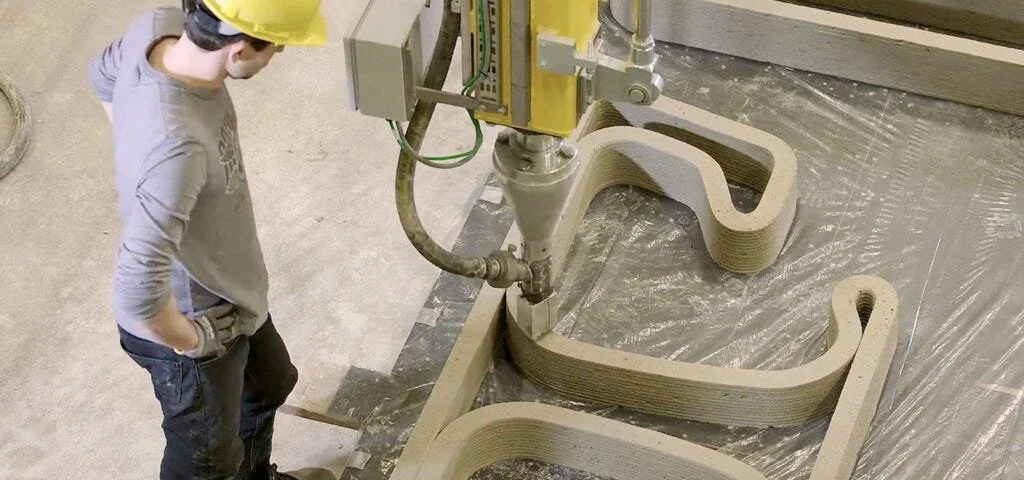
These distinctive Stonehenge-like houses are built with minimal waste by a robot that prints layer after layer of concrete.
“It’s important to think like the end-user. An end-user wants a nice house in a nice location. Now we’re able to use that technology to create a beautiful house, a place you want to live in and come home to.”
-Rudy van Gurp — Consortium Spokesperson
The sheer scope of possibilities for 3D Printed sustainable designs are endless, as are the applications for such a positive step in the future of architecture and sustainability.”
— Future Earth
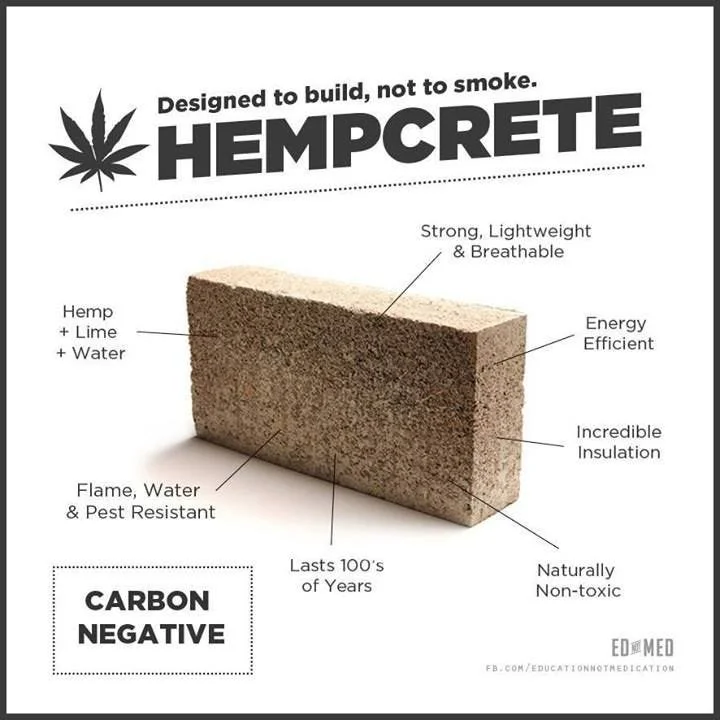
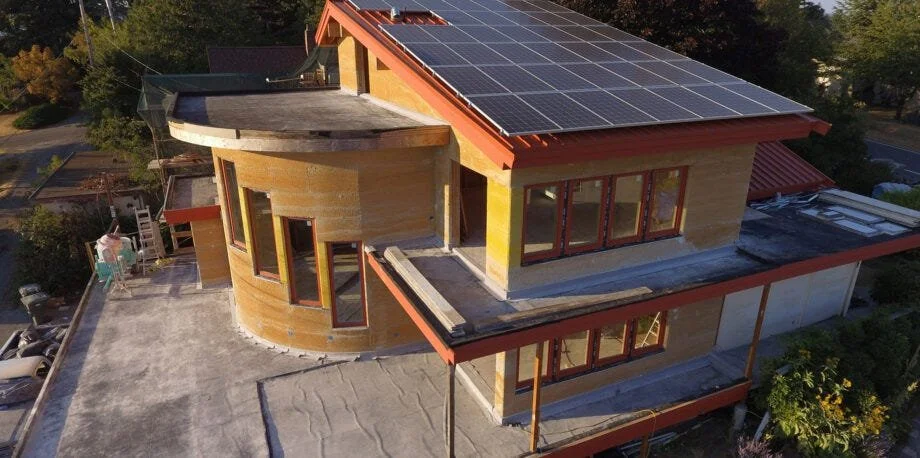
Read below what Ensia has to say about hemp’s potential:
It has become almost a cliché to discuss the benefits of hemp, the supposed wonder plant with almost endless uses — from woven fibers to edible seeds to bioplastics. “Of course, hemp is that magic crop that does everything,” says Nicholas Carter, an environmental researcher who, along with Tushar Mehta, a Toronto-based doctor, runs the website Plant Based Data. His work involves reading through scientific papers and studies and summarizing the most important work supporting plants as a source of food and other important uses. Given the hype, Carter wondered just how much power hemp really had. “I wanted to see the research out there on it, to see what’s actually real, what’s actually backed by evidence,” he says.
Magic? Not exactly. But Carter came away from his attempted debunking a hemp believer. And one of the most promising of its many uses, he found, is its application as a building material known as hempcrete.
Like its namesake concrete, hempcrete is a material mixed with a binder that hardens it into a solid in the form of blocks and panels. Made from the dried woody core of hemp stalks and a lime-based binder, hempcrete can be cast just like concrete. But unlike concrete and its binding cement, which accounts for about 8% of human-generated carbon dioxide emissions annually, hempcrete actually sequesters CO2. According to a recent study, hempcrete can sequester 307 kilograms of CO2 per cubic meter (19 pounds per cubic foot), roughly the equivalent of the annual carbon emissions of three refrigerators.
“While we’re growing it and building hempcrete, it’s sucking CO2 the whole time and encapsulating the CO2 in the structure,” says Eric McKee, founder of the U.S. Hemp Building Association.
“What’s really important about this material is we can create new structures or we can update or retrofit existing structures so that they don’t need air conditioning,” Allin says.
As Karade notes, hempcrete has a high thermal capacity compared with concrete, making it good for both the structure of a wall and its insulation.
Hempcrete can also cut down on another big problem: construction waste. Concrete represents more than half of the debris generated by building construction and demolition. The U.S. Environmental Protection Agency estimates that more than 23 million tons (more than 20 million metric tons) of concrete debris was created during construction in 2015. And while hempcrete can’t be used for structural sections of a building, it can be used to replace non-structural elements of walls that traditionally could use concrete. Hempcrete can also be used in place of common construction materials like drywall and plaster, which account for about 8% of building construction debris.
— Ensia Feature Article
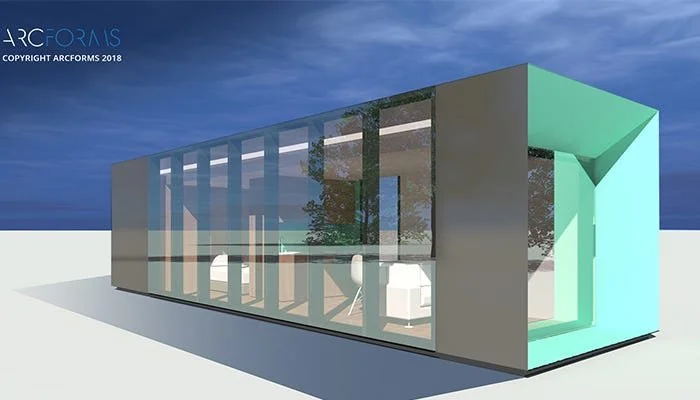
Read what 3DNatives has to say about hemp’s potential:
Mirreco stated: “The floors, walls and roof will all be made using hemp biomass, and the windows will incorporate cutting-edge technology that allows light to pass through glass where it is converted into electricity.” The company’s intentions are; to manufacture, sell and/or own and operate a full fleet of mobile machines to process hemp onsite at relevant farming locations. The construction will be build using a plus sized printer, such as the recent XXL 3D printer created by S-Squared 3D printers. — 3DNatives Article
Hemp can also be very useful in your home. Look at these stunning products:

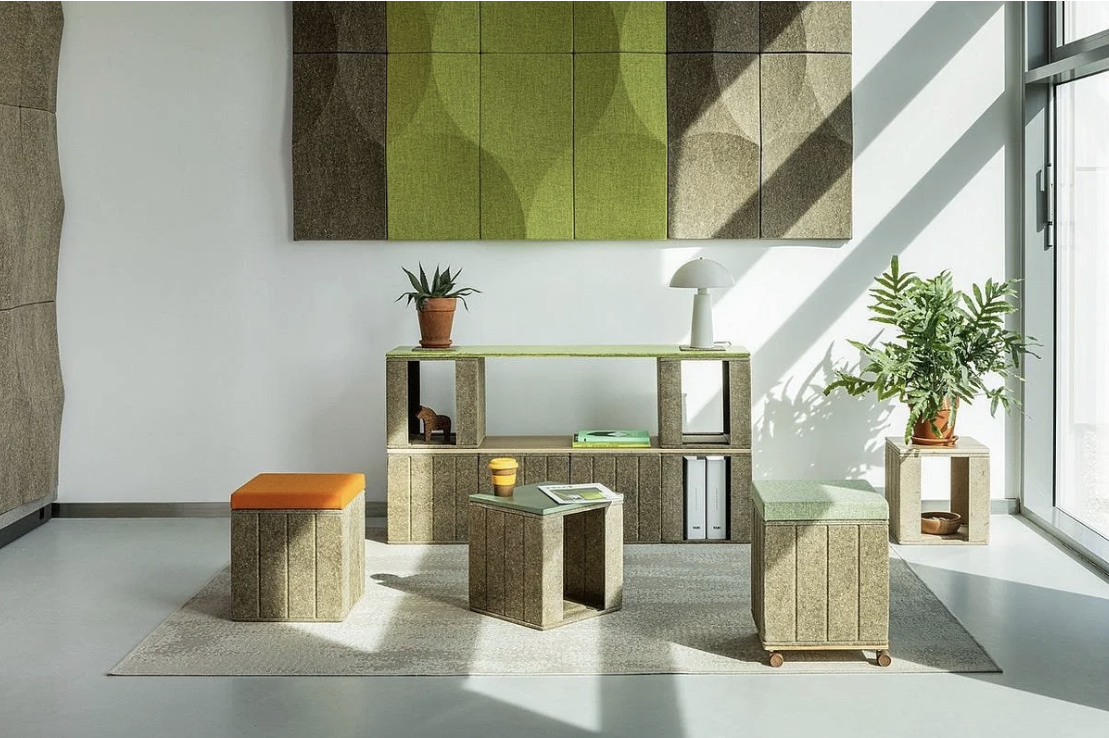
If you are in the restaurant industry, here are some options for you:
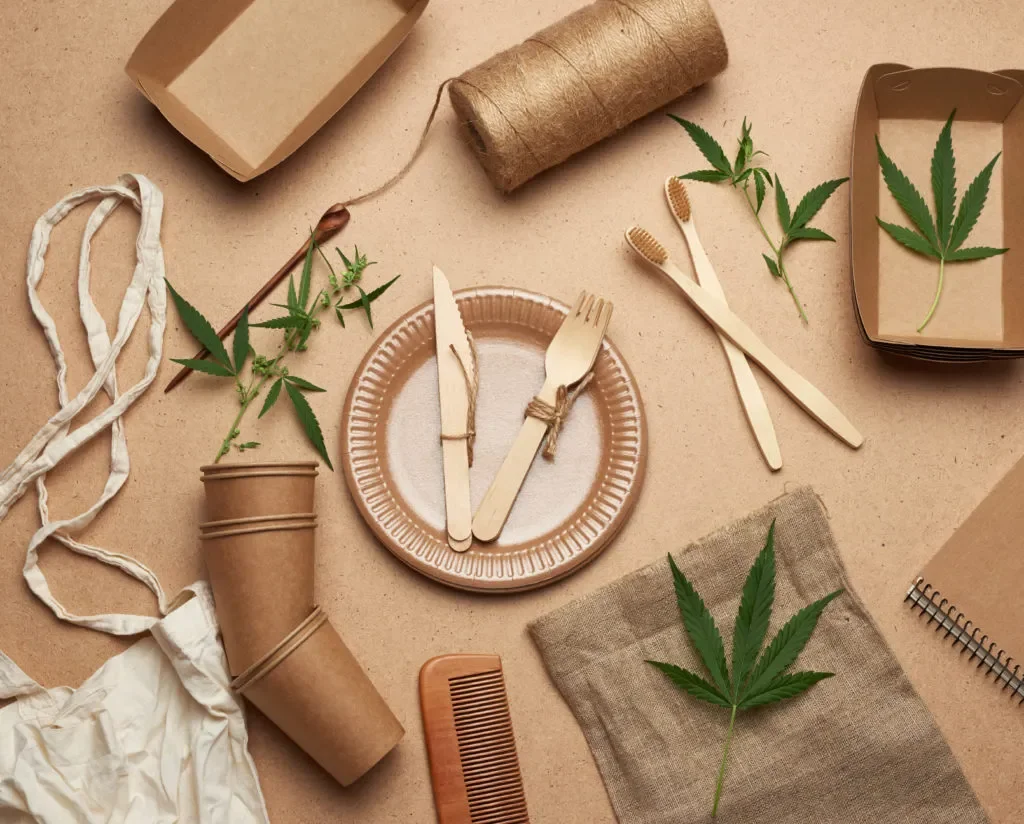
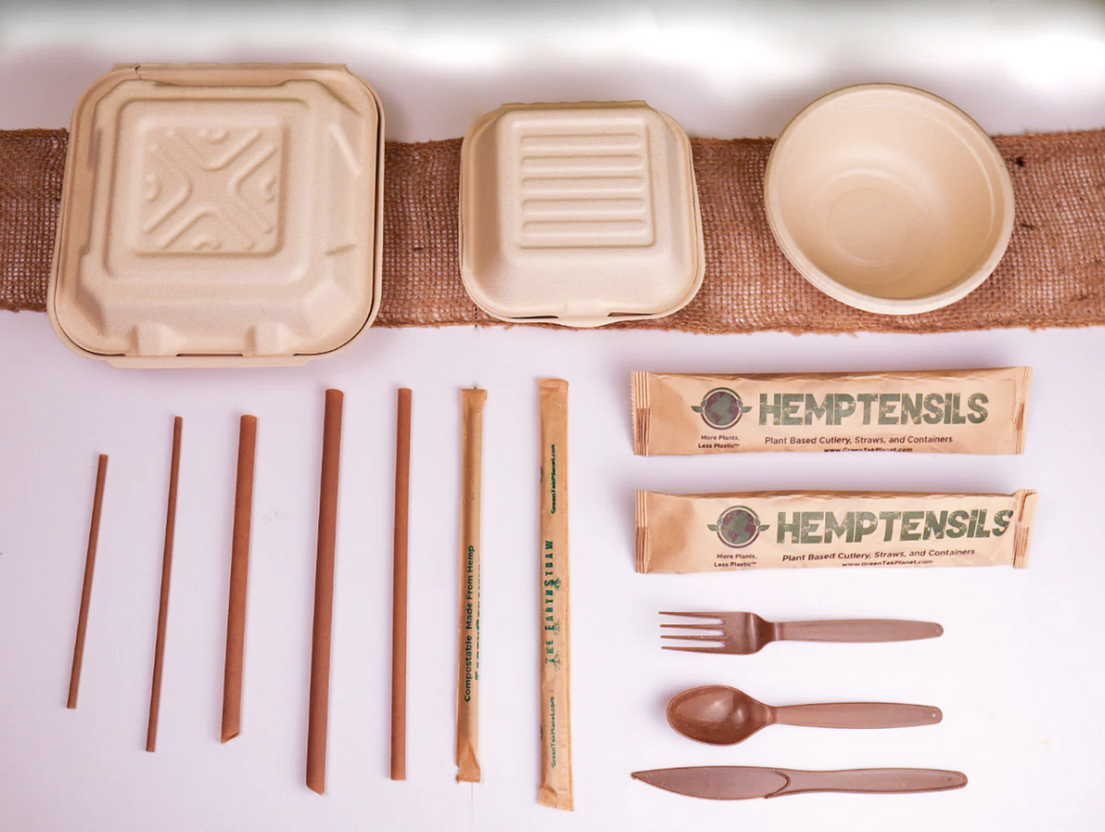
If you’re in other industries, here are other hemp-made products that may be useful to you if you are a person who wants to be more eco-friendly:
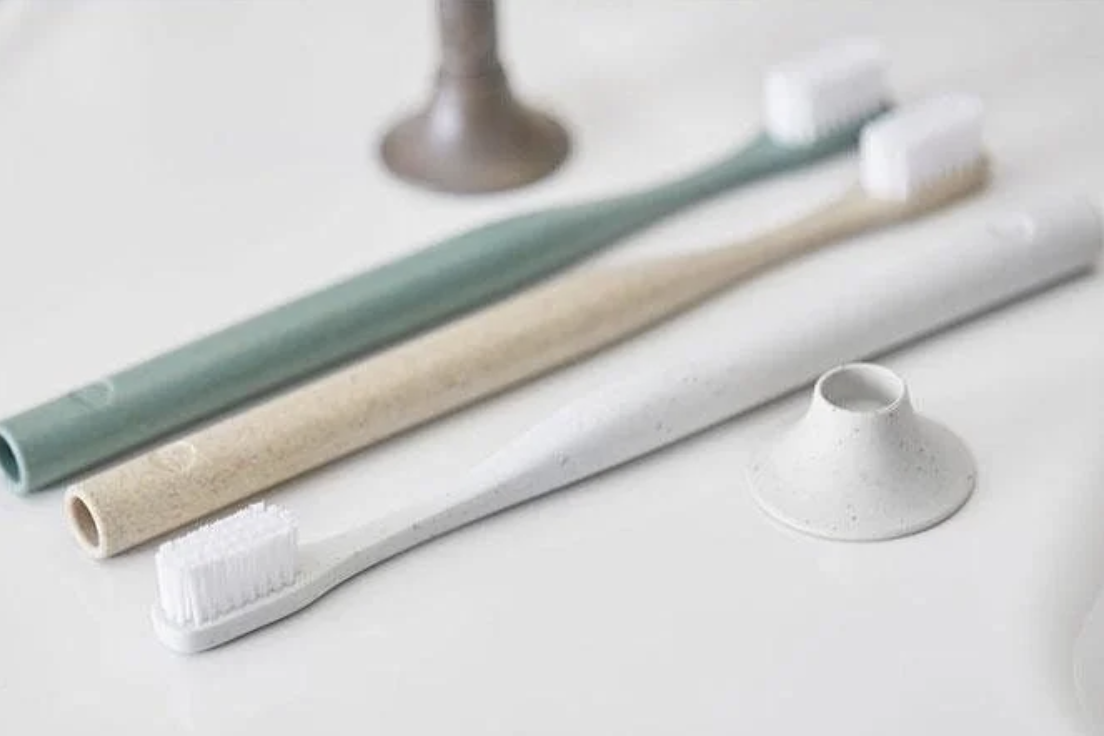
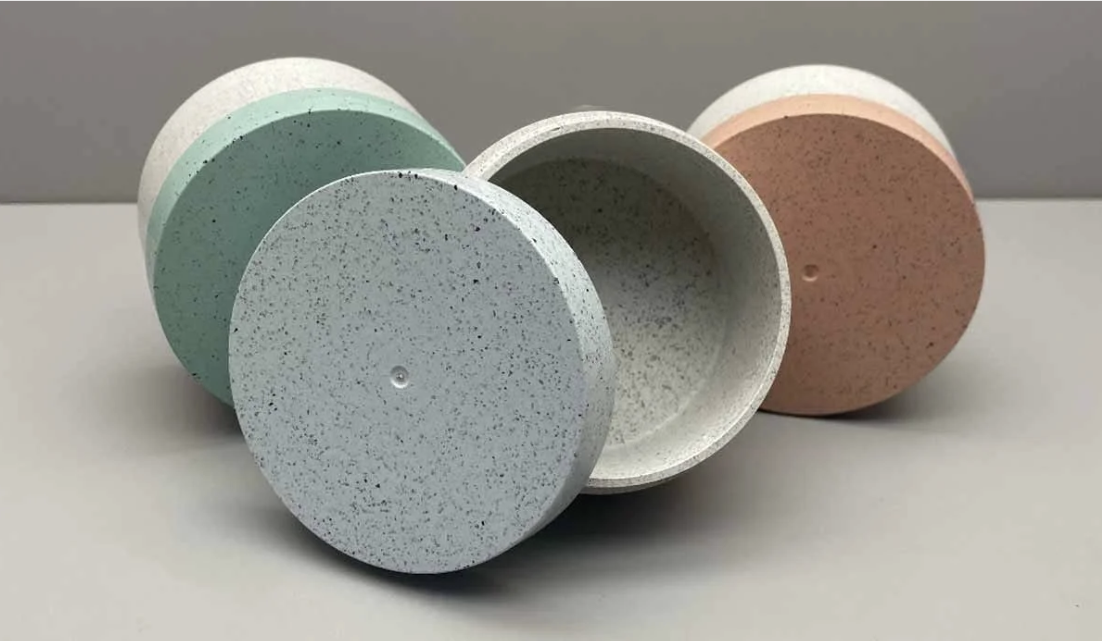
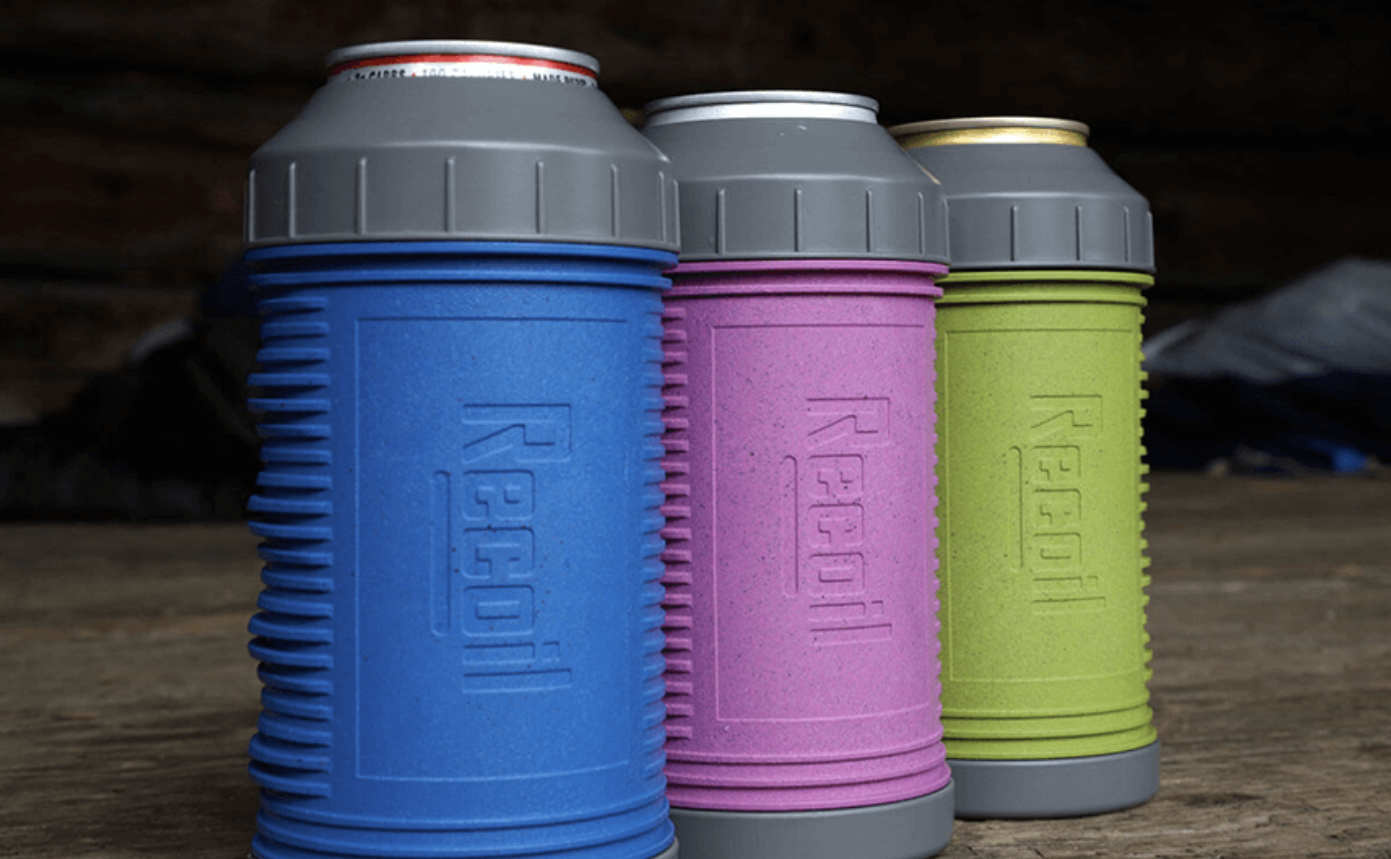
Therefore, hemp can be used for so many things. Just look at these two graphics below:
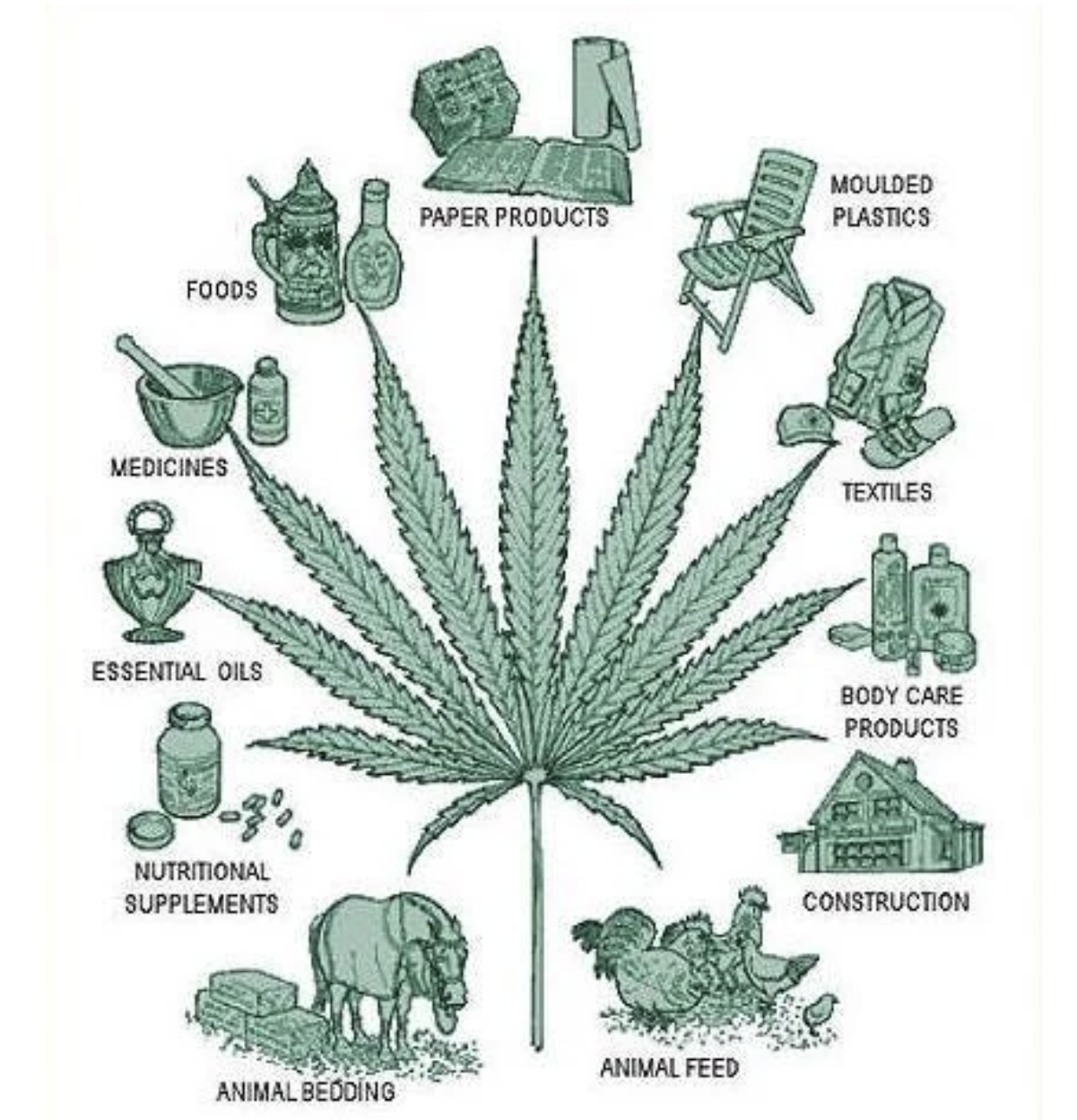
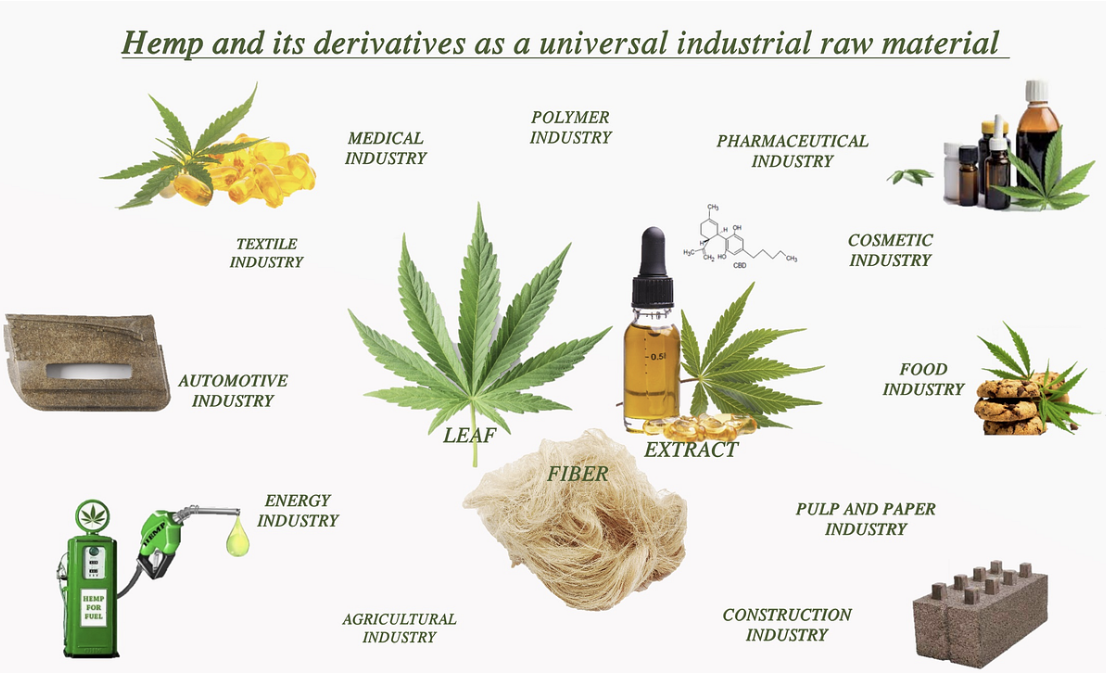
Why don’t we change our consciousness from one of adaptation to one of prevention?
This is a key point in my of my articles. We have solutions.
Why are we not acting NOW to prevent these awful situations? Aren’t we intelligent enough?
I believe growing hemp around the world is the preventative solution to this emergency climate crisis.
Please share this article with anybody who can help. Consider your own responsibility in this situation. Send me any questions, ideas, or insights.
Also, we can grow more flowers for the bees that feed our needs (our food). We can grow herbs. This would all be a more pleasant ozone layer and atmosphere. It can be healed. We can also invest in green technologies so we do not pollute the air and cause children in Pakistan to not even be able to go to school because it is so dangerous due to India’s manufacturing petroleum-based industries that are sweeping into their neighbor’s land due to the wind.
Who is next? Can we help our neighbors? Can we be creative and use preventative solutions NOW?
Listen to this inspirational video about Wangari Maathai from Kenya. Planting hemp, trees, flowers, etc. is entirely possible. She and her team and nation did it together. You can too!
https://www.youtube.com/watch?v=BQU7JOxkGvo&t=229s
The Greatest Commandment from Jesus; The Bible; Mark 28–34
Mark 28 One of the teachers of the law came and heard them debating. Noticing that Jesus had given them a good answer, he asked him, “Of all the commandments, which is the most important?”
29 “The most important one,” answered Jesus, “is this: ‘Hear, O Israel: The Lord our God, the Lord is one.[e] 30 Love the Lord your God with all your heart and with all your soul and with all your mind and with all your strength.’[f] 31 The second is this: ‘Love your neighbor as yourself.’[g] There is no commandment greater than these.”
32 “Well said, teacher,” the man replied. “You are right in saying that God is one and there is no other but him. 33 To love him with all your heart, with all your understanding and with all your strength, and to love your neighbor as yourself is more important than all burnt offerings and sacrifices.”
34 When Jesus saw that he had answered wisely, he said to him, “You are not far from the kingdom of God.” And from then on no one dared ask him any more questions.
I hope this is helpful to you! Please consider this as an option for you, your company, your community, the world, Africa, your neighbor, your friend, your children, your children’s children, all the generations to come.
It would be very kind if we who are alive right now heal the earth together, and act quickly. That would be an impressive legacy for our children.
Please share this article with anybody who can help. Consider your own responsibility in this situation. Send me any questions, ideas, or insights.
Organic, Sustainable, Community-Orientated Farms for the World
Although this presentation says it’s for California (because there is a massive homelessness crisis there), it really is a prototype for the entire world! https://www.youtube.com/watch?v=7j6AB8WbKnU&t=9s
You can also read it here on My Website, or on Medium.
The Compassion Network (A Fund for those with Inspired Ideas for People and Planet)
https://www.youtube.com/watch?v=kWIfnuJbX6A
You can also read this presentation on My Website or on Medium.
What Needs to Be Done Now to Save the Earth
Providing multi-level actions for everybody around the world
Image by Freepik
What is Going On?
The earth is dying because of too much manure and pollution. More diseases like COVID or AIDS, STDs, could become more rampant. Our food could acidify (the oceans already are, and probably food too if anybody has been calculating that). Our food and air could be manure and petroleum-filled, leading to abnormalities in birth rates (which is already happening, FYI).
If you want the saddest details of our demise because we are not planning and acting fast enough, here they are:
“Leading wildlife charity Butterfly Conservation has revealed very low numbers of butterflies have been spotted so far in their annual Big Butterfly Count. On average participants are seeing just over half the number of butterflies they were spotting this time last year…
However, the charity is also warning that it is not only this year’s weather that is contributing to the lack of butterflies being seen. 80% of butterflies in the UK have declined since the 1970s, with habitat loss, climate change and pesticide use the main drivers of this decline.
Dr Dan Hoare continues: “The lack of butterflies this year is a warning sign to us all. Nature is sounding the alarm and we must listen. Butterflies are a key indicator species. When they are in trouble we know the wider environment is in trouble too.” — Butterfly Conservation
“The Amazon rainforest is now emitting more carbon dioxide than it is able to absorb, scientists have confirmed for the first time. The emissions amount to a billion tonnes of carbon dioxide a year, according to a study. The giant forest had previously been a carbon sink, absorbing the emissions driving the climate crisis, but is now causing its acceleration, researchers said. Most of the emissions are caused by fires, many deliberately set to clear land for beef and soy production. But even without fires, hotter temperatures and droughts mean the south-eastern Amazon has become a source of CO2, rather than a sink. Growing trees and plants have taken up about a quarter of all fossil fuel emissions since 1960, with the Amazon playing a major role as the largest tropical forest. Losing the Amazon’s power to capture CO2 is a stark warning that slashing emissions from fossil fuels is more urgent than ever, scientists said.” — The Guardian
So, obviously we have a Problem. I have detailed solutions below.
Image by Freepik
Basic Necessities to Save the Earth:
We need things to be clean.
We need things to be efficient.
We need things to be in harmony with the environment, ecology, the natural world.
We need to use new green technologies.
We need to use intelligent and kind diplomacy with each other. We are One World. We can solve this crisis Together.
We need to be Planners. Let’s not wait idly by until another disease crisis infiltrates the air or our food becomes ultimately inedible. Let’s use our Intelligence to start acting quickly now.
Solution Outline and Responsibilities of Each Party:
Personal Efforts
United Nations Efforts
Government Efforts
Factory Efforts
NASA/MIT System Dynamics/Environmental Protection Agency Cooperation Efforts
Personal Efforts:
Plant gardens upon gardens upon gardens. For plants, animals, meditation, dating, love, life.
Sustainable farms with diverse produce so you can be completely sustainable and self-sufficient and ensure you have food for your community (rather than just wheat/rice/soy crops that you couldn’t survive on if exportation from another country fell through.)
Plant cannabis, hemp, everywhere possible because it consumes massive amounts of carbon and can also replace plastic produce that are non-biodegradable with products that are like plastic, but biodegradable! It also helps regenerate soil, producing good soil for produce. “Yes, hemp can regenerate soil by adding nutrients, removing toxins, and improving soil structure. Hemp is a good fit for regenerative farming, which aims to restore the soil’s carbon, water, and nutrient cycles.” — Google AI
Other good plants that reduce carbon from the air: live oak, eucalyptus, poplar, evergreen sequoia, scots pine, mangroves
Plant flowers for the bees! We need more bees! “The bee population is declining globally due to a variety of factors, including climate change, habitat loss, and pesticides.” — Google AI
Stop using chemical products (fertilizers, pesticides) and start using organic options like horse poop, or something in your community. It’s quite easy. Look it up online!
Stop using chemical products in your home. There are so many organic options at Target, Safeway, Amazon, etc. I have written about them in a lot of my blogs. Just do a Google Search for what you need for soap, cleaning, etc. that is biodegradable and safe for our water system and your children so we do not ingest chemicals. Thank you.
Try out Veganism. Make sure you get B12, which can be found in nutritional yeast at your local co-op or organic store. Use a blender for fresh juices that are elevating for your mood. Try home-cooked meals that include complete proteins. When you combine complete proteins with vitamin C this is the optimal combination, according to my research. I am always open to new ideas, so feel free to message me your recipes!
Look into Home Bio Gas, it’s a really cool new eco-tech company!
What ideas do you have? Feel free to comment below!
United Nations Efforts for the Poor, Free:
Solar/Nuclear/Wind/Sensorial panels for: Refrigeration for animal products (so we don’t get another COVID/AIDS/who knows what in the air that spreads to everyone.)
Separation of animal products from produce in all markets
Solar/Nuclear/Wind/Sensorial panels for: Hot water showers
Solar/Nuclear/Wind/Sensorial panels for: Washers for clothes to be cleaned
Compostable, clean, sanitary bathrooms for the developing world, plus places for washing hands with soap. (Look up Enviro-Loo from South Africa.)
All we have to do is redistribute money from the rich to these projects so we can avoid another COVID, AIDS/HIV, any virus, pathogen, that could cause many lives to suffer, be killed, or end up with an STD.
Perhaps learn from or partner with GiveDirectly, an organization that gives money directly without stipulations to all of the poor all over the world so they can rise. Learn more about GiveDirectly at https://www.givedirectly.org/home/
Give to young bright entrepreneurs with a purpose for people and planet (This is the Compassion Network I’m seeking to start. You can learn about it here: bit.ly/TheCompassionNetwork If you have advice for me, please email me at ashleyheacock@gmail.com) Or if the UN can initiate this project, I would be grateful!
What ideas do you have? Feel free to comment below!
Government Actions:
Net Zero Emissions by 20XX (What would an Excel Spread Sheet / System Dynamics program tell you to do? How much do we need to do now to avert death and destruction of the earth? Look what this Chinese University, School of Management and Engineering, Capital University of Economics and Business, did with the Vensim program for calculating pollution.)
Net Factory Emissions lowered by x% by 20XX
Net manure emissions lowered by x% by 20XX
Investing in Solar/Nuclear/Wind/Sensorial panels for your electric grid
What else?
Incentivize Sustainable Farms that are diverse and able to provide for the community what they need to survive, rather than just cash crops. This can be turned into Army-non-violent Prisoners-Jobless people initiative. We can then have a network of farms for people to live, including the homeless who could then have meaningful work. Women can also work on the farms, gardening, cooking, cleaning. You can learn more about this program I have been envisioning here: bit.ly/OrganicCommunityFarm
7. What ideas do you have? Feel free to comment below!
Factory Actions:
Start researching renewable energy sources
What is most efficient?
What is most long-lasting?
What is most practical?
What is the best product on the market?
Think about the long term, not the short term. You can get a loan, and have more security knowing you got the best product out there.
What ideas do you have? Feel free to comment below! Or share what incredible technology you have to offer the world!
NASA/MIT System Dynamics/Environmental Protection Agency Cooperation Efforts
Start an atmospheric research department that does kind of what Google Maps does. It shows where the carbon, oxygen, nitrogen, etc. hot spots are around the entire globe. That way we can begin to map out where all of this pollution is coming from, and where all of the spots are that are helping absorb it. I would consider water, air, earth, etc. However, I would also consider what I wrote about in my first article, about how we are all involved and implicated in different ways, and my second article that outlines potential variables.
Start laboratory tests. One where there is manure and petroleum pollution everywhere, etc. however, with hardly any plants, kind of like a city. Then do another laboratory where there are a lot of plants. Discover which ones soak up the most carbon, or whatever categories you all come up with that would be beneficial. Then, bring politicians to the two labs, and show them the costs of not helping save the earth.
Start using System Dynamics and Artificial Intelligence in your work. If you are not aware of what System Dynamics is (which was started at MIT and I took the classes), you can read my second article here. You have to scroll down to the bottom to see the diagrams. I believe this will be very beneficial for your team. You can download Vensim for free here.
You can contact the MIT System Dynamics team here. You can contact NASA here. You can contact the Environmental Protection Agency if you have a contact there, or here is the contact for the EPA Administrator, Lee Zeldin, here.
What ideas do you all have? Feel free to comment below!
Next Chapter on Financial and Health Benefits of Going Green!
4) Financial and Health Benefits of Protecting the Earth
Financial Benefits (from Google AI):
“Going green offers significant financial advantages for both individuals and businesses by reducing long-term costs, opening new revenue streams, and providing access to various financial incentives.
For Businesses:
Operational Cost Savings: Adopting energy-efficient systems like LED lighting (saving up to 75% energy) and smart climate controls can reduce utility bills by 20–30%. Circular economy models can also slash raw material costs by up to 90%.
Access to Green Capital: Companies with high ESG (Environmental, Social, and Governance) ratings often enjoy a lower cost of capital and better borrowing rates through green bonds or sustainability-linked loans.
Increased Revenue & Pricing Power: Approximately 73% of Gen Z consumers are willing to pay a premium for sustainable products, providing companies with greater pricing power. Sustainable product lines have been shown to grow up to 50% faster than conventional ones.
Regulatory & Tax Incentives: Governments offer various tax credits, grants, and subsidies for eco-friendly upgrades, helping to offset initial investment costs.
Talent Attraction & Retention: Sustainable practices reduce recruitment costs; nearly 1 in 3 young workers have rejected job offers due to a company's lack of environmental commitment.
For Individuals:
Reduced Utility Bills:Simple steps like adjusting thermostats and installing energy-efficient appliances can significantly lower monthly power and water costs.
Increased Property Value: Energy-efficient homes tend to have higher resale values, often selling for roughly 2.7% more than traditional homes.
Lower Transportation Costs: Switching to public transit, biking, or electric vehicles (which may qualify for tax credits up to $7,500) reduces fuel and maintenance expenses.
Government Rebates: Homeowners can access federal and state tax credits for solar installations and energy-efficient home improvements.
Reduced Consumption Costs: Sustainable habits such as buying in bulk, choosing durable goods over "fast fashion," and reducing food waste can dramatically lower overall grocery and household spending.
Health Benefits (From Google AI)
Adopting a "green" lifestyle provides a widerange of physical, mental, and environmental health benefits. These advantages stem from direct interactions with nature, the consumption of sustainable foods, and the use of eco-friendly products.
Mental Health & Well-Being:
Stress and Anxiety Reduction: Spending time in green spaces like parks or forests lowers cortisol levels (the stress hormone) and triggers physiological responses that promote relaxation.
Improved Mood and Focus: Exposure to nature is linked to higher levels of happiness, reduced feelings of anger or fatigue, and enhanced concentration through "attention restoration".
Sense of Purpose: Actively participating in environmental protection can reduce "eco-anxiety" by giving individuals a sense of agency, fulfillment, and meaning.
Cognitive Development: For children, growing up near green spaces is associated with a lower risk of developing psychiatric disorders later in life and supports better cognitive development.
Physical Health Benefits:
Cardiovascular Health: Regular access to green environments is associated with lower blood pressure, reduced heart rate, and a decreased risk of heart disease and stroke.
Respiratory Health: Embracing sustainable practices (like using renewable energy or biking) improves air quality, which reduces the prevalence of asthma, bronchitis, and other respiratory illnesses.
Immune System Support: Trees release natural compounds called phytoncides, which can increase the activity of natural killer cells that help the body fight infections.
Better Sleep: Daily exposure to natural light and the stress-reducing effects of nature help regulate sleep-wake cycles (circadian rhythms), leading to improved sleep quality.
Nutritional & Lifestyle Benefits:
Plant-Based Diets: Transitioning to diets rich in leafy greens and plant-based foods can lower the risk of type 2 diabetes, obesity, and certain cancers while providing essential vitamins and antioxidants.
Reduced Toxin Exposure: Choosing eco-friendly household cleaners and organic personal care products limits your exposure to harmful chemicals like VOCs, phthalates, and synthetic fragrances that can cause skin and respiratory irritation.
Increased Physical Activity: Green spaces naturally encourage movement through activities like hiking, gardening, and biking, making it easier to maintain a healthy weight.
Community & Economic Gains:
Social Cohesion: Community gardens and green initiatives foster a sense of belonging and provide opportunities for meaningful social interaction.
Cost Savings: Green living often translates to lower utility bills through energy-efficient appliances and long-term savings from using durable, reusable products.
Switching from chemical-based to natural products offers several health benefits for both humans and the environment:
Improved Indoor Air Quality: Conventional products often release volatile organic compounds (VOCs), which can cause headaches, dizziness, and respiratory issues. Natural alternatives, such as those certified by the EPA's Safer Choice program, use essential oils and plant-based ingredients that emit fewer or no harmful VOCs.
Reduced Endocrine Disruption: Many synthetic products contain phthalates and parabens, which are known hormone disruptors linked to fertility issues, developmental delays, and certain cancers. Natural products typically exclude these substances, supporting long-term hormonal health.
Lower Risk of Skin Sensitivities: Natural personal care items are often hypoallergenic and free from harsh surfactants like sodium lauryl sulfate (SLS), which can strip natural oils and trigger conditions like eczema or dermatitis.
Protection of Ecosystems and Waterways: Chemical cleaners frequently contain non-biodegradable toxins that leach into soil and water, harming aquatic life. Natural products are generally biodegradable, breaking down quickly without leaving toxic residues that disrupt ecological balance.
Mitigation of Microplastic Pollution: Conventional cosmetics often use microbeads, which contribute significantly to plastic pollution in aquatic ecosystems. Switching to natural brands that use plant-derived exfoliants helps reduce this persistent environmental hazard.
Support for Sustainable Agriculture: Many natural products utilize ingredients from organic or regenerative farming, which avoids synthetic pesticides and fertilizers that contaminate water systems and degrade soil health.
Benefits of switching from chemical foods to organic foods, and to more vegan or vegetarian options:
Switching to an organic vegan diet offers significant health benefits, including enhanced weight management, improved heart health (lower blood pressure/cholesterol), reduced cancer risk, and better management of type 2 diabetes. By choosing organic, you also minimize intake of synthetic pesticides, fertilizers, and preservatives, while maximizing nutrient-dense intake of fiber, antioxidants, and vitamins.
Improved Heart Health: A plant-based diet reduces saturated fat intake, leading to lower LDL (bad) cholesterol levels. This can cut heart disease risk by up to 46% and significantly reduce blood pressure.
Disease Prevention and Management: Vegan diets are linked to a lower risk of certain cancers (such as colon and breast cancer) and are effective at managing or preventing type 2 diabetes by lowering A1C levels.
Weight Management: Organic vegan foods are generally more nutrient-dense and lower in calories, which helps maintain a healthy BMI.
Lower Toxicity: Choosing organic ensures lower consumption of synthetic pesticides and fertilizers compared to conventional diets, reducing exposure to potential toxins.
Improved Immune Function: The high intake of antioxidants and phytochemicals from organic fruits and vegetables boosts the immune system and reduces chronic inflammation.
Better Digestion: High fiber content from whole plant foods supports digestive health.
(Again, this information was sourced from Google AI.)
Proper Nutritional Diet Recommendations (for those of you who want to give it a try!)

Final Chapter on Your Inspiration to Act for the Benefit of the Earth!
5) Your Commitment - Action Plan
What are you inspired by after reading this content?
What are you shocked by after reading this content?
What do you feel is your purpose after reading this content?
Who can help you? Who do you want on your team? Who do you need to talk to, partner with?
Track your progress. Organize your tasks. Google Docs is a great free tool to use for writings, spreadsheets, and presentations! Canva is a really great resource for artistic designs.
This circular design may be helpful to you to fill out so you can imagine what your effort will produce! Image by Ashley Heacock created on Canva.
Other Helpful Advice:
Plan out your course of action.
Start small.
Talk to people, network.
Brainstorm.
Channel with your spiritual guides.
Meditate.
Walk in nature.
Then, once you feel confident, Just Do It!
Sometimes we can doubt ourselves.
It’s OK if you don’t succeed right away.
We have to learn, it’s part of the process.
So learn, grow, advance, get better!
You’ll probably meet more people, get more people involved, get more inspired together.
Maybe you’ll start small and grow. Maybe just staying small is just right for you. Maybe growing is exciting to you. Maybe medium is your best fit. All is fine and okay! You Be You!
The main step is taking initiative. Taking action. Trying.
What are we here on earth, having a life for anyways?
You could frame your new venture as a new experience. Something different to do with your life.
You could frame it as a purpose. As something that you want to do to help change the world.
You could frame it as a starting point for your life. Something that gets you going and out in the world for a good cause.
It’s completely going to depend on who you are and where you are at in your life.
If you’d like a consultation, you can feel free to email me at ashleyheacock@gmail.com
To end, here is one of my poems. I am also a poet, and you can find my book, Poems from The Heart on Amazon.
Where We Come From; All you have to do is Dream
This is where you come from my child
You were birthed out of pure nothingness
Ultimate Unconditional Love
Like the dark earthen core, you were pressurized
To become somebody
Like a seed sprouting from the soil,
You overcome challenges
To blossom towards the Light
Look up at the sky
Remember you are Heavenly
Then notice the darkened night
Remember you are always held in the womb of the Mother
You are safe
You are loved
Be true to yourself
Love yourself like
You are the most precious flower of God
Drink the water
Of neutrality
And Remember the Spirit that breathed Life into you
See the mountain
Of courage
And find that in yourself
Plant a flower
Of beauty
And know that geometry in you too
Hear the hummingbird’s song
And remind yourself
Of your soft angel wings
Notice the lion
And remember
Your untamed soul
Life is metaphorical
Who Am I?
Where do I come from?
So God births you
And shows you
You are like the mountain, Dear Soul
You are like the flower
You are like the hummingbird
You are like the lion
You are the breath
You are the Universe
You are The Sun
Connected to The Father in the Light of The Kingdom surrounding us
We are more like one big Family Story
Like the waves of an ocean
You are more like a web of intimate interaction than one separate self
Your relationships will mold you
So follow your Heart
Create yourself every moment
With each loving intention
Set forth
Birth beautiful dreams, Dear Child
Fill this world with the most glorious of visions of your soul
Imagination is Creation
All you have to do is
Dream…
Written by Ashley Heacock, 2023
I hope you have enjoyed this course and it has inspired you to get involved with preventing climate change and helping the environment in your own small or big way!
Please leave comments, questions, and insights below! Let’s help each other! You could even share your projects, it might inspire somebody else to do something similar!
Or you could share your questions and blockages, and perhaps one of us could help you get past it and get creative. I’m open to your ideas on how to use the comment section!
With Gratitude,
Ashley Heacock, Researcher, Writer, Mentor, Healer, Guide
MIT Sloan School of Management, MBA
Harvard Kennedy School of Government, MPA
The George Washington University, BA Economics, BA International Affairs
Contact: ashleyheacock@gmail.com
Website: awakeningconsciousness.community
*If you feel like you have received value and benefit from this course, feel free to consider a donation so I can share more. My PayPal is: paypal.me/ashleyheacock and my Venmo is: Ashley-Heacock