Inequality Skyrocketing; Immediate Need for a New Economic System
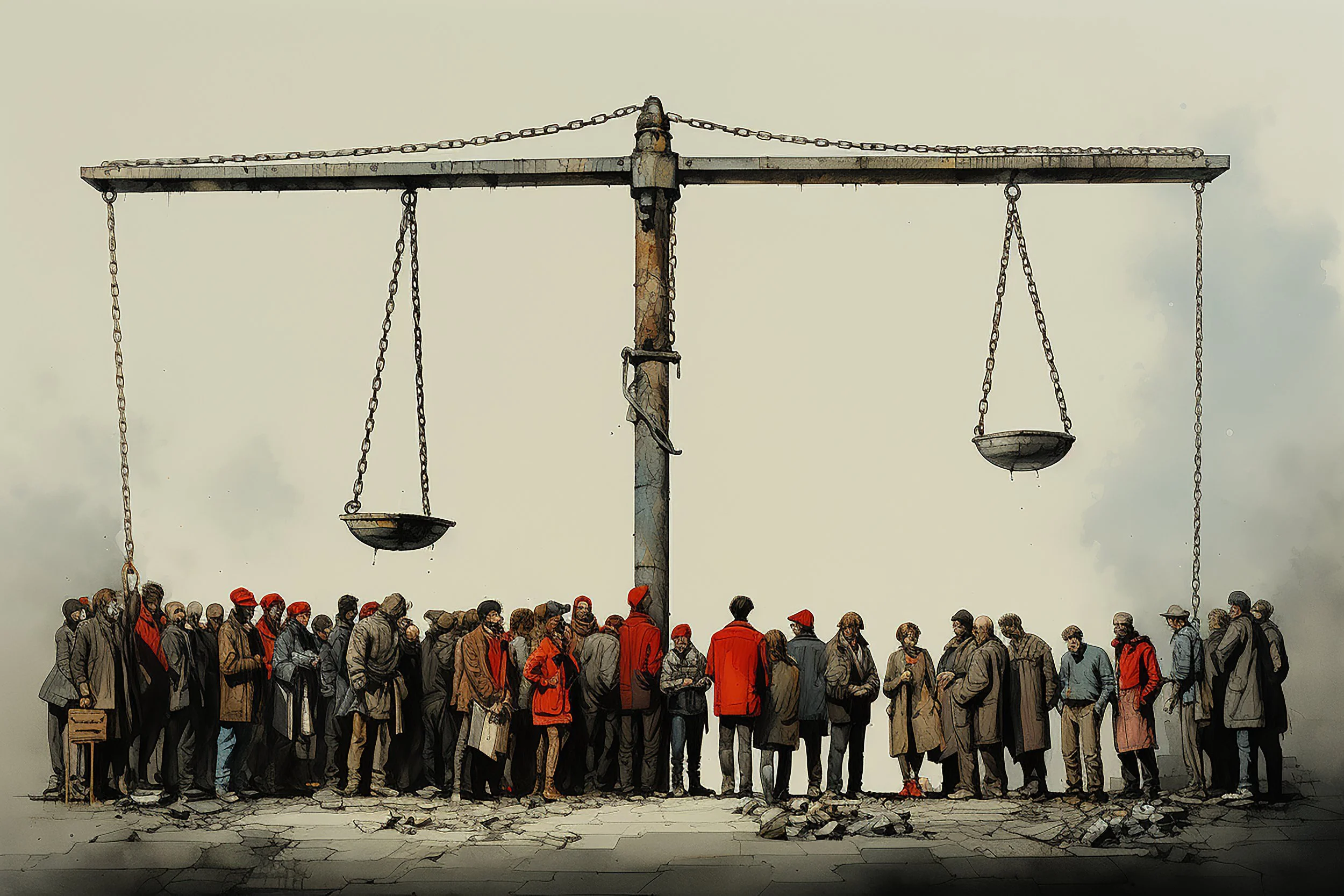
Can an economic team from around the world help distribute this wealth and avert social-economic crises?
Image by Freepik
On this Christmas Day of 2025, I encountered this Oxfam Report and YouTube Video by SABC News. This is extremely sad. Not Christian. Can somebody help? Can an economic team from around the world figure out a new social-ecological-economic system to help distribute this wealth and avert social-economic crises (wars)?
Oxfam’s Inequality Report:
“Oxfam’s 2023 inequality report, highlighting the extreme concentration of wealth: the richest 1% held nearly half the world’s wealth (around $214 trillion), while the poorest 50% owned less than 2%, showing a massive gap where the ultra-wealthy gain even more, even as poverty persists, driven by factors like monopoly power and inheritance.
Billionaire Boom: Oxfam’s 2024 data showed billionaire wealth growing three times faster than in 2023, with projections of the first trillionaire in a decade.
The report found that billionaire wealth rose by 2 trillion dollars in 2024 alone, that’s three times faster than the rate of growth in 2023, while it says that people living in poverty have barely seen an improvement in their lot since 1990.
(*My question: is this due to technology too; Artificial Intelligence? The gap in inequality should just continue to widen; we need a new economic policy worldwide.)
Drivers of Inequality: This wealth surge isn’t just from innovation; it’s fueled by unchecked inheritance, monopolies, and lobbying, cronyism, etc. that shapes systems for the elite.
Research shows that wages in the Global South are 87 to 95 percent lower than wages in the Global North for work of equal skill. Despite contributing 90 percent of the labor that drives the global economy, workers in low- and middle-income countries receive only 21 percent of global income. Globally, women are more often found in the most vulnerable forms of informal employment, including domestic work, than their male counterparts.
Impact on Poverty: While billionaires get richer, the economic situation for the poor has stagnated, with minimal progress since the 1990s, notes the YouTube video.”
— Google AI
Transcript of this WEF Oxfam Report from SABC News:
Dec 25, 2025, 10:07 AM
WEF Oxfam Report
“While in line with tradition at the annual World Economic Forum meeting in Davos, international charity Oxfam has released its inequality report and its findings make for concerning reading in terms of poverty with the rich getting richer and the poor stagnating economically in the position they were in in previous years. The report found that billionaire wealth rose by 2 trillion dollars in 2024 alone, that’s three times faster than the rate of growth in 2023, while it says that people living in poverty have barely seen an improvement in their lot since 1990. Well, to unpack the report for us, I’m joined by Fatih Nzi Hassani, she’s the Africa Director at Oxfam.Thank you very much for joining us, Fatih. So, your report indicates (0:46) massive wealth acceleration among the rich with billionaire wealth growing at approximately 5.7 billion US dollars a day last year. Just take us through some of the sources of this increased wealth and other key highlights that came out of the report. Thank you very much. So, the sources are multiple. It’s one of the biggest reports we issue every year.So, there’s a lot of desk research, there’s a lot of analysis from our teams across the world. And this report really highlights the origin of the explosion that you mentioned, the surge of 2 trillion dollars in 2024 in the billionaire’s wealth. It shows that this surge is driven by unchecked inheritance, by monopoly power, by cronyism.And it’s a situation where billionaires can lobby governments, they use their money to fund political campaigns, they manipulate systems so that they can protect their wealth and expand it. One challenge we have when we discuss the need to reform the system, because the system serves only a tiny majority. So, one of the challenges we have is that we often encounter fascination and enthusiasm and hope that, oh, I might become a billionaire someday, so maybe this is not so bad after all.And this is especially among young people in Africa, particularly. But this is completely disconnected from reality and from facts. The fact is that we are in a billionaire economy.It’s an economy that is influenced by a billionaire. I mentioned cronyism. It’s an economy that is designed to serve the interest of billionaires at the expense of the rest of us.The reality is that workers in the global South provide 90% of the world’s And this is really important. Sorry to cut you. Workers in the global South provide 90% of the world’s work, but they only receive 21% of the revenue.And these are two sides of the same coin. Sorry for trying to interrupt you earlier. I’m just worried about time.But what are the social risks that you foresee from this widening gap between the rich and the poor? Well, it has the risk of destabilizing societies globally. We know that ordinary people face rising taxes, they face stagnant wages, unaffordable cost of living. And in the same time, the riches continue to accumulate extraordinary wealth.And this creates frustration, alienation, and the growing risk of social unrest. Because people lose trust in institutions because institutions are supposed to protect them, but actually are protecting the rich and their interests. So what’s your perspective around the African continent? We know that we do have an elitist society at the top and then the rest of us have to just chug along. What’s your view on poverty and wealth on the continent? Well, the view is mainly on inequality because as billionaires are seeing their wealth expand, Africa is the most hardest hit by the wealth gap. The richest 1% globally extract $30 million per hour from the global South. And this is at a time where African countries are trapped in unpayable debts, austerity, and exploitative trade policies. So this is what we call a modern day form of colonialism. And this undermines the capacity of governments to invest in critical sectors like health, education, social protection, what we call inequality busting sectors. So, you know, the concern is that obviously you always highlight what’s happening in the inequality stakes and you do this at the World Economic Forum, which is seen by many as an elitist gathering. And many question, you know, whether it’s really a genuine platform that seeks to resolve society’s problems or whether it’s just a talk shop for the rich. To what extent do you think your inputs over the years have actually helped to shape social policy by governments who attend these things? Do you think it actually makes any difference or it’s just you ticking a box each year? No, no, no. We’re not in the business of ticking boxes.We know that when we attend Davos, world leaders listen to us because we have feedback from them. Remember, we work in 80 countries and we engage with decision makers, with lawmakers across the world. We also know that our reports on inequality, which is very, not only very documented, but also robust and easy to read.We know that this is a tool, an important tool for civil society, for citizens who want to keep their political leaders accountable. So we do feel that we’re doing our part, but we need more citizens to take ownership of the issue of inequality and to apply more pressure on their political leaders. We’re asking African citizens to join us and demand bold actions from their governments, like taxing corporations, also from global leaders to cancel debts and also reform global governance to dismantle the billionaire economy and to reduce inequality.And this is the fight we’re not giving up on. All right, Fatih, thank you so much for your insights there. That was Fatih Nzihasani. She’s Africa Director at Oxfam. We’re going to take a quick break. Start to speak like a top manager.”
From Google AI:
Billionaire wealth soared by $2 trillion in 2024 — three times faster than 2023 — due to surging stock prices, monopoly power, inherited wealth, and pro-billionaire policies, according to an Oxfam report. While global wealth concentrated at the top, over 60% of this wealth was unearned through inheritance or cronyism, leaving poverty levels largely unchanged since 1990.
Key factors contributing to this trend include:
Asset Price Inflation: Rising stock markets and property values significantly increased the net worth of the super-rich, who own the majority of these assets.
Unearned Wealth & Monopoly: A significant portion of this growth stems from inheritance, cronyism, and monopoly power, rather than innovation.
Political Influence: Oxfam notes that the surge is driven by lobbying and political influence that protects and expands wealth, often by lowering taxes on the rich.
Systemic Disparity: While wealth at the top increases, the benefits are not trickling down, with global poverty levels stagnant despite, or even during, economic contractions.
Historical Accumulation: The report highlights that wealth often flows from the Global South to the Global North, exacerbating inequality. — Google AI
Oxfam International is calling on governments to act rapidly to reduce inequality and end extreme wealth concentration, which could lead to poverty being ended three times faster:
Radically reduce inequality. Governments need to commit to ensuring that, both globally and at a national level, the incomes of the top 10 percent are no higher than the bottom 40 percent. According to World Bank data, reducing inequality could end poverty three times faster. Governments must also tackle and end the racism, sexism and division that underpin ongoing economic exploitation.
Tax the richest to end extreme wealth. Global tax policy should fall under a new UN tax convention, ensuring the richest people and corporations pay their fair share. Tax havens must be abolished. Oxfam’s analysis shows that half of the world’s billionaires live in countries with no inheritance tax for direct descendants. Inheritance needs to be taxed to dismantle the new aristocracy.
End the flow of wealth from South to North. Cancel debts and end the dominance of rich countries and corporations over financial markets and trade rules. This means breaking up monopolies, democratizing patent rules, and regulating corporations to ensure they pay living wages and cap CEO pay. Restructure voting powers in the World Bank, IMF and UN Security Council to guarantee fair representation of Global South countries. Former colonial powers must also confront the lasting harm caused by their colonial rule, offer formal apologies, and provide reparations to affected communities. — Oxfam
Christ’s Words about Helping the Poor:
“Truly I tell you, whatever you did for one of the least of these brothers and sisters of mine, you did for me” (Matthew 25:40).
“Blessed are you who are poor, for yours is the kingdom of God” (Luke 6:20).
“Invite the poor, crippled, lame, and blind to banquets, for they cannot repay you” (Luke 14:13–14).
“He declared He was anointed to “preach good news to the poor,” and helping them is a sign of true faith” (Luke 4:18–19).
“He praised a poor widow for giving her last two coins, showing God values the heart behind the gift, not the amount” (Mark 12:41–44).
“He challenged a rich man to sell possessions and give to the poor to find treasure in heaven, contrasting worldly wealth with spiritual reward” (Matthew 19:21).
I suggest an economic worldwide council to figure out a new economic system for the world.
This is obviously a travesty, ridiculous, insane
I propose starting with what is Real? The Earth.
People can print money like crazy. Credit cards are like a pyramid scheme. Are we sure we’re okay? Is something drastic going to happen
Can we lend a hand, lift a finger, help a neighbor who is poor? Can we help out Earth survive this climate change emergency using this money? Let’s get creative! Let’s be helpful to the poor. Let’s ensure our survival as a species.
Merry Christmas to you all. I pray for your health, fulfillment, wellbeing, and safety, and for people all over the world.
Written by
Ashley Heacock, Researcher, Writer, Mentor, Healer, Guide
MIT Sloan School of Management, MBA
Harvard Kennedy School of Government, MPA
The George Washington University, BA Economics, BA International Affairs
Contact: ashleyheacock@gmail.com
Website: awakeningconsciousness.community