Important: The Y Male Chromosome has dwindled from over 900 to about 55 active genes
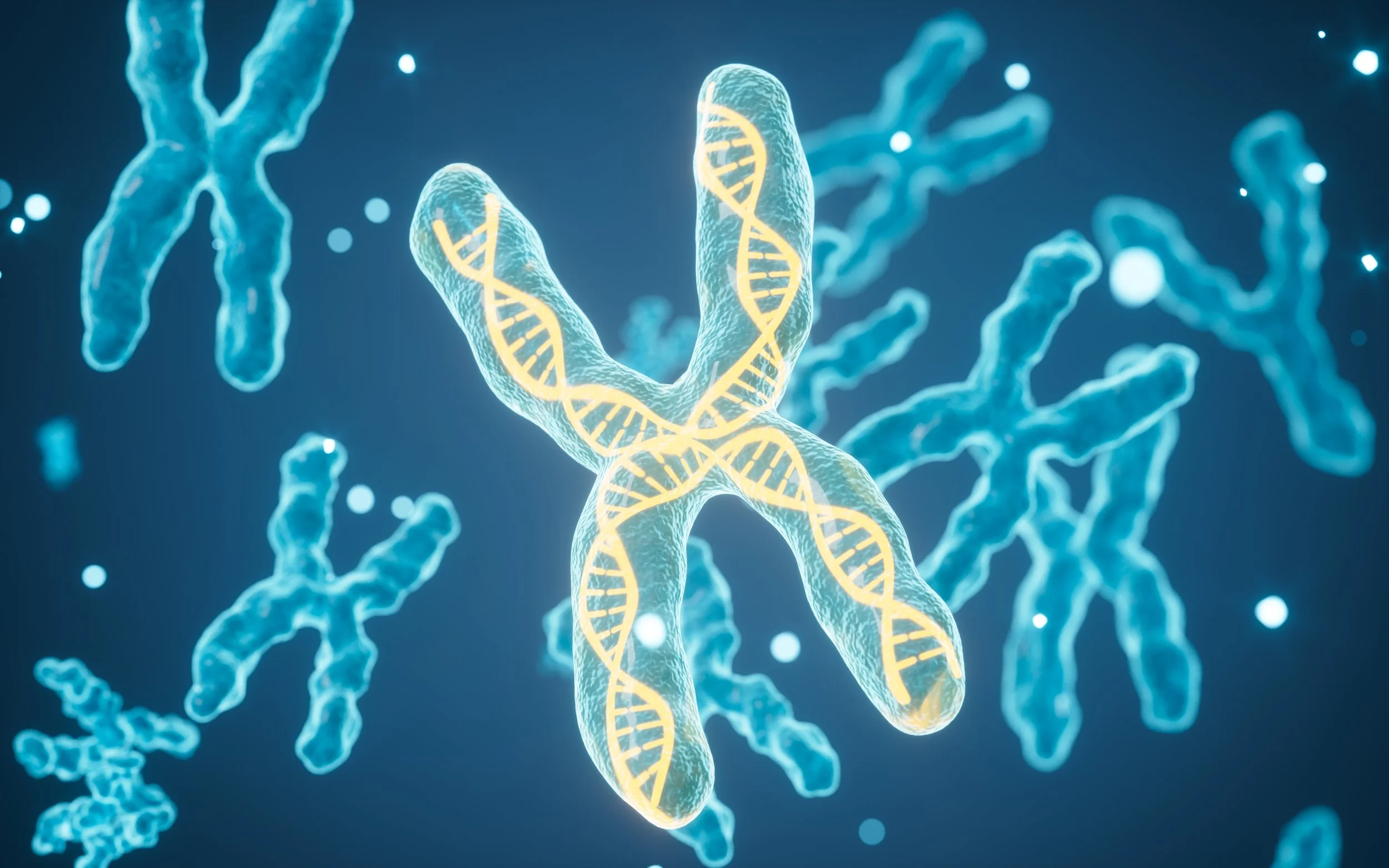
This is a serious topic I am seeking collaboration on to see if we need more scientific research and action to be taken; Image by Freepik
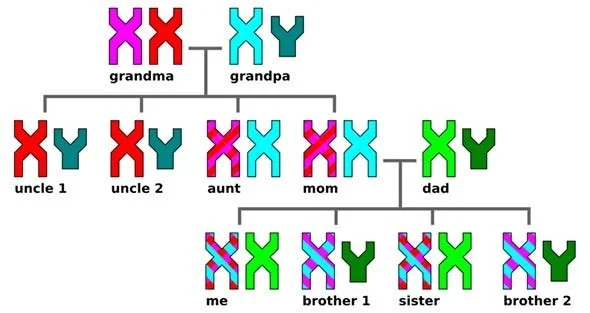
Women have XX chromosomes they pass on to their children. Males have XY chromosomes they pass on to their children. View the graphic below to get a visual sense of this process.
Jennifer Marshall Graves, an Australian biologist, is probably best known for a dire prediction: the human Y chromosome, which makes males male, could disappear in the next 5 million years. In the last 190 million years, the number of genes on the Y has plummeted from more than 1,000 to roughly 50, a loss of more than 95 percent. The X chromosome, in contrast, stands strong at roughly 1,000 genes.—Quanta Magazine
This is a series problem. We need to start researching, studying, experimenting, documenting, and acting NOW!
This is about the Evolution of Our Species. We could turn into completely different creatures. We could have abnormalities. We could have de-masculated men. We could have no men, and we all die.
FYI, this seems like it is a mammalian problem, so could also affect animal species.
Keep reading below.
I also have a 5-Part Series on Circumcision and Female Genital Mutilation that you can read about. This is about deformations and abnormalities of our human species. You cannot cut somebody’s genitals off and think nothing will happen. These practices also need to stop NOW!
Please read below and pass on to all of your friends and family and colleagues who can understand genetic coding.
About the Y Chromosome from Google AI:
“Gene Loss: Over the past 166 million years since the human and platypus lineages diverged,
the Y chromosome has lost the vast majority of its original genes, dwindling from over 900 to about 55 active genes today.
Lack of Recombination: Unlike other chromosome pairs (including the X chromosomes in females, which can exchange genetic material and repair damage),
the Y chromosome lacks a homologous partner with which to recombine over most of its length. This lack of “gene shuffling” makes it difficult to eliminate or repair damaging mutations, leading to gradual genetic decay over time.
*From another source on this same important topic:
“Unlike other chromosomes, it does not recombine with a partner during fertilization. Instead, it recombines with itself using palindromic sequences — almost like genetic self-repair. This “incestuous” exchange can fix mutations, but it can also accidentally delete important genes, contributing to infertility.” — ListVerse
Male-Limited Transmission: The Y chromosome is passed exclusively from father to son.” — Google AI
However, some critics argue that gene loss on the Y has stabilized and may have reached equilibrium. Whether the chromosome is doomed or simply quirky remains one of genetics’ great unanswered questions.” — ListVerse
About the X Chromosome from Google AI:
“The X chromosome has approximately 900 genes, though some estimates place the number between 900 and 1,400. It contains genes that are essential for both sexual development and many other biological processes, with one source identifying 867 identified genes on the X chromosome, most of which are responsible for the development of various tissues, according to the NCBI Bookshelf.” — Google AI
About other animals from Quanta Magazine:
“Scientists are discovering that the mechanisms that organisms use to determine sex are in a remarkable state of flux. When one system is destroyed, evolution seems to easily come up with a new one. Birds, fish and snakes have found myriad ways of making males and females. Sex chromosomes are frequently lost or swapped. Even closely related species can determine sex in quite different ways, suggesting that the system is highly flexible and evolving rapidly.
Recent studies of these different animals are helping scientists understand what happens when sex chromosomes shrink and disappear. “Sex determination is probably the most fundamental decision you make; it has huge implications for morphology, behavior, life history,” said Katie Peichel,(opens a new tab) a biologist at the Fred Hutchinson Cancer Research Center in Seattle. “Given that this is a super-fundamental process, how come it seems like every organism came up with its own mechanism for doing it?”
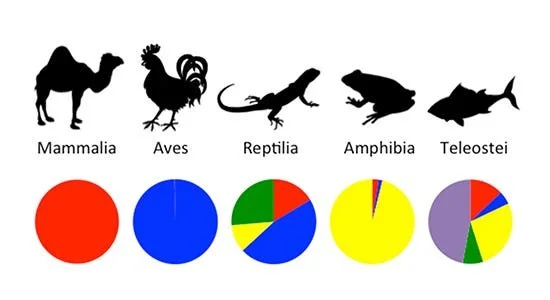
Mammals all use an XY system (red) and birds all use a ZW system (blue). But reptiles and fish employ a variety of different systems. Some choose sex based on temperature (green), others are hermaphrodites (purple), and some have sex chromosomes that look the same (yellow).”
Several mammals — the creeping vole and certain Japanese spiny rats — have already evolved alternative sex-determination systems after losing their Y.
Lizards, amphibians and fish, in particular, frequently change the systems used to control sex. One species of tropical frogs has three different sex chromosomes: Y, W and Z. Males can be YZ, YW or ZZ, and females can be ZW or WW. How these strange systems function is poorly understood, said Doris Bachtrog, a biologist at the University of California, Berkeley. “We know little beyond the model organisms.”
The bearded dragon, a lizard named for the spiky scales circling its head, is perhaps the most striking example of sexual fluidity. This creature typically uses a genetic system to determine sex — ZZs develop as males and ZWs as female. But in 2007, Graves and collaborators showed that they could convert the lizards’ genetically controlled system to a temperature-driven one. Lizard eggs raised at higher temperatures developed into females, regardless of their genetic identity. Temperature-controlled sex determination wasn’t itself a surprise — many reptiles, such as crocodiles, follow this method.— Quanta Magazine
“Some lizards and snakes are female-only species and can make eggs out of their own genes via what’s known as parthenogenesis. But this can’t happen in humans or other mammals because we have at least 30 crucial “imprinted” genes that work only if they come from the father via sperm.” — LaTrobe
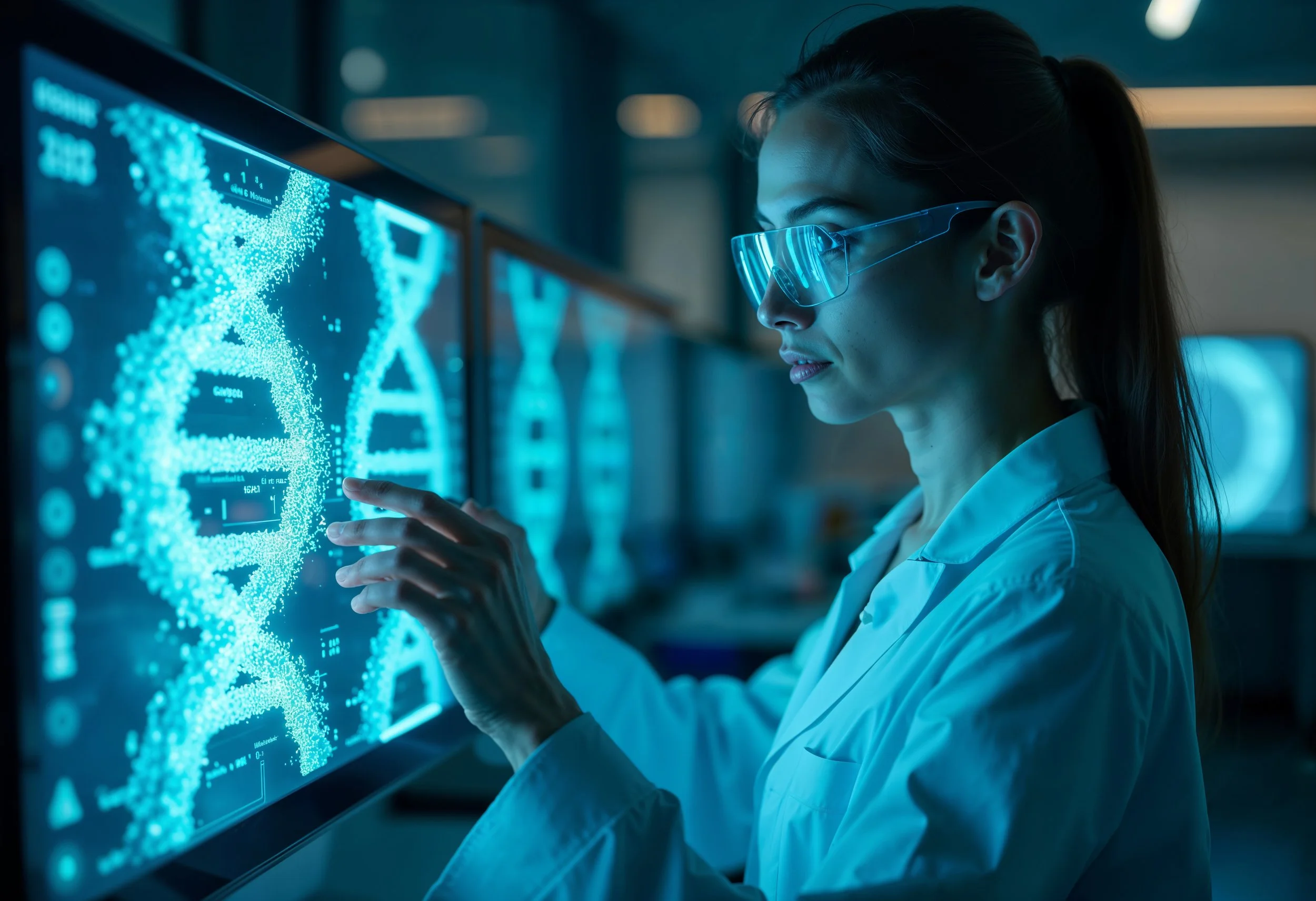
Image by Freepik
Is there Hope for Our Species Surviving?:
“Geneticists still don’t know what about 20% of our genes do. To map these mysteries, researchers Matthew Freeman and Sean Munro created the “unknome,” a database ranking genes by their “knowness” scores. Thousands score near zero, meaning we know almost nothing about their function, structure, or distribution.” — ListVerse
“The new finding supports an alternative possibility — that humans can evolve a new sex determining gene. Phew!
However, evolution of a new sex determining gene comes with risks. What if more than one new system evolves in different parts of the world?
A “war” of the sex genes could lead to the separation of new species, which is exactly what has happened with mole voles and spiny rats.
So, if someone visited Earth in 11 million years, they might find no humans — or several different human species, kept apart by their different sex determination systems.” — LaTrobe
I like to use the Biblical and Socratic method of questioning in addition to the Scientific Method. Are we sure? I think we need more research on this topic, personally. It is very complex. We’re talking about the survival of our species!
Image by Freepik
God’s Word
Isaiah 43:26 (ESV): “Put me in remembrance; let us argue together; set forth your case, that you may be proved right.” / ”Put me in remembrance: let us plead together: declare thou, that thou mayest be justified.”
This means you can pray to God and be a scientist and be led by spiritual guidance as you do your work.
The Socratic Method
How it works:
Questioning: A teacher or facilitator asks a series of open-ended questions about a specific topic.
Cooperative dialogue: It’s a back-and-forth conversation where both the facilitator and the students can ask questions.
Challenging assumptions: The questions are designed to probe the student’s reasoning, uncover underlying assumptions, and test the validity of their beliefs.
Guiding to self-discovery: The goal is to help students formulate their own conclusions through their own rational thought process, rather than being told the answer.
Encouraging critical thinking: By analyzing and defending their own positions, students develop stronger critical thinking skills and intellectual rigor.
Key principles:
No direct answers: The facilitator does not provide the answers directly but instead guides the student to find them.
Focus on reasoning: It focuses on the reasoning and logic behind a student’s ideas, not just the memorization of facts.
Iterative process: The process can be repeated with the student’s new viewpoint to further refine their understanding through continuous questioning.
Goal is deeper understanding: The ultimate goal is not to win an argument but to discover a deeper, more consistent understanding of an idea. — Google AI
The Scientific Method
Ask a question: Start with an observation and pose a question about it.
Do background research: Gather information to learn what is already known about the topic.
Formulate a hypothesis: Create a testable explanation or a potential answer to your question.
Test the hypothesis: Conduct a controlled experiment to test your prediction. Data should be collected in a reproducible manner.
Analyze the data: Examine the results from your experiment.
Draw a conclusion: Determine whether the results support or reject the hypothesis. This conclusion may lead to new hypotheses and more research.
Communicate results: Share your findings with others, often through publication, which allows for retesting and further scientific inquiry. — Google AI

Image by Freepik
Is this Genome Loss in Men a Problem right now?
Now, researchers have come up with an intriguing alternative explanation for much of this lifespan difference — that it all comes down to the Y chromosome. Specifically, the idea is that as men grow older, they lose this chromosome from many of their cells, which drives age-related disease.
Losing your Y chromosome in this way isn’t something that you would notice happening. “As far as I know, there are no data to suggest that men with loss of Y would feel it,” says Lars Forsberg at Uppsala University in Sweden. However, it turns out that a significant fraction of older men are affected, and researchers are now uncovering long-term consequences for the immune system and the risk of developing cancer, heart disease and even Alzheimer’s.
“If you’re a male, you do not want to lose your Y chromosome, it’s definitely going to shorten your life,” says Kenneth Walsh at the University of Virginia. The growing recognition of the importance of the Y chromosome for general health is opening the door to potential new ways to keep men healthier as they age. — New Scientist
“Recent study show that the gradual loss of the Y chromosome in blood cells is linked to increased risks of heart idsesase, Alzheimer’s, and certain cancers in men. This genetic decline may also weaken immune function and accelerate biological aging. Researchers now consider Y chromosome loss a potential biomarker for age-related diseases. This complete study is published in the Journal Cell.
Long before the chromosome disappears from the species, many men are already starting to lose it in some of their cells. Starting around age 50, some bone marrow cells begin to misplace the Y chromosone during cell division. These Y-less cells mutliply, especially in the blood. By the time a man reaches 80, about 4 in 10 have a significant amoung of blood cells missing the Y — a condition known as “mosaic loss of Y,” or LOY.
A long-term study in Sweden tracked over 1,100 older men and found that those with LOY had higher risks of cancer, heart disease, and Alzheimer’s, and did an average of 5.5 years earlier than those without the condition.
One of the genes on the Y chromosome, called UTY, helps regulate the immune system. When it’s gone, certain immune cells stop working the way they should. Some start producing more scar tissue, while others become weaker and less able to fight cancer” — Times of India
It seems to me like there needs to be a lot more research on this topic.
I also have the question are mutations already happening? There are heterosexuals and people who question if they are a man or woman. Just a question, another variable to study, not an answer.
If animal species adapt to this, then what are human beings doing?
Again, I repeat:
Jennifer Marshall Graves, an Australian biologist, is probably best known for a dire prediction: the human Y chromosome, which makes males male, could disappear in the next 5 million years. In the last 190 million years, the number of genes on the Y has plummeted from more than 1,000 to roughly 50, a loss of more than 95 percent. The X chromosome, in contrast, stands strong at roughly 1,000 genes.
This is a series problem. We need to start researching, studying, experimenting, documenting, and acting NOW!
This is about the Evolution of Our Species. We could turn into completely different creatures. We could have abnormalities. We could have de-masculated men. We could have no men, and we all die.
FYI, this seems like it is a mammalian problem, so could also affect animal species.
Please contact me if you have questions, insights, ideas for collaboration. Please share this article with your friends, family, and colleagues who may be able to understand this topic.
Written by,
Ashley Heacock, Researcher, Writer, Mentor, Guide
MIT Sloan School of Management, MBA
Harvard Kennedy School of Government, MPA
The George Washington University, BA Economics, BA International Affairs
Contact: ashleyheacock@gmail.com
Website: awakeningconsciousness.community